

Juvelook Volume quotes vary by clinic because vial count and area design differ. Here's what drives the total cost and how to compare estimates before you book.
Published -
Updated -

Author
Wi Young-jin · Chief director
Seoul National University College of Medicine · Seoul National University Hospital Specialist
→
If you've requested quotes for Juvelook Volume from two different clinics and walked away confused by the difference, you're not alone. One provider says two vials; another says four. One gives you a single price; another builds a line-by-line breakdown by area. It's easy to assume someone's overcharging — but that's often not what's happening.
The reality is that Juvelook Volume estimates are highly individualized. Vial count, treatment zones, injection technique, and session design all vary by provider and by patient. In this article, we'll cover what Juvelook Volume actually is, why quotes differ so much, how area design affects the total, what a credible breakdown looks like, and what side effects and risks you should know about before you commit.
What Is Juvelook Volume?
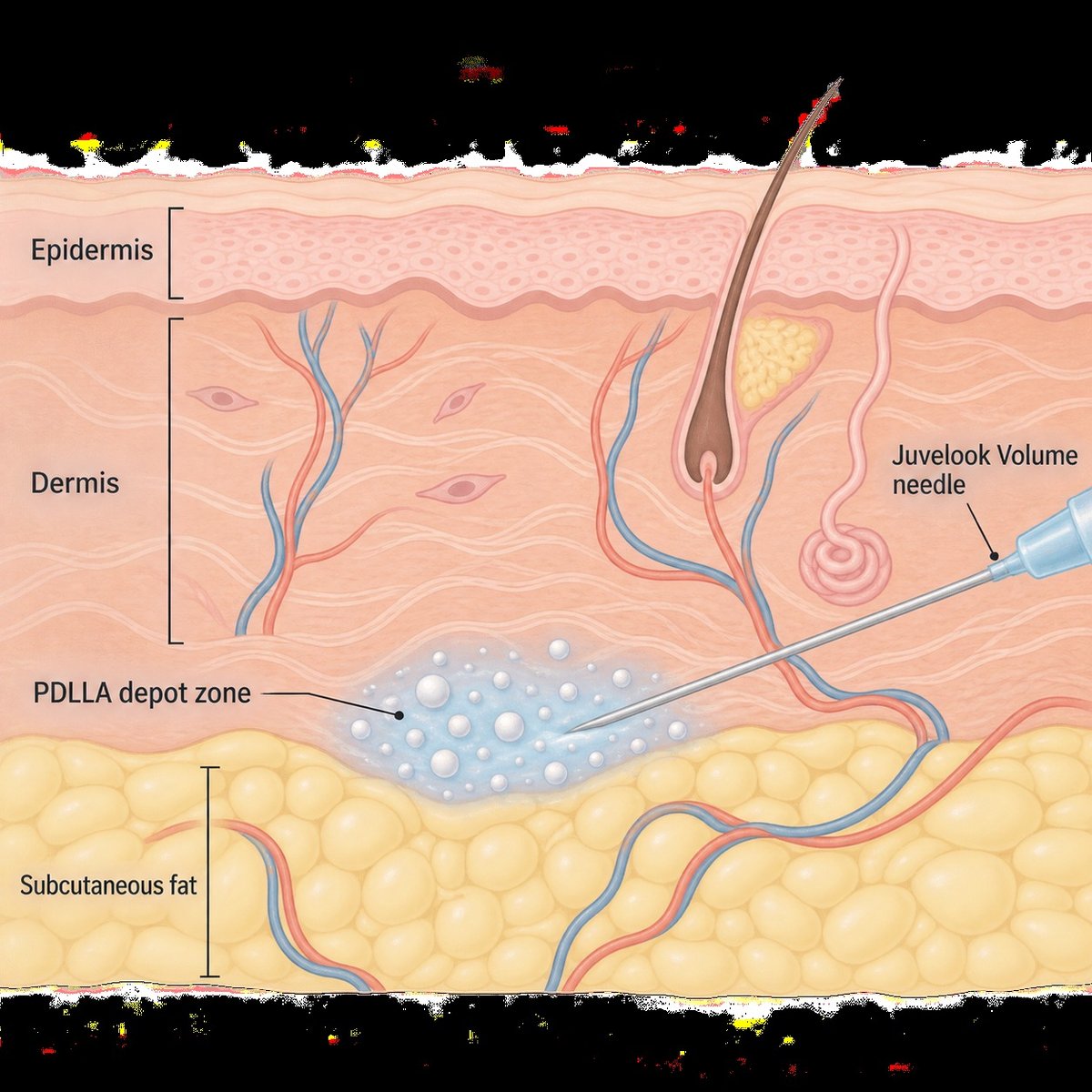
Juvelook Volume is a PDLLA (poly-D,L-lactic acid) and HA (hyaluronic acid) hybrid injectable. It's classified as a collagen biostimulator — meaning it works in two phases: the HA provides an immediate soft-tissue lift, while the PDLLA microspheres gradually stimulate your own collagen production over the following weeks and months.
Think of it as a combination of a filler and a biostimulator in a single product. The HA filler effect gives some immediate visible change; the collagen-stimulating effect builds slowly. Studies suggest that PDLLA-based injectables can support dermal collagen remodeling over a multi-month window, though individual results vary depending on skin quality, age, and treatment area.
It's distinct from standard HA fillers (which only replace volume) and from older PLLA-only stimulators like Sculptra. The hybrid formulation is specifically designed for mid-facial areas where both immediate lift and longer-term tissue support are useful — cheeks, temples, nasolabial folds, forehead, and chin line.

How Does Vial Count Get Set?
Here's what most clinics don't explain upfront: there's no universal vial count for Juvelook Volume. A provider doesn't look at your face and pick a number from a chart. The estimate comes from mapping which areas need treatment and how many milliliters each zone requires.
The standard calculation works roughly like this:
Area selection: Which zones are being treated? Cheeks, temples, nasolabial region, forehead, and chin line each have different volume requirements.
Volume per area: A single treatment area might require 0.5 cc to 1.5 cc depending on the degree of volume loss, skin laxity, and the provider's injection design.
Vial size: Each vial of Juvelook Volume contains 2 cc. So a patient treating two moderate areas could plausibly land at one to two vials; someone addressing four areas with significant hollowing could reach three to four.
Session vs. total plan: Some providers quote the first session only; others quote a two- or three-session plan upfront. That single difference can double the number you see on paper.
The short answer to why quotes differ? They're often quoting different things — not just different prices.
Why Area Design Changes the Total
Area design is where provider philosophy really shows. Some clinics take a conservative, targeted approach — treating only the primary complaint area in session one and reassessing after collagen buildup begins. Others design a full-face plan from the start.
Neither is automatically right or wrong. Conservative designs typically have lower first-session quotes but may require more follow-up sessions. Full-face plans front-load the investment but can deliver more comprehensive restructuring over the same timeline.
A few areas where design decisions vary the most:
Area | Design considerations | Volume impact |
|---|---|---|
Cheeks | Depth of hollowing, cheekbone projection, jowl interaction | High — often the largest single-area volume |
Temples | Shadow depth, hairline proximity, lateral brow support | Moderate — often 0.5–1 cc per side |
Nasolabial region | Whether to address fold root or perioral volume | Varies widely by anatomy |
Forehead | Convexity loss, frontal bone projection, hairline | Lower — typically secondary zone |
Chin line | Prejowl sulcus depth, chin tip projection preference | Moderate — often combined with other work |
If two clinics are quoting for different sets of areas, comparing the total price directly doesn't tell you much. The more useful question is: what areas are included, and why?

Side Effects and Risks to Know
Juvelook Volume has a strong safety profile in the published literature, but it's not without trade-offs. Knowing what's normal versus what warrants attention is part of making an informed decision.
Common, expected reactions:
Swelling: Typically peaks at 24–72 hours post-injection, especially in the cheek and temple zones. Most patients find it settles within a week.
Bruising: More likely in areas with thinner skin or higher vascularity (under-eye adjacent zones, temples). Cold compresses in the first 24 hours can help.
Firmness or lumpiness: The PDLLA component creates small depots under the skin that can feel textured in the first few weeks. Gentle massage as instructed by your provider helps distribute product evenly.
Redness at injection sites: Normal within the first day or two. Redness and swelling are common and usually settle within a few days.
Less common concerns:
Delayed nodules: PDLLA biostimulators carry a small risk of subcutaneous nodule formation if product distribution is uneven or massage aftercare isn't followed. Risk is reduced with proper injection technique and post-treatment massage protocol.
Asymmetry: Any injectable treatment can result in uneven outcomes, particularly if baseline facial asymmetry wasn't accounted for in the design plan.
Vascular complications: Rare, but injectable treatments near vascular structures carry theoretical risk. Provider experience and knowledge of facial anatomy are important safeguards.
If you notice spreading redness, fever, worsening pain, or any signs of infection after treatment, seek medical care right away. Individual results vary, and your provider should review your specific anatomy and medical history before treatment.
How Much Does Juvelook Volume Cost?
Because there's no standardized pricing for injectable treatments, quotes genuinely range — sometimes significantly. The per-session cost depends on vial count, number of areas, clinic location, and the provider's design approach. Sessions requiring more vials for more treatment areas will cost more than single-area conservative protocols.
At Beautystone in Seoul's Hapjeong area, current Juvelook Volume pricing is available at /en/price and ongoing seasonal offers are listed at /en/promotion. Seoul clinic pricing is subject to change.
A few things that influence the total across any clinic:
Number of vials per session — the primary cost driver
Number of areas treated — more zones typically require more product
Single-session vs. multi-session plan — total investment looks different depending on how it's structured
Combination treatments — Juvelook Volume is often done alongside other injectables or lifting procedures, which affects the total quote
You get what you pay for is a cliche, but there's truth in it here. Comparing only on price without knowing what's included in each clinic's quote is genuinely unhelpful. A low quote for one vial in one area isn't comparable to a comprehensive design plan covering four zones.
What Makes a Quote Worth Trusting?
A credible Juvelook Volume quote includes more than just a number. Here's what you should be able to ask for and receive an answer to:
Which specific areas are included? Cheeks, temples, nasolabial region, forehead, chin — each should be itemized or at minimum named.
How many vials per session, and how many sessions in the plan? A one-session quote and a two-session plan quote look very different in isolation.
What's the rationale for that vial count? A provider who can explain why they recommend two vials versus three for your specific anatomy is demonstrating that they've actually assessed your face, not just applied a template.
What does the follow-up look like? Collagen stimulators are designed for gradual buildup. A provider who has a plan for reassessment and potential touch-up is building toward a result, not just completing a transaction.
Are combination treatments included? If the quote bundles Juvelook Volume with a lifting procedure or skin booster, make sure you understand what's driving the cost.
If a clinic can't answer these questions clearly during a consultation, that's worth noting. The quote isn't just a price — it's a summary of the provider's treatment logic for your face. If it's unclear, ask until it isn't.
Is Juvelook Volume Right for You?
Juvelook Volume tends to work well for people who have some degree of mid-facial volume loss, mild to moderate skin laxity, and realistic expectations about gradual collagen stimulation. Research indicates PDLLA-based biostimulators can be effective for facial volumization over time, but results build over weeks to months rather than appearing immediately. Individual results vary.
It may be a stronger fit if you:
Want volume restoration with a biostimulating component (not just a filler effect)
Are comfortable with a gradual, progressive result rather than immediate dramatic change
Can commit to the post-treatment massage protocol, which is especially important with PDLLA formulations
Don't need the very high-G-prime structural support that firm HA fillers provide
It may be less suited if you need a quick cosmetic result before an event, have active skin infections or inflammatory conditions near the treatment area, or have a history of hypertrophic scarring or keloid formation — which may increase nodule risk with biostimulators. Your provider should review your full medical history and skin profile before recommending Juvelook Volume.
The Bottom Line
Different quotes for Juvelook Volume aren't a sign that someone's trying to overcharge you — they're usually a sign that clinics are designing treatment plans differently. Vial count, area selection, and session structure are all variables that legitimately shift the number.
Juvelook Volume is a PDLLA + HA hybrid that provides both immediate volume and gradual collagen stimulation
Vial count is set by the number and size of treatment areas — not by a fixed formula
A credible quote tells you which areas are covered, how many vials, and why
Side effects are real but manageable; follow your provider's aftercare instructions carefully
Like any injectable procedure, it comes with trade-offs. Ultimately, the choice depends on your anatomy, your goals, and your comfort with a gradual result timeline. If you're considering Juvelook Volume, a thorough consultation is the best way to understand what a treatment plan for your face would actually look like. Beautystone is a dermatology clinic in Seoul's Hapjeong area — see current offers at /en/promotion.
Frequently Asked Questions
Q. How many vials of Juvelook Volume does a typical treatment take?
A. There's no single answer — it depends on how many areas are being treated and how much volume restoration is needed in each. A single targeted area might require one vial; a full mid-face design covering cheeks, temples, and nasolabial region could require two to four vials. Your provider should explain the reasoning behind their recommendation based on your specific anatomy.
Q. Why is the Juvelook Volume quote from one clinic so different from another?
A. Quotes often reflect different treatment plans, not just different prices. One clinic may be quoting a single-session, single-area protocol; another may be quoting a full-face, multi-session plan. Comparing quotes side by side is only meaningful if you know exactly what areas and how many vials are included in each.
Q. Does Juvelook Volume hurt, and what's the recovery like?
A. Most patients describe the injections as manageable, especially with numbing cream applied beforehand. Post-treatment swelling and bruising are common and typically resolve within one to two weeks. The PDLLA component may feel firm under the skin for the first few weeks — this usually softens with the massage protocol your provider prescribes. Individual experiences vary.
Q. How long do the results from Juvelook Volume last?
A. The HA component provides a more immediate effect that can last several months; the collagen stimulation from PDLLA builds gradually over three to six months and may support longer-lasting volume improvement. Most providers recommend a follow-up assessment after the initial collagen buildup period to evaluate results and decide on maintenance. Individual results vary.


skin
Ellanse Cost: Duration Beats Price Per Visit

Lifting
Alltite RF: Two Effects, Two Timelines

Contouring & Volume
Why Juvelook Volume Quotes Vary by Clinic

men's
Nose Pore Treatment: Aftercare Timing Guide

skin
How Many Sessions Does Eyeliner Removal Take?

Hair Removal
Laser Hair Removal While Pregnant or Nursing