

Makeup cracking only over cheekbones signals pigmentation, not dryness. Here's the cause and fix.
Published
Updated

Author
Wi Young-jin · Chief director
Seoul National University College of Medicine · Seoul National University Hospital Specialist
→
If your makeup keeps flaking or looking patchy in the exact same spot every morning, your first instinct might be to layer on more moisturizing cream, thinking your skin is just dry. However, if that one specific spot remains matte and causes your makeup to crack, it can be incredibly frustrating. This is a very common pattern seen right where brown spots—such as solar lentigo (senile lentigo, or age spots)—are dotted on the upper cheekbones or forehead.
To get straight to the point, makeup flaking on a solar lentigine is not a moisturizing problem; it is because the concentrated melanin is disrupting the natural flow of sebum. No matter how much moisturizing cream you apply, that specific spot will continue to look matte and patchy unless the solar lentigine itself is treated.
*Solar lentigo: Brown pigment spots formed when melanin accumulates in one area due to cumulative UV exposure. Unlike melasma, they have clear, well-defined borders and appear like freckles or dark spots.
The melanin density is different where a solar lentigine is settled
A solar lentigo is a pigmented spot created by melanin accumulating in areas with long-term UV exposure. While it looks like a simple brown spot on the surface, the melanocytes in the epidermis underneath are producing far more melanin than usual, piling it up in that single location.
This accumulation of melanin subtly affects the sebaceous glands and the flow of pores. Because the path for sebum to reach the surface is slightly more restricted compared to other areas of the skin, the sebum-moisture balance at the site of the solar lentigo becomes different from the surrounding area.
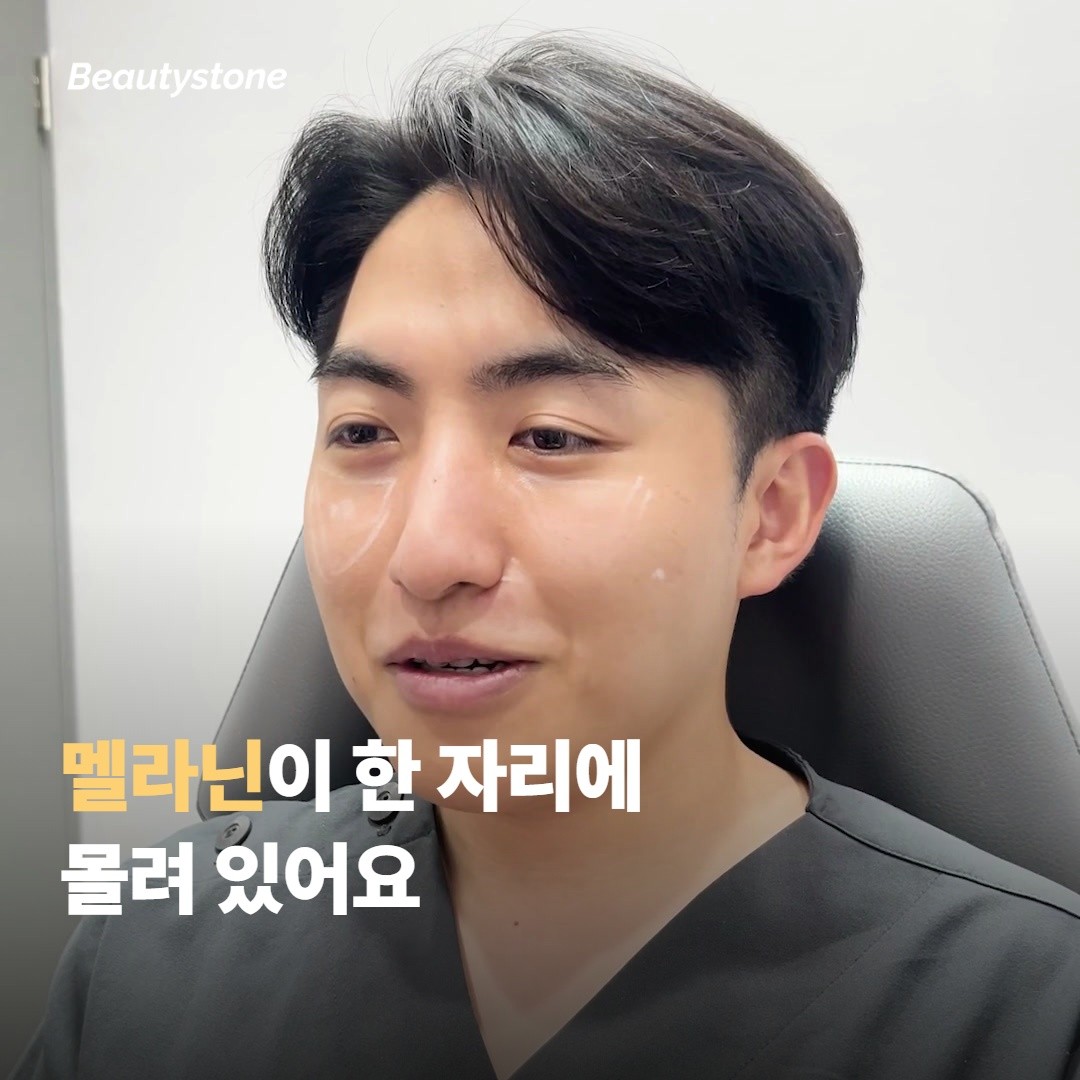
Why makeup turns matte: It's a sebum flow issue
In the area with the solar lentigo, less sebum flows compared to the surrounding skin, and the surface keratin pattern is slightly different. When your makeup base is applied, it adheres to a subtly different texture. As a result, even if you apply the exact same amount of the same foundation, only the spot with the solar lentigo ends up looking matte and dry.
Applying more moisturizing cream only temporarily increases surface hydration; it does not change the physical structure of the melanin concentrated inside the epidermis. This leads to a frustrating cycle: moisturizing, seeing the same matte patchiness return an hour or two later, and moisturizing again. If your makeup is lifting only on specific spot-like areas, it is a signal that you need to address the pigment itself rather than just hydration.

You need to treat the solar lentigo to smooth out your makeup texture
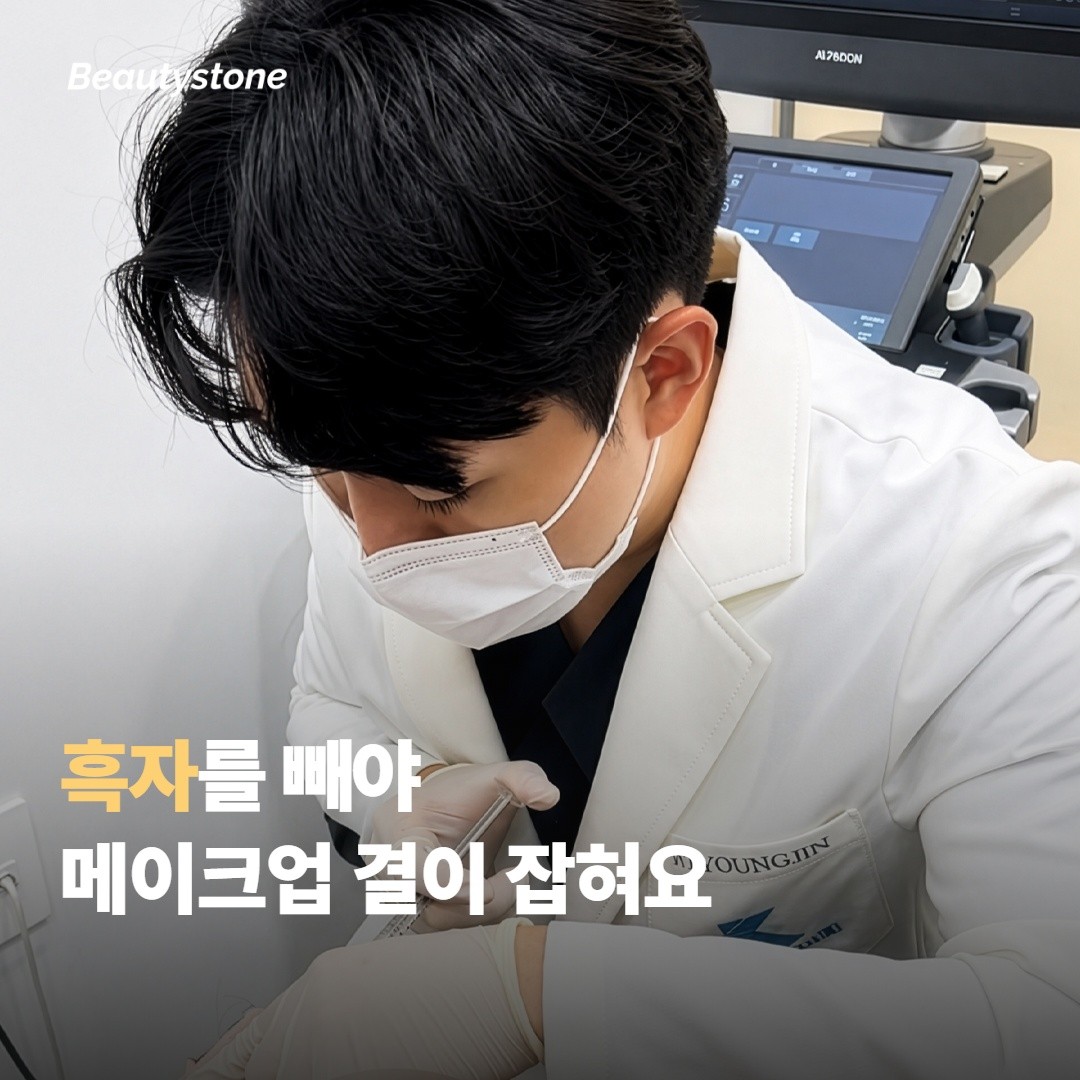
Since solar lentigines are pigmented spots, they will only fade once the melanin itself is broken down. Commonly used treatments include Q-switched lasers (532nm or 1064nm) and IPL. In many cases, the spots fade significantly after 1 to 3 targeted sessions. Once the solar lentigo fades, the sebum flow and keratin pattern in that area return to match the surrounding skin, resolving the issue of dry, lifting makeup along with it.
Please note that for about a week to ten days after the treatment, the area will form a scab and eventually flake off. Since it can be difficult to apply makeup directly over the treated area during this recovery phase, we recommend scheduling your treatment during a time when your schedule is relatively flexible. You will also need to be extra diligent with sun protection for about two months post-treatment—skipping sun protection often causes the solar lentigo to darken again.
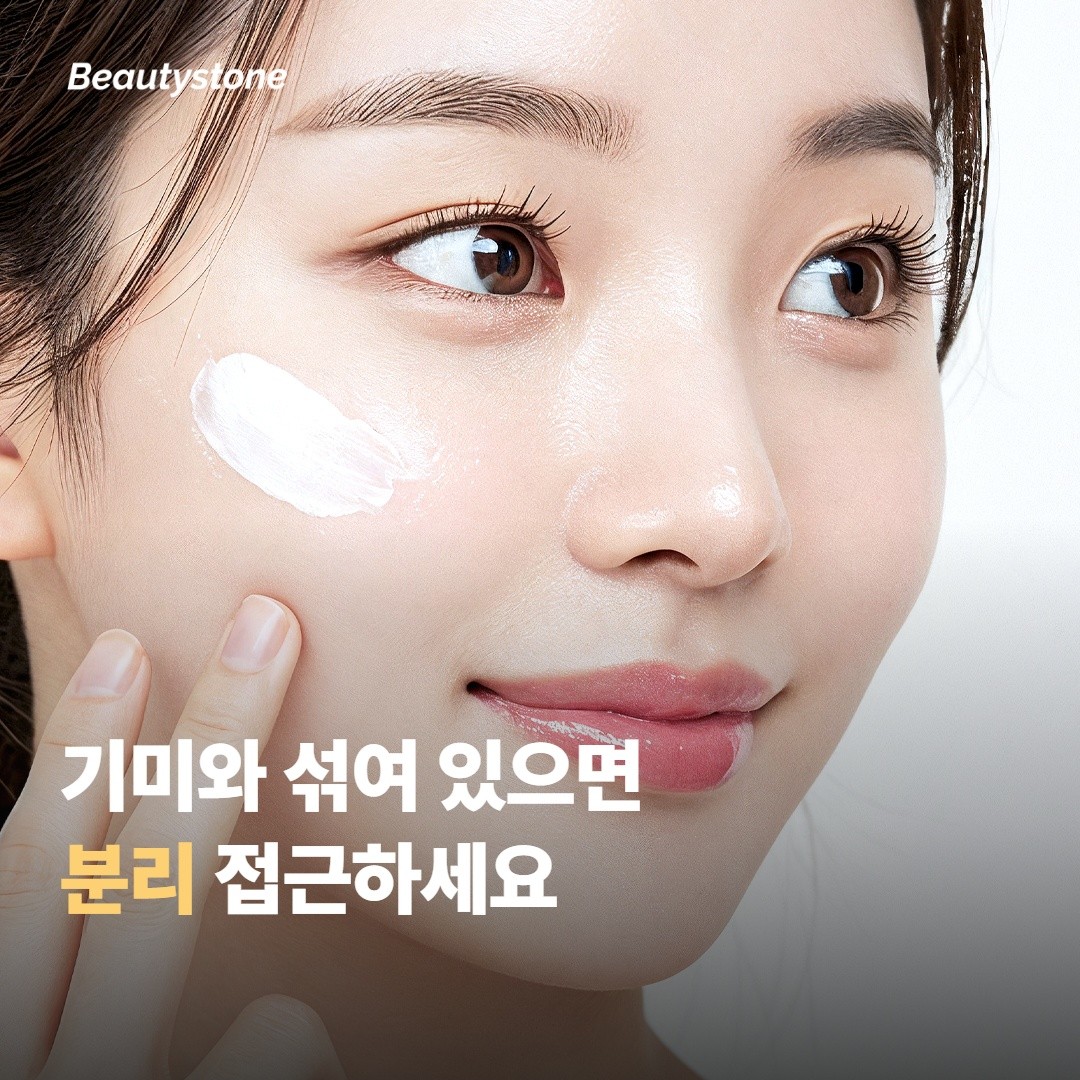
When solar lentigo and melasma coexist
Many people have both solar lentigines and melasma together on their cheekbones. While both appear as brown spots, melasma is a chronic pigmentation triggered by a combination of hormones and UV rays, meaning it cannot be removed in just one or two laser sessions like a solar lentigo. When both pigments are present, a safe and reliable approach is to treat the solar lentigines first, and then separately manage the melasma using toning lasers and topical brightening treatments.
This article is for general informational purposes. Determining whether you have solar lentigo or melasma and choosing the right course of treatment should always be done in consultation with a doctor who can examine your skin in person.
Frequently Asked Questions
Q. Will my makeup stop flaking completely once the solar lentigo fades?
A. As the melanin fades and the sebum and keratin patterns align with the surrounding skin, the flaking usually improves significantly, though reaching a 100% perfect match can take a little time. Generally, your makeup texture will smooth out within 2 to 3 months post-treatment.
Q. Can deep moisturizing make a solar lentigo fade?
A. Moisturizing alone cannot fade the melanin itself. While keeping your skin hydrated is excellent for reducing irritation, treating the actual pigment requires targeted dermatological procedures or topical brightening care.
Q. Can I treat all of them at once?
A. If the affected area is small, they can be treated in a single session. However, if you have solar lentigines scattered across multiple areas, the treatment is often divided into two or three sessions to ease the recovery process.
Recommended Readings
Lasers for Melasma: Does a Higher Intensity Mean Better Results? "Actually, It Might Make It Darker"
Honestly, Even I Didn't View Hyperpigmentation This Way 5 Years Ago
Pico Laser Every 2 Weeks: Why Getting It Too Frequently Cuts the Effectiveness in Half
Why Your Solar Lentigo Isn't Fading Even After 10 Sessions of Laser Toning


skin
뷰티스톤 블로그 전체 글 목록 — 카테고리별 한눈에 보기
뷰티스톤의원 블로그의 모든 글을 카테고리별로 정리했어요. 리프팅·스킨·제모·바디 등 원하는 주제의 글을 한 페이지에서 찾아보세요.

Lifting
다이어트로 체중은 줄었는데 아랫배만 그대로일 때 온다 복부 시술이 답이 될 수 있을까요?
아랫배만 남아 보이는 이유를 피하지방과 내장지방으로 나눠 보고, 온다 복부 시술이 닿는 층과 한계를 정리했어요.

skin
울퉁불퉁 패인 여드름 흉터, 시크릿RF 마이크로니들이 잘 닿는 모양은 따로 있을까요?
여드름 흉터 시술 결과가 갈리는 이유를 흉터 모양에서 찾고, 거울 앞에서 스스로 가늠하는 방법을 함께 담았어요.

Lifting
Hard Lump After Sofwave: Is It Normal?
Feeling a firm, pebble-like lump after Sofwave? Here's what's happening under your skin, how long it usually takes to soften, and the signs worth a call.

skin
Pigment Lasers After a Tan: How Long to Wait?
A tan changes where laser energy lands. Here's how long to wait before pigment treatment, why the delay matters, and how to tell your skin is finally ready.

Tattoo removal
PicoWay Turned Ink Darker? 3 Things to Check
Some tattoo inks darken instead of fading after laser removal. Here's how to tell an ink reaction from a healing problem, and why a test spot goes first.