

Toning, Pico, and IPL target different pigments. Classifying spots and choosing the right one.
Published
Updated

Author
Wi Young-jin · Chief director
Seoul National University College of Medicine · Seoul National University Hospital Specialist
→
When you notice brown spots deepening over your cheekbones and search for solutions, Toning, Pico, and IPL almost always appear together like a set. It is natural to wonder, "Will getting just one of these clear everything up?" However, even if they look like the same brown color, different types of pigment respond best to different treatments.
The short answer is that blemishes, melasma, and age spots are simply grouped under "pigment" in daily conversation, but their underlying causes are entirely different. Some pigments lie in the shallow layers of the skin, while others reside deep within; some are even triggered by hormonal changes, meaning they won't react the same way to a single treatment. Therefore, rather than choosing a treatment first, identifying where your specific pigment belongs is a much faster path to clear skin.
This content is a summary of treatment information from Beautystone Hapjeong.
In This Article, You Will Learn
Why blemishes, melasma, and age spots are not the same type of pigment
How Toning, Pico, and IPL match different types of pigmentation
How to estimate your own pigmentation pattern
Key post-treatment care tips to minimize pigmentation recurrence
Blemishes, Melasma, and Age Spots Are Not the Same Pigment
Even if they are grouped under one category, they start differently. Blemishes are small, clearly defined brown spots that may have been present since childhood. Melasma* is a bilateral pigment condition that deepens symmetrically on the cheeks, forehead, and bridge of the nose. Age spots are dark brown spots that become more pronounced after your 30s and 40s due to accumulated UV exposure.
Melasma*: A bilateral pigmentary condition triggered by a combination of hormonal changes and UV stimulation. It often deepens symmetrically on both cheekbones.
As guidebooks note that melasma commonly darkens after pregnancy or starting birth control pills, and that sunlight acts as a major trigger, melasma is highly influenced by both hormones and UV rays. In contrast, age spots are primarily caused by cumulative UV exposure rather than hormones. Because their origins differ, it is difficult to expect the exact same result from the same laser treatment.
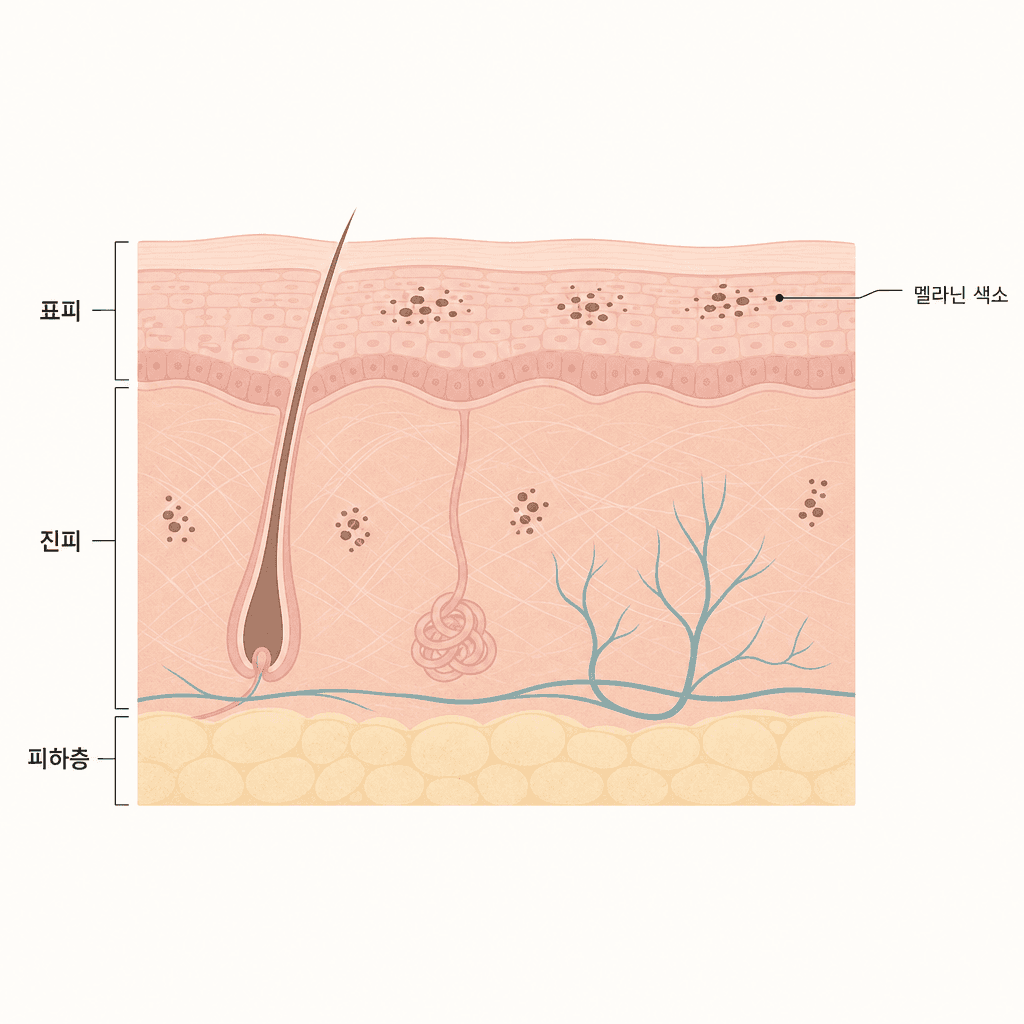
The treatment response also varies depending on whether the pigment stays in the epidermis (shallow layer) or descends into the dermis (deep layer). Viewing this depth difference as a cross-section makes it much easier to understand.
Toning, Pico, and IPL: Which One Is Best for Your Pigment?
These three treatments differ in both how they work and the pigments they target. Here is a comparison at a glance.
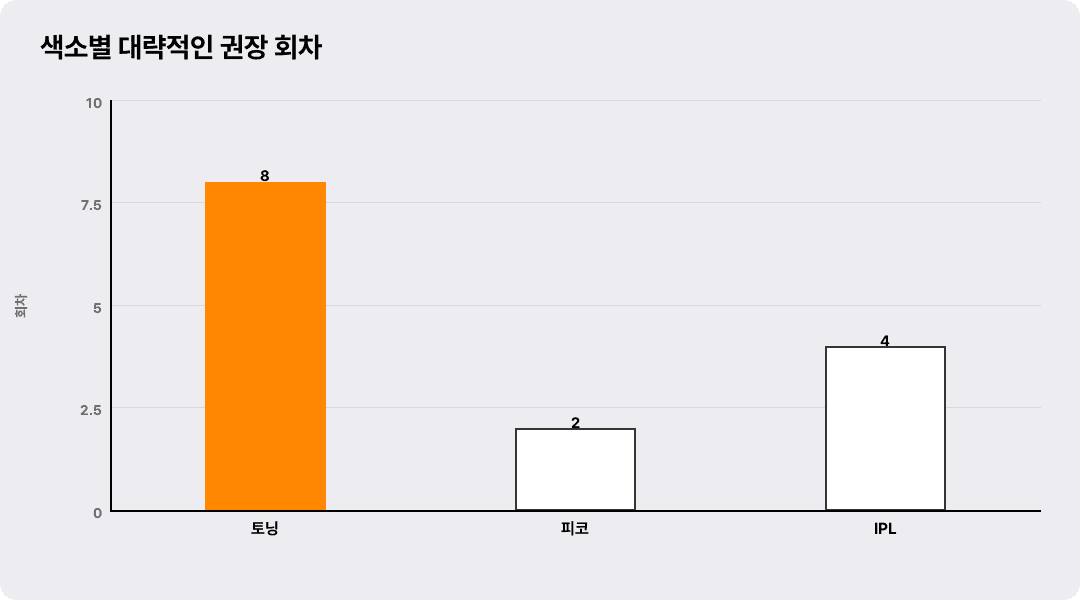
As medical sources explain that IPL is a non-ablative method where light energy is absorbed by pigment targets like melanin and converted into heat, thus targeting layers below the epidermis, IPL is highly suitable when superficial pigmentation or redness are present together. On the other hand, Pico is often used for dark, isolated age spots, and a series of low-intensity Toning sessions is frequently recommended for melasma, which carries a higher risk of recurrence. This is why the number of recommended sessions varies significantly by treatment.
To easily compare how the treatment commitment differs, take a look at the recommended sessions.
How Can I Identify Which Type of Pigment I Have?
If you are unsure of your pattern, you can narrow it down using the following clues:
Blemishes — Small brown spots present since youth, with clear borders, appearing mostly on sun-exposed areas.
Melasma — Spreads symmetrically on both cheeks, forehead, and bridge of the nose, often darkening after pregnancy or taking birth control pills.
Age Spots — Dark brown spots that deepen after your 30s or 40s, sometimes developing a slightly rough texture on the surface.
With studies reporting that a family history is present in about 60% of melasma cases, and that it behaves as a chronic condition driven by UV, hormones, and certain cosmetics, treating melasma is a continuous journey of management rather than a one-time fix. However, cleanly distinguishing whether pigment is confined to the epidermis or has reached the dermis with the naked eye is challenging. While the classification of epidermal vs. dermal types serves as a framework for treatment direction, it is difficult to definitively determine depth through non-invasive diagnosis alone. Therefore, doctors typically assess this using diagnostic tools like Wood's lamps alongside clinical observation. It is best to use these clues to understand your general direction and let a professional assess the depth during a personal consultation.
Why Beautystone Hapjeong?
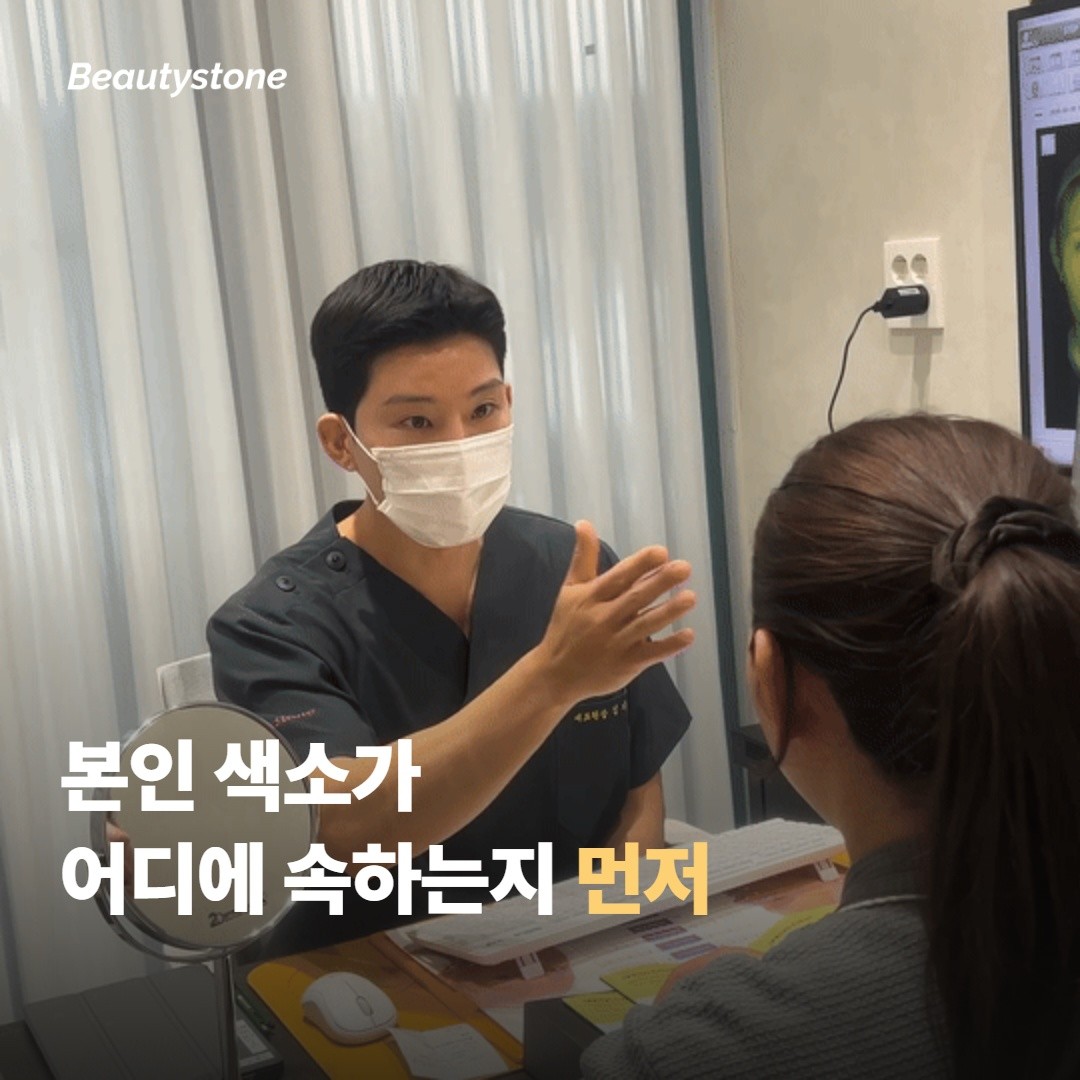
At Beautystone Hapjeong, before recommending any procedure, we prioritize explaining which layer of your skin the pigment is located in. By estimating the ratio of superficial to dermal pigment through diagnostics, and taking into account your overall skin tone and recurrence history, we propose a single or combined approach using Toning, Pico, or IPL. If dermal pigment is deep, we may first attempt to disperse it with low-intensity Toning sessions; if a superficial spot is dark and isolated, we might suggest a single Pico session. Being a cozy, dedicated clinic easily accessible from Hapjeong Station, we are able to thoroughly analyze and tailor treatment to each individual's pigment pattern.
Important Considerations Before and After Treatment
For about a week before your procedure, it is best to avoid self-tanning, exfoliating scrubs, and strong acid skincare products. Receiving laser treatments while the skin is sensitive can prolong the recovery process.
After your treatment, protecting your skin from the sun is the single biggest factor determining your results. Just as sun protection and topical creams form the foundation of melasma care while lasers play a supporting role, neglecting sunscreen in your daily routine can cause the pigment to return. Additionally, a temporary darkening of the treated area known as PIH* (Post-Inflammatory Hyperpigmentation) can occur post-treatment. This is a common response in Asian skin and typically fades over time, though individual recovery rates vary. It is frequently managed alongside topical brightening agents like Tranexamic Acid or Azelaic Acid, and your daily skincare between sessions plays a decisive role in the outcome. Since this article is a general guide, it is safest to discuss the best treatment choice and timing for your unique skin with a doctor who has personally examined you.
PIH*: A temporary darkening of pigment at the site of a procedure or inflammatory stimulus. It occurs commonly in Asian skin types.

Frequently Asked Questions
Q. Can all pigments be removed in a single session?
A. Because even similar-looking brown spots vary in depth and cause, it is often difficult to clear everything with a single treatment. While blemishes may fade in one or two sessions, melasma generally requires a steady series of low-intensity treatments. The number of sessions depends on your unique pigment distribution.
Q. How many days after the treatment can I return to my daily routine?
A. Toning and IPL usually cause only mild redness that settles between the same day and the next. Pico can result in light scabs or fine marks for a few days, depending on the energy level used. Recovery times vary based on treatment intensity and individual healing capacity.
Q. Can I receive these treatments during pregnancy?
A. Laser pigment treatments are generally not recommended during pregnancy or breastfeeding. Because active hormonal changes make treatment outcomes hard to predict and pigment often fades naturally after pregnancy, it is best to postpone your sessions.
Q. Why does pigmentation sometimes return after treatment?
A. UV exposure and hormonal fluctuations are major triggers. Recurrence can easily happen if you skip sunscreen or if your treatment coincides with pregnancy or starting birth control. Diligent sunscreen use and recommended topical care after your procedure are key to keeping your skin clear long-term.


Lifting
Ultherapy Before and After: Why Wait 90 Days?

Contouring & Volume
Belotero Revive Cost: 2cc Price vs. 3 Sessions

skin
Lip Hyperpigmentation Laser: Does It Work?

Contouring & Volume
Men's Forehead Filler: Hollow or Just Lines?

Contouring & Volume
Calf Botox Timeline: When to Book Session 2?

Contouring & Volume
Thread Lift Cost: Smile Lines vs. Full Face?