

A mild peel and a deep resurfacing laser don't ask for the same break, which is why clinic advice varies so much. Your skin's signals set the restart day.
Published -
Updated -

Author
Wi Young-jin · Chief director
Seoul National University College of Medicine · Seoul National University Hospital Specialist
→
If you use retinol regularly and have a laser or peel coming up, you've probably wondered whether you can keep applying it. One clinic says stop a week ahead, another says a few days is fine, and it leaves a lot of people unsure exactly when to pause and when to start again.
The short answer: because retinol speeds up your skin's cell turnover and leaves it temporarily more sensitive, it's safest to give it a rest for a few days before your treatment, then ease back in step by step once your skin has calmed down. The exact number of days depends on how strong the treatment is and how your skin reacts, but once you understand why the pause matters, it's much easier to judge how many days make sense for you.
This article rounds up treatment information from Hapjeong Beautystone.
What you'll take away
Why pausing retinol before a treatment helps, and the reasoning behind it
Roughly when to stop and when to restart, before and after a treatment
How to read your own skin's signals to time the restart
How to ramp back up gradually when you start again
Why is it better to pause retinol before a treatment?
Retinol speeds up the turnover of your skin cells, which moves exfoliation along faster. In the process, the surface of your skin thins out and your photosensitivity* rises for a while, so it reacts to light and irritation more than usual. Lasers and peels also put a certain amount of stress on the skin, so when those two sources of irritation overlap, recovery can drag out or the reaction can be bigger than expected.
photosensitivity*: a state where your skin becomes more sensitive to light, especially UV. During this window, irritation and pigmentation reactions can be stronger than usual.
As this explanation notes, topical retinoids can make the skin more sensitive to sunlight, so sun protection and careful management are recommended while you're using them — which makes it clear why a short break before and after a treatment is the safer call. The idea is to avoid adding treatment stress on top of already-sensitized skin.
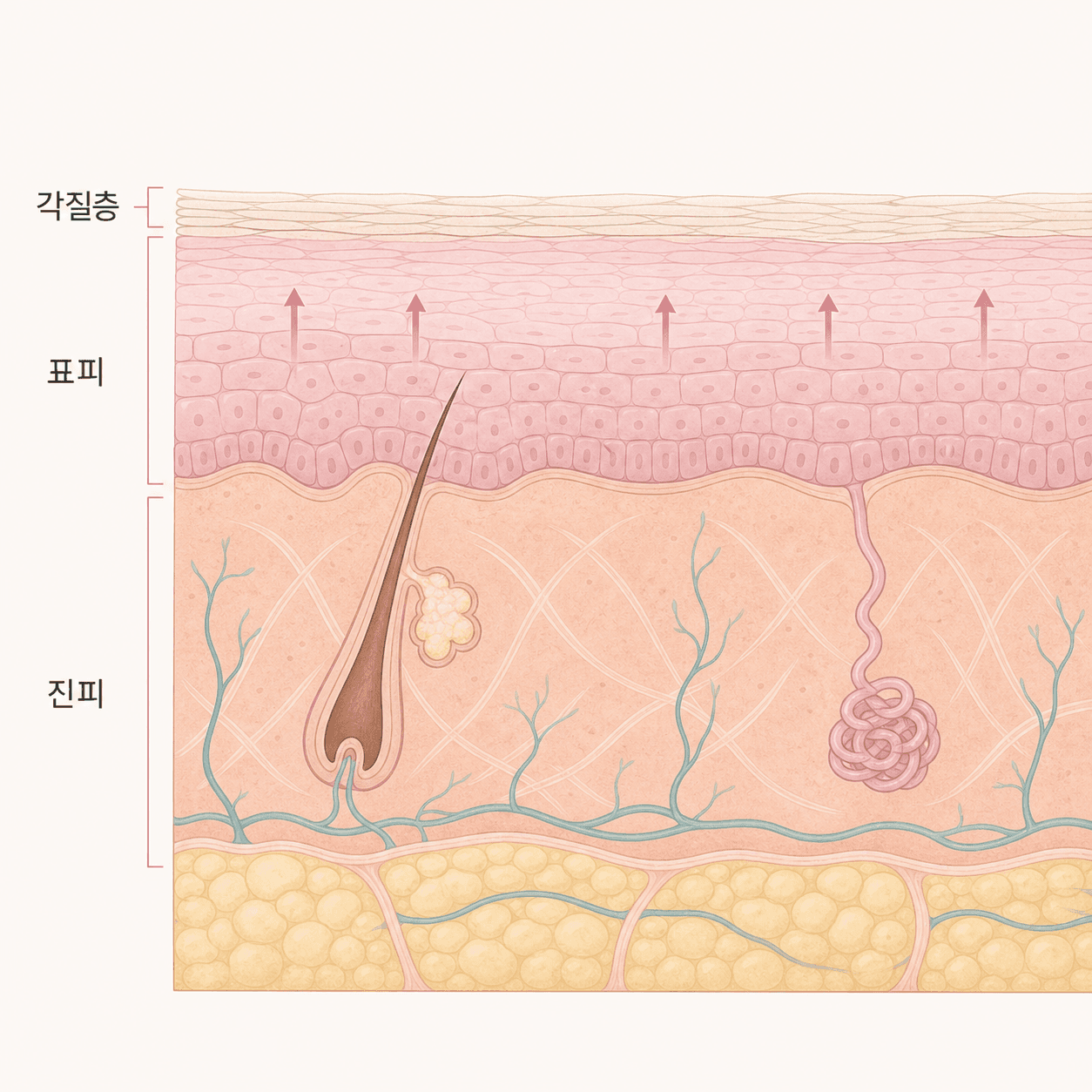

Let's compare when to stop and restart, before and after
How long you rest depends on how strong the treatment is. Lining up a gentle treatment and a stronger one item by item, it shakes out roughly like this.
Item | Gentle treatment | Strong treatment |
|---|---|---|
Examples | Mild peel, low-intensity laser | Deep peel, strong laser |
Stop before | 3–5 days prior | 5–7 days prior |
Restart after | 5–7 days later | 1–2 weeks later |
Restart cue | Once redness and flaking settle | Once skin is fully calm |
What to pair with | Moisture and sun protection | Extra moisture and sun protection |
The table shows that the stronger the treatment, the more breathing room you leave on either side. That said, these are general guidelines — even for the same treatment, sensitive skin is safer resting a bit longer. Rather than hitting the numbers exactly, it's better to adjust based on how your skin actually looks and feels.

How do you read your skin to time the restart?
It's more accurate to judge the restart by the signals your skin sends than by a fixed number of days. When the redness, flaking, and stinging at the treated area have settled and your skin feels comfortable with just your usual moisturizer, that's a sign it's okay to start again. On the flip side, if it still feels dry and tight or a little raw, it's better to wait a few more days.
Here's a simple self-check: after cleansing and applying moisturizer, does it sting? Do the gentle products you normally use cause any irritation? Has the flaking at the treated area cleared up on its own? If all three feel comfortable, you can start back up at a low frequency. But if even one of them feels off, don't push it — for the exact timing, it's safest to decide together with the medical team that performed your treatment.

Why Hapjeong Beautystone?
Rather than just setting a treatment date, Hapjeong Beautystone tends to walk through how to adjust the skincare you already use before and after the procedure. Ingredients with some bite, like retinol, suit everyone a little differently, so we look at each person's skin and routine to guide when to pause and when to restart. As a small clinic within walking distance of Hapjeong Station, it's easy to watch your recovery after a treatment and settle on the right time to bring your skincare back together.

When you restart, raise the frequency gradually
When your skin has calmed and you're ready to start again, it's steadier to ramp up in steps rather than jumping straight back to your pre-break frequency. Start at a low concentration once every few days, and if there's no irritation, gradually bring the frequency and strength back to your usual level. This gives skin that had become sensitive the time it needs to readjust.
Here's roughly how the frequency might build back up after you restart.
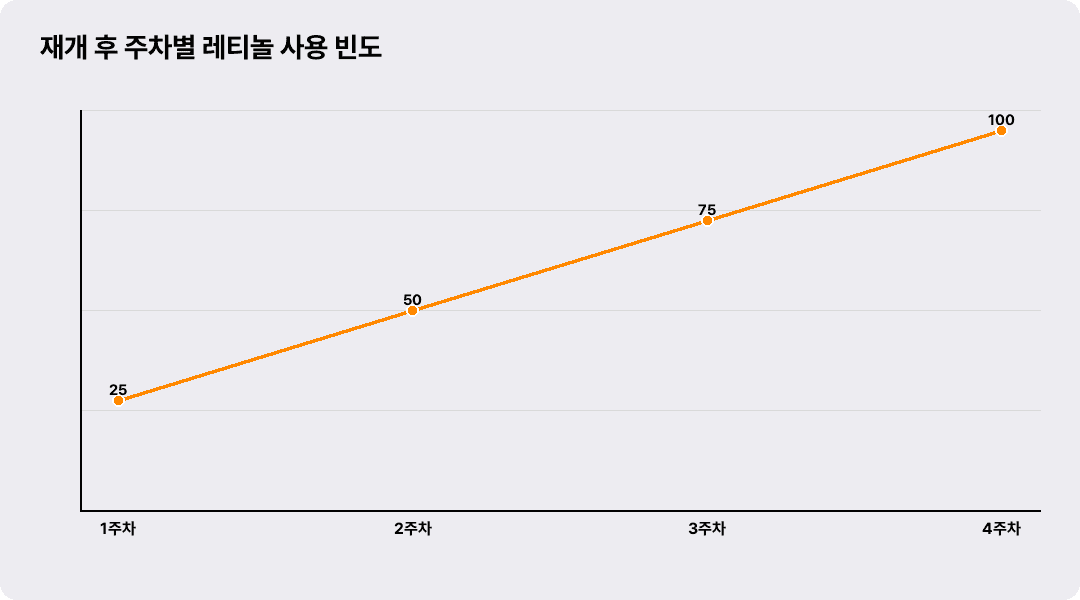
While you're easing the curve up slowly like this, be extra diligent with moisture and sun protection. If stinging or redness shows up as you ramp, just drop back a step and let your skin adjust for a few more days. Everyone adapts at a different pace, so it's best to take it slow and not overdo it. This article is general information, so for adjustments that fit your own skin and treatment schedule, it's safest to decide together with the medical team that treated you.

Frequently asked questions
Q. Why does the advice on how many days to stop differ from clinic to clinic?
A. It's because treatment strength, product concentration, and each person's skin sensitivity all vary. For a gentle treatment, many go with about 3–5 days, and for a strong one, about 5–7 days, but if your skin runs sensitive it's safer to leave more room. That's why it's better to factor in your own skin's condition rather than just the day count.
Q. How soon after a treatment can I apply it again?
A. It's more accurate to judge by your skin's signals than by a set number of days. Once the redness and flaking at the treated area have settled and your skin feels comfortable with just your usual moisturizer, you can start back up at a low frequency. Many people leave about 5–7 days for a gentle treatment and 1–2 weeks for a strong one, but if it still feels tight or raw, give it a few more days.
Q. How should I handle skincare while retinol is on pause?
A. The key is to keep things simple and moisture-focused with low irritation, and to be thorough with sun protection. It's best to avoid adding any new active ingredients during this window. Since your skin is in a sensitive phase, leaning into calming and protection helps with recovery.
Q. When I restart, can I jump straight back to my old frequency?
A. It's safer to ramp up gradually than to go right back to the same frequency. Start at a low concentration once every few days, and as long as there's no irritation, slowly increase how often you use it. If stinging or redness shows up as you ramp, drop back a step and let your skin adjust for a few more days.
![[Wi Young-jin Column] Retinol Adjustment vs Barrier Damage](https://framerusercontent.com/images/ytrEiREJ8Dzp0ifIefbteOXATU.jpg?width=1080&height=1080)


skin
Fraxel CO2: Why Prices Vary & What to Check

skin
How to Choose an Acne Dermatologist: 5 Signs

Contouring & Volume
Nasolabial Folds: When Lifting Isn't Enough

skin
Sculptra Cost: Why Sessions and Vials Matter

Lifting
After Shurink Universe: Wash, Work Out & Drink

skin
Sofwave Before a Wedding: Timing Guide