

Shurink Universe or Classic? Handpieces, pain and speed compared, plus what stays the same.
Published -
Updated -

Author
Wi Young-jin · Chief director
Seoul National University College of Medicine · Seoul National University Hospital Specialist
→
Say you are booked in for Shurink, and the next question back is often whether you want Universe or the original. The names sit close together, the prices differ, the explanations differ slightly too, and a fair number of people end up choosing without ever getting a clear read on what separates them.
Short answer: both focus ultrasound to deposit heat in the deeper layers of skin, and Universe is the follow-up device that adds handpiece and mode options on top of that. So rather than an entirely different treatment, think of it as the same family with a wider treatment experience and range. Once you know which of those differences connects to your own concern, either choice becomes one you can actually stand behind.
This is general information from Beautystone, a skin clinic in Hapjeong, Seoul.
What you'll learn
Whether Universe and Classic share the same underlying principle
How they differ on handpieces, comfort and speed
Which depths focused ultrasound lifting works at
How to judge which choice fits your concern
Shurink has a lot of versions. Here is the map
Shurink is one brand name for a lifting treatment that concentrates ultrasound energy at a point to create heat inside the skin. Within Shurink alone there are versions such as Classic and Universe, and once similar ultrasound devices from other manufacturers join the conversation, comparison starts to feel impossible. Worth flagging early if you are reading from the US: Shurink is a Korean brand name authorised in Korea by the MFDS, and it is not the same device as Ultherapy, which is the FDA-cleared microfocused ultrasound system used in American clinics.
Starting with the shared principle makes it easier. Everything in this family uses focused ultrasound to leave the skin surface alone and create tiny thermal coagulation points only at a set depth. That heat contracts collagen, and over the following months new collagen fills in, which is what reads as firmness.
Focused ultrasound*: an approach that converges several ultrasound beams on a single point so energy concentrates only at a chosen depth. It passes through the surface while doing almost nothing to the epidermis.
Thermal coagulation point*: the very small zone of heat injury created where the ultrasound energy converges. That point wakes the skin's repair response and prompts new collagen.
Research setting out how focused ultrasound creates thermal coagulation points in the dermis and fascial layer to improve skin firmness, and how safe that is makes it clear this treatment is engineered to act only at depth while leaving the epidermal barrier alone. So whether it is Classic or Universe, the starting mechanism belongs to one family.


Universe versus Classic: what actually differs
If the principle is shared, where does the real difference come from? Mostly from the handpieces, and from the treatment experience that follows. Classic is built around firing energy point by point, in shots; Universe keeps that and adds a continuous mode that draws along a line. That single difference is what feeds through into comfort, speed and range.
Category | Classic (original Shurink) | Universe |
|---|---|---|
Handpiece | Mainly point-by-point shots | Shots plus a continuous drawing mode |
Comfort | A deep jolt with each shot | More spread out in continuous mode |
Session pace | Relatively slow | Faster across broad areas |
Range | Mainly the face | Face plus larger areas |
Cartridge depths | Selectable by depth | Selectable by depth (same family) |
As the table shows, Universe is less a stronger treatment than a device with more options. When a continuous mode is available, filling an area does not concentrate the stimulus on one point, and a lot of people find it easier to sit through. Comfort varies widely between individuals, though, and some prefer the short, defined jolt of a Classic shot.
Faster is not automatically better either. It helps when you are covering a large area, but what counts in the end is whether enough energy reached the depth that needed it. So the process of choosing cartridge depth and shot count for your own laxity and treatment area shapes the outcome more than the name of the device.
How focused ultrasound works on skin
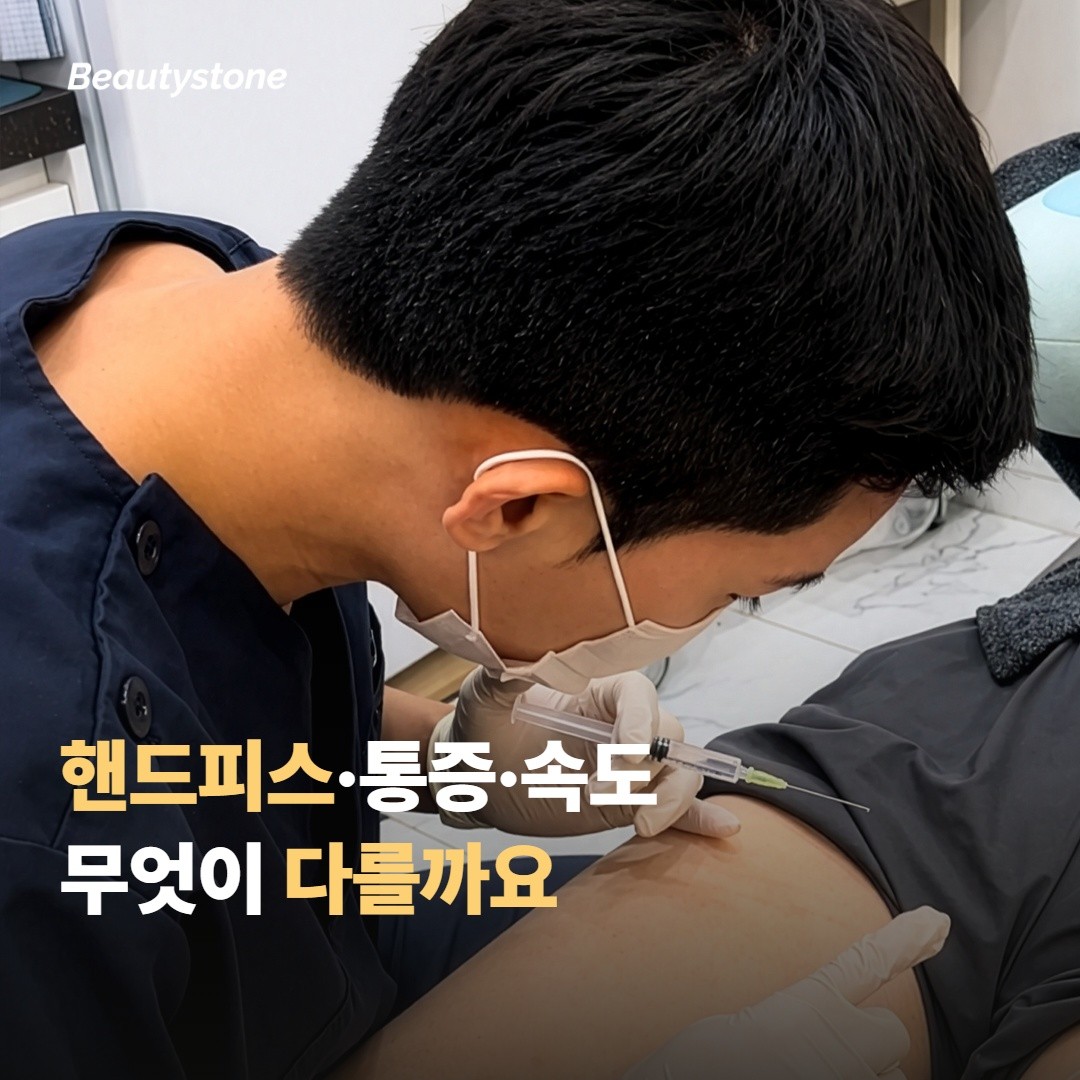
With the device difference clear, here is the process the two share. When focused ultrasound enters the skin, the temperature at the set depth rises momentarily to around 65 degrees Celsius. That heat contracts collagen at the point and leaves behind a very small injury, which flips the body's repair switch.
From there the skin does the work. Fibroblasts*, picking up the injury signal, gather and start producing new collagen and elastic fibres. According to a histological study reporting that focused ultrasound generates not only new collagen but new elastic fibre, lifting the skin, that regeneration unfolds over time rather than on the day.
Fibroblasts*: the cells in the dermis that manufacture collagen and elastic fibres. Woken by heat stimulus, they begin building new tissue.
So focused ultrasound lifting is less a treatment that pulls tight the moment it is done and more one that fills in. You may feel some immediate tightening on the day, but the real change generally settles over two to three months, and for some people it keeps sharpening for close to six. Individual results vary, and that timeline holds whether the device was Universe or Classic.
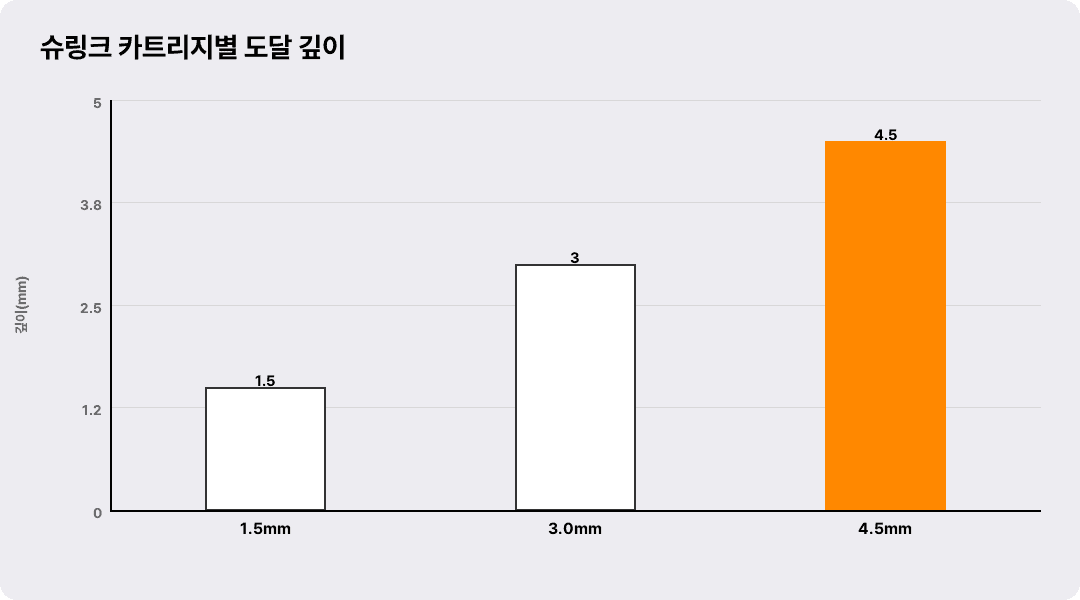
Cartridges are grouped by the depth they reach. The shallow 1.5mm targets fine lines and surface firmness, the mid 3.0mm the dermis, and the deep 4.5mm reaches the fascial layer*. Those depths get combined according to how much laxity there is and where, and that combination does more to separate outcomes than the type of device.
Fascial layer*: a membrane-like layer under the skin that supports the structure of the face. Because it sits at a depth comparable to what surgery lifts, it is a core target for lifting treatments.

Why where you have it done still matters
As above, choosing depth and shot count for your skin matters more than choosing a device name. That is why at Beautystone the consultation does not open with Universe or Classic; it opens with where the laxity actually is and how much stimulus you tend to tolerate. The same device produces different results depending on the depth combination and how shots are distributed. We are a small clinic near Hapjeong Station in Seoul, so there is time to read one person's skin and recovery pace and agree on the next session together. If you are travelling in for treatment, ask how the clinic handles questions once you are home, and keep a provider near you in mind for anything that needs an in-person look.
Frequently asked questions
Q. Does Universe always work better than Classic?
A. Not necessarily. Both use the same focused ultrasound principle, so putting the same energy at the same depth produces broadly similar action. Universe is the device that adds a continuous drawing mode and a wider treatment range. If the plan suits your area and degree of laxity, either can deliver a reasonable result, and individual results vary.
Q. Which one hurts less?
A. Generally, more people report the continuous mode on Universe feeling easier because it spreads the stimulus out. Comfort varies a lot between individuals, though, and some find the short, defined point stimulus of Classic easier to sit with. It also shifts depending on whether numbing cream is used and how deep the treatment goes, so mention your sensitivity in the consultation.
Q. When do results start to show?
A. You may feel some tightening straight after, but the real change comes as new collagen fills in over two to three months, and for some people it keeps sharpening for close to six. Thinking of it as a treatment that fills in rather than one that pulls tight on the day makes the timeline easier to plan around.
Q. How long does one session hold?
A. Around a year is the usual expectation, but the spread between individuals is wide. Age, degree of laxity, lifestyle and sun exposure all shift how long it holds. Consistent sun protection helps, as does agreeing a sensible point to treat again with your provider. Whether the treatment suits you at all, and when, is safest settled with the clinician who examined you.
Related reading
My Shurink barely did anything. Did I do something wrong, or is that normal?
Bruising and swelling after Shurink: how many days, and what to avoid while it settles
How does Shurink lifting for men differ, and where should the focus go?
Shurink duration: why it stops at six months for some and runs nine for others
Content





skin
Why Does Fractional CO2 Take Longer to Heal?

Contouring & Volume
How Many cc Does Forehead Filler Need?

skin
Why Is My Skin Oily but Tight in the Fall?

Hair Removal
Underarm Laser Hair Removal Cost: Do the Math

Tattoo removal
Laser Before a Cover-Up: How Many Sessions?

skin
큐어젯 다운타임, 다음 날 출근과 화장은 언제부터 될까요?