

Oligio X vs. the original Oligio: tips, speed, comfort, and which generation suits you.
Published -
Updated -

Author
Wi Young-jin · Chief director
Seoul National University College of Medicine · Seoul National University Hospital Specialist
→
Plenty of people go in asking about Oligio and come out having also heard the name Oligio X, which is where the confusion starts. It is the same word with an X on the end, so is it just a different price, or a different machine altogether? When two treatment names sit that close together, sorting out the difference once makes the consultation much easier to run.
Short answer: both are monopolar radiofrequency lifting devices from the same family, and Oligio X is the follow-up generation, so the differences show up in the tip line-up, the pace of the session and how output is delivered. Neither is simply better than the other; the right pick depends on your skin and the recovery you want. This article works through where the two diverge and what radiofrequency lifting is actually doing under the skin.
This is general information from Beautystone, a skin clinic in Hapjeong, Seoul.
What you'll learn
Where Oligio X and the original Oligio diverge
How the two compare on tips, speed and comfort
How radiofrequency lifting works in the dermis
How to judge which one suits your skin
Oligio and Oligio X: why the names confuse people
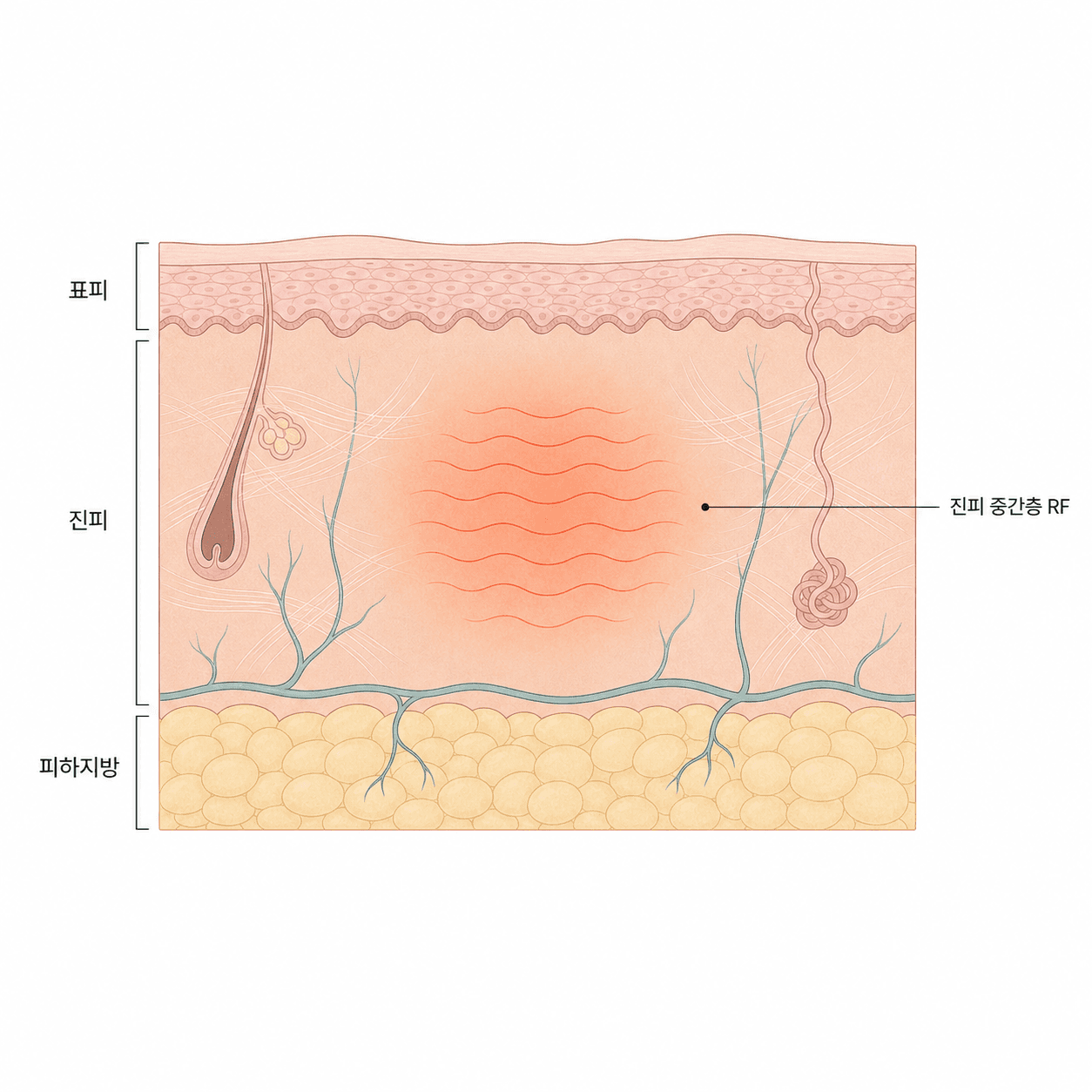
Oligio delivers radiofrequency energy into the skin without breaking the surface, using a monopolar approach that generates heat at depth. When that heat reaches the dermis, it starts the collagen-building response that gradually reads as firmer skin over the following weeks. One thing worth knowing up front if you are researching from the US: Oligio and Oligio X are Korean-market devices authorised in Korea by the MFDS, not FDA-cleared brand names you will find in American clinics, where the monopolar radiofrequency system usually referenced is Thermage.
Monopolar*: an arrangement in which radiofrequency energy flows deep in one direction. It suits delivering heat well below the surface rather than at it.
Dermis*: the thick layer of skin beneath the epidermis. Collagen and elastic fibres are concentrated here, which is why it governs how firm skin feels.
The part that trips people up is that Oligio and Oligio X are not unrelated machines. Oligio X is the improved successor built on the original, so the operating principle is the same monopolar radiofrequency in both. Think of them as one line-up separated by a generation and the whole comparison gets simpler. An animal-model study reporting that monopolar radiofrequency raises collagen synthesis while keeping dermal temperature controlled and avoiding thermal damage makes it clearer how this approach is meant to work below the surface.
What actually differs between the two
The core difference is that the newer device was refined to run faster and more evenly. Where the original Oligio builds up shot by shot, Oligio X has reworked output delivery and a broader tip line-up, so covering the same area tends to take less time with more even heat distribution. Laid out in a table the contrast is easy to read.
Category | Original Oligio | Oligio X |
|---|---|---|
How it works | Monopolar radiofrequency | Monopolar radiofrequency (same family) |
Tips | Mainly the standard tip | A wider range by treatment area |
Session pace | Shot by shot, relatively slow | Faster, thanks to reworked output delivery |
Comfort | A sharp prickle, though it varies | Eased somewhat by more distributed delivery |
Best suited to | Straightforward firmness care | Covering larger areas quickly |
Treat the comfort and speed entries as general tendencies rather than promises. What you feel depends on the area treated, how thick your skin is and the settings chosen, so instead of assuming the X model simply hurts less, it is more accurate to say the same area can feel quite different depending on how it is set up. Whichever generation you pick, individual results vary, and how the clinician runs output and tips for your skin does more to shape the outcome than the badge on the machine.
Moving up a generation does not meaningfully change recovery. Neither device breaks the skin surface, so you can go straight back to your day, with mild redness or a warm feeling settling shortly after.
How radiofrequency lifting works under the skin
What makes radiofrequency lifting work is delivering the right amount of heat to the dermis. Collagen in the skin contracts the moment it takes on heat above a certain temperature, and the body responds to that stimulus by producing new collagen. Run over weeks to months, that process is what registers as gradually firmer skin.
The balance that matters is protecting the epidermis while concentrating heat in the dermis. That is exactly why devices in this family pair surface cooling with output control. Too much heat at the surface means more irritation; too little in the dermis means a weak collagen response. A clinical study reporting improved skin elasticity and collagen rearrangement after monopolar radiofrequency treatment also describes change accumulating over a period rather than arriving at once.
The collagen response does not finish on the day of treatment; it climbs slowly. Roughly speaking, the curve looks like this.
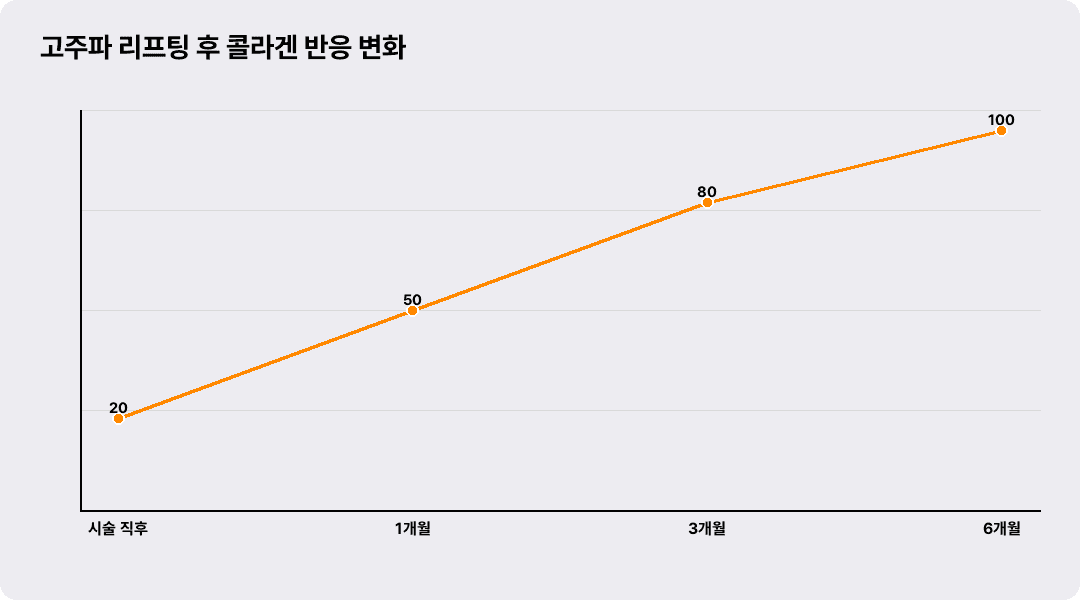
So rather than expecting a large change the moment you leave, it is more realistic to think of it settling in over one to three months. A review describing how energy-based skin tightening draws out collagen and elastic fibre regeneration through a repair response in the superficial dermis stresses the same point: results come through a healing process, not in a single step. How long the effect holds and when to treat again differ from person to person, so decide that with your provider based on how your skin responded.

Why where you have it done still matters
At Beautystone we would rather hear about your skin and what you want out of it than open with a device generation. Whether it is Oligio or Oligio X, how output and tips are handled is what you actually feel, and the same machine has to be set differently for different people. We are a small clinic within walking distance of Hapjeong Station in Seoul, so there is time to read skin thickness and recovery pace and settle both intensity and the next session together. If you are visiting from abroad, ask before booking how the clinic handles questions after you fly home, and have a provider where you live in mind in case anything needs to be seen in person.

Frequently asked questions
Q. Is Oligio X simply better than the original Oligio?
A. It is a successor, so session pace and heat distribution have been refined, but calling it flatly better is a stretch. Both sit in the same monopolar radiofrequency family and share the same underlying principle, and the right choice depends on your skin and the recovery you want. Hearing the difference explained in the consultation is the best way to decide.
Q. How long does a session take?
A. It depends on the area and the settings, but a full face usually runs about 20 to 40 minutes. Oligio X tends to shave a little off that for the same area because output delivery has been reworked. For an accurate figure, have the treatment area assessed in the consultation.
Q. Can I go back to normal straight after?
A. Neither device breaks the skin surface, so you can return to your day immediately. Mild redness or a warm feeling may linger, though it usually settles within a few hours. Do put off heat-raising activities such as saunas and hard exercise for the rest of the day.
Q. When do results show?
A. Because this is a collagen-rebuilding process, change appears gradually over one to three months rather than immediately, and for some people it keeps developing for up to six months. Individual results vary, so instead of treating one session as the whole plan, decide on any follow-up with your provider based on how your skin responded.
Content




skin
Why Does Fractional CO2 Take Longer to Heal?

Contouring & Volume
How Many cc Does Forehead Filler Need?

skin
Why Is My Skin Oily but Tight in the Fall?

Hair Removal
Underarm Laser Hair Removal Cost: Do the Math

Tattoo removal
Laser Before a Cover-Up: How Many Sessions?

skin
큐어젯 다운타임, 다음 날 출근과 화장은 언제부터 될까요?