

Alcohol affects clotting and bruising; caffeine, heart rate. Stop longer before invasive ones.
Published
Updated

Author
Wi Young-jin · Chief director
Seoul National University College of Medicine · Seoul National University Hospital Specialist
→
Once you book your procedure, simple questions like, "Can I drink alcohol and coffee until that day?" can suddenly become quite confusing. To put it simply, it varies depending on the type of procedure and your personal condition, but the general rule of thumb is to manage alcohol intake about 2 to 3 days prior, and focus on limiting caffeine on the day of your treatment.
How do alcohol and caffeine affect the results of a treatment?
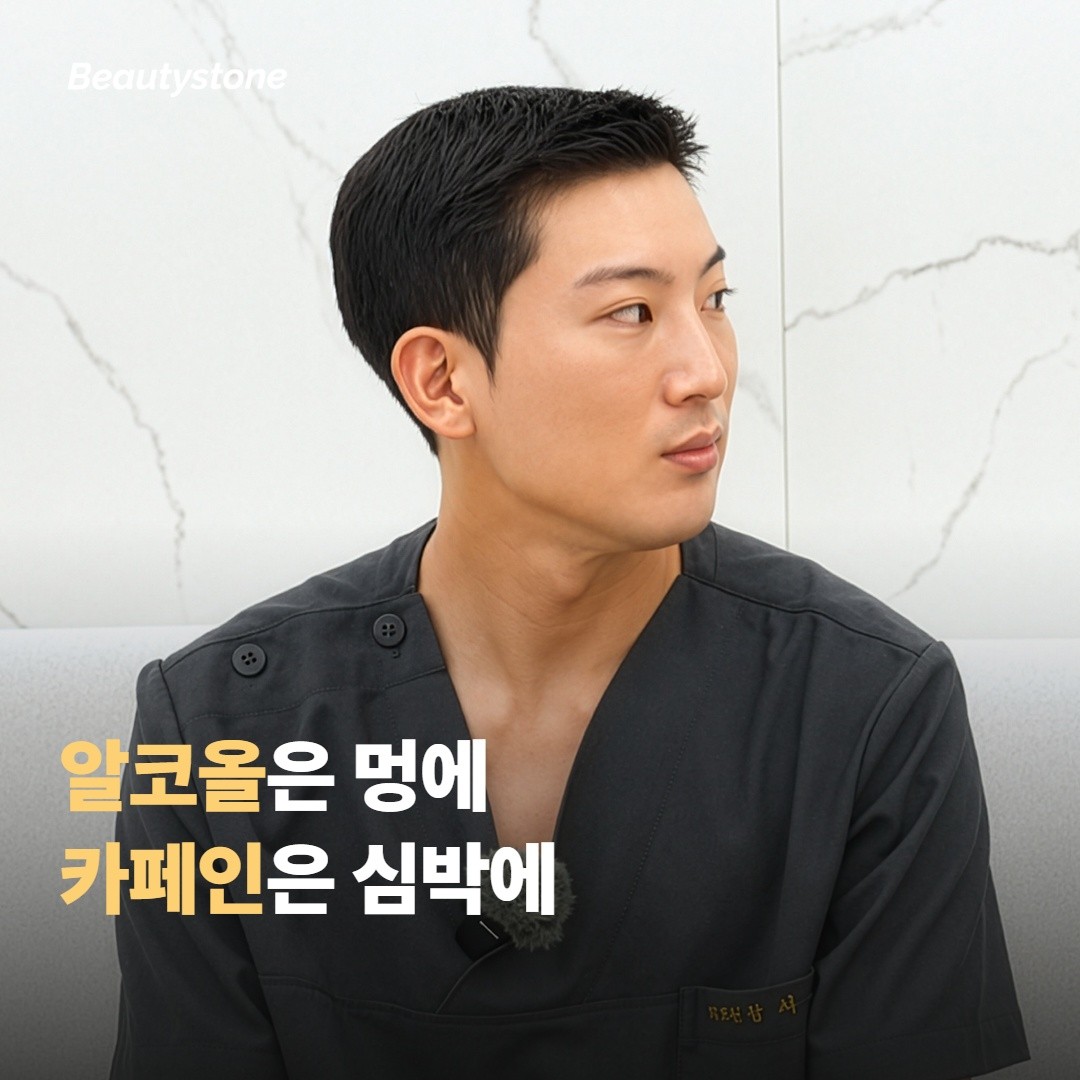
Alcohol dilates blood vessels and prolongs blood clotting time. Consequently, bruising, swelling, and bleeding can become more noticeable than usual. The impact is greater for invasive procedures (such as fillers, microneedling, and lasers), whereas it remains relatively minimal for gentle, surface-level skin care treatments.
Caffeine works a little differently than alcohol. Although it has a minimal impact on bleeding, it can slightly elevate your blood pressure and heart rate, which might make you feel more jittery or tense during the procedure. Even the AAD Procedure Safety Guide advises honestly sharing your physical condition, current medications, and lifestyle habits with your medical team both before and after any treatment.
*Blood Vessel Dilation and Clotting: Alcohol affects the synthesis of blood clotting factors in the liver, which can prolong the time it takes for micro-bleeding to stop. This is one of the main reasons why bruises after invasive procedures can appear darker and last longer than usual.
Recommended periods to avoid alcohol by procedure type
The general recommendation varies depending on how invasive the procedure is. Here is a summary of the general guidelines:
Procedure Category | General Alcohol Avoidance Period (Before Treatment) | Reason |
|---|---|---|
Filler (Hyaluronic Acid) | 2 to 3 days | To minimize bruising |
Botox | 1 to 2 days | To reduce micro-bleeding and swelling |
Laser Toning / Skin Brightening | 1 day | To minimize mild irritation and redness |
RF Microneedling (Potenza, Secret, etc.) | 2 to 3 days | Impact on micro-bleeding and recovery time |
Lifting (Ultherapy, Shurink, etc.) | 2 to 3 days | Swelling and pain sensitivity |
Post-Treatment Recovery (Within 1 week) | 1 week recommended | Impact on the recovery and regeneration phase |
This table serves as a general guideline. If your body takes longer to process alcohol or if you bruise easily, it is safer to avoid alcohol for a longer period.
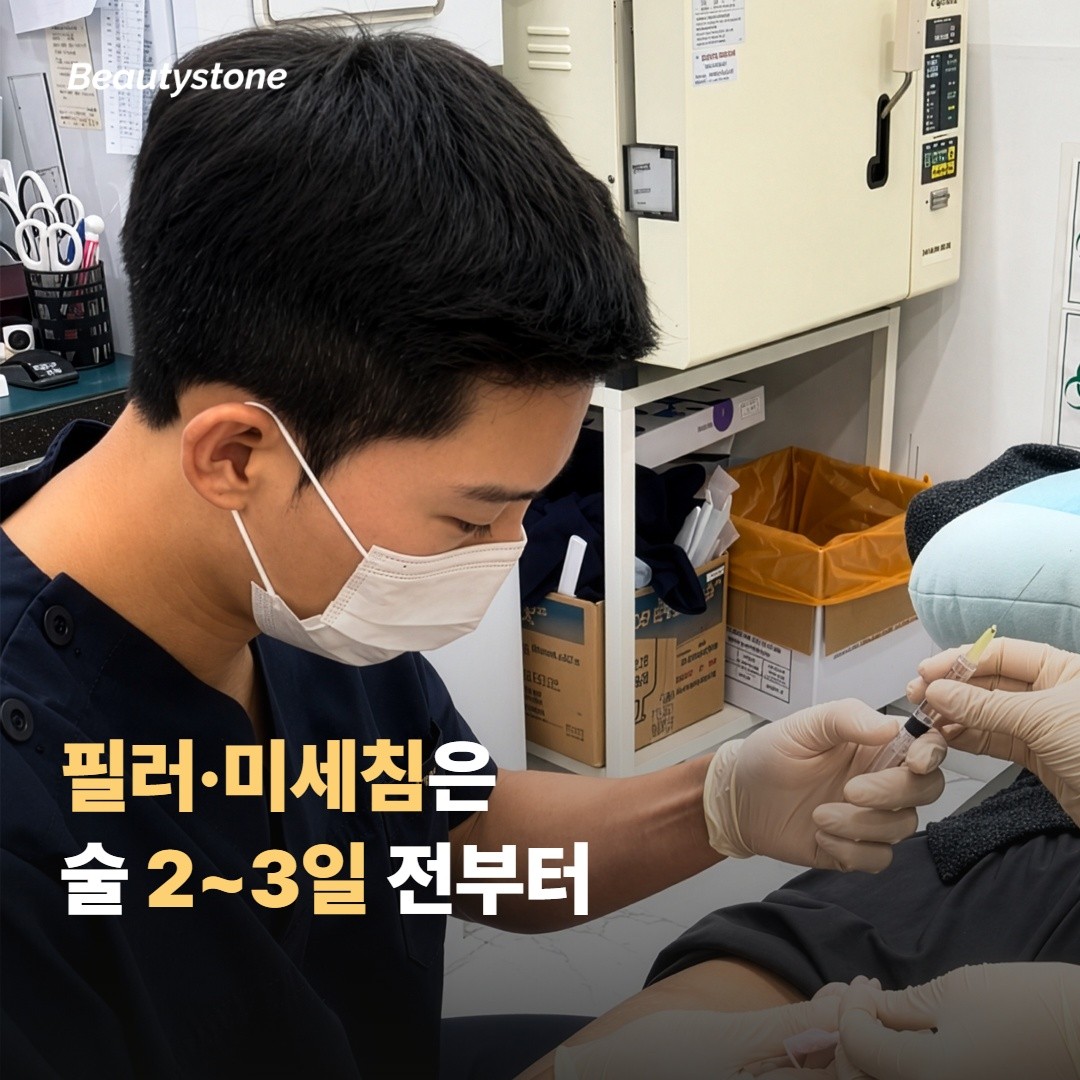
Caffeine management is most important on the morning of your treatment
In most cases, you do not need to cut out caffeine days in advance. However, the morning of your procedure requires a slightly different approach:
Timing | Recommended Action |
|---|---|
Morning of the procedure | Skip your coffee if possible. This helps stabilize your nerves and heart rate. |
2 hours right before the treatment | Avoid energy drinks and caffeinated beverages. |
Immediately after to 24 hours of recovery | Reduce intake if you had a procedure prone to bruising and swelling. |
If you are highly dependent on caffeine | Inform your medical team in advance to prepare for potential headaches or withdrawal. |
Quitting coffee too suddenly on the morning of your treatment can cause a headache. It is much easier on your body if you slightly reduce your intake starting 2 to 3 days before your appointment.

Additional items that are helpful to check
In addition to alcohol and caffeine, there are other factors that can influence your treatment results. It is highly recommended to review these when planning your schedule:
Category | Description |
|---|---|
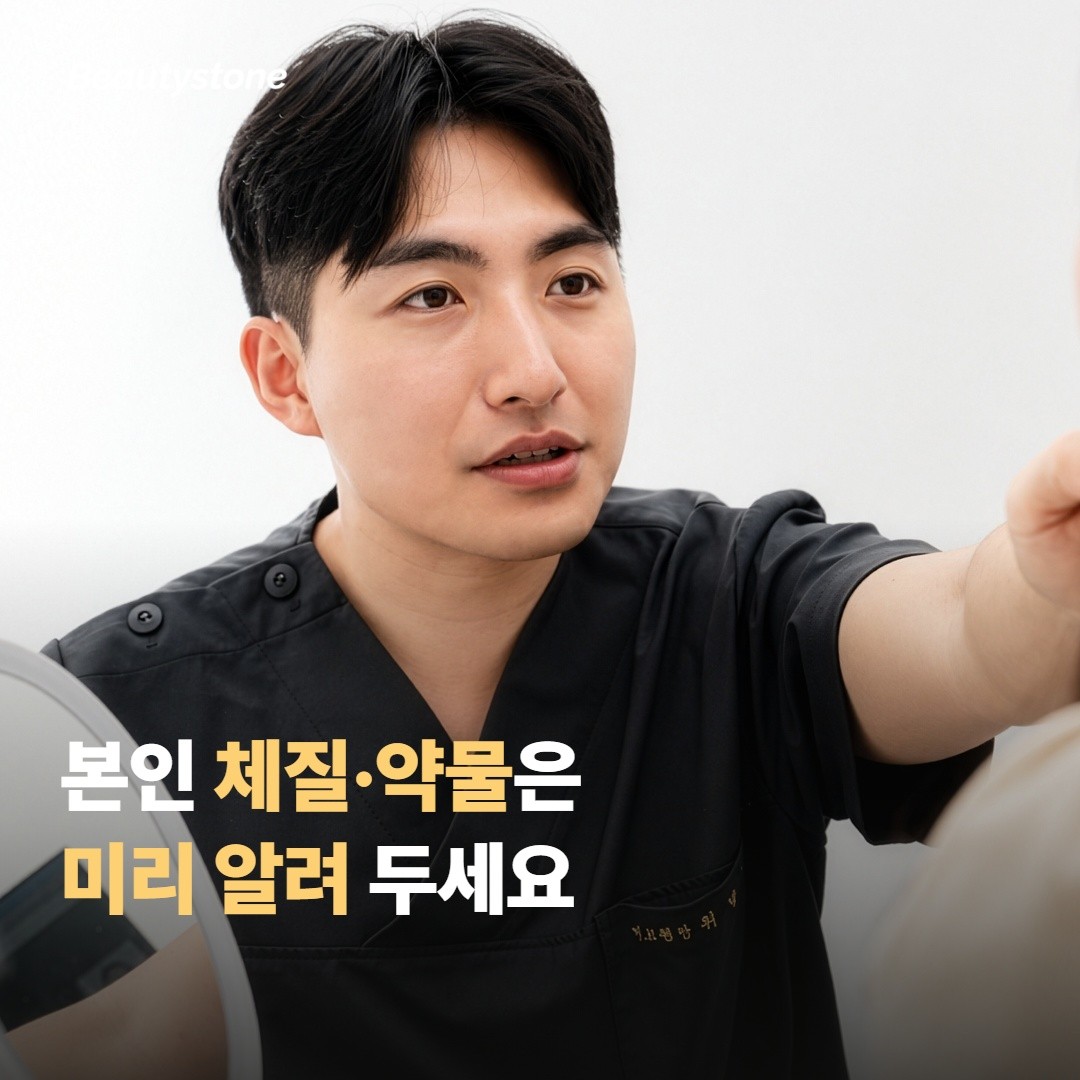
Anticoagulants / Aspirin / Painkillers (Ibuprofen, etc.) | Discuss with your medical team to adjust these 1 week prior. |
High-dose Vitamin E, Omega-3, Ginkgo Biloba Extract | May affect bruising; reduce intake starting 1 week prior. |
Strenuous exercise | Avoid for 24 hours before and after the treatment. |
Saunas / Hot baths / Jjimjilbang | Avoid for 1 week after the treatment. |
UV Exposure | Avoid intense sunlight both before and after the treatment. |
Instances where you must consult your medical team immediately:
If you have bleeding tendencies (such as coagulation disorders)
If you are currently prescribed anticoagulants
If you are pregnant or breastfeeding
If there is an active infection or inflammation in the treatment area
If any of the above apply to you, we may need to reconsider and adjust your treatment schedule.
Frequently Asked Questions
Q. I had some alcohol last night. Can I still receive my treatment today?
A. It depends on the type of procedure. If it is a gentle superficial skincare treatment, it won't have a major impact. However, if it is an invasive procedure like fillers or microneedling, bruising may become more pronounced. It is safest to let our medical team know honestly before your session so they can make the best medical decision. Sometimes, rescheduling is the best approach.
Q. Can I have just one drink at lunch on the day of my treatment?
A. Generally, we do not recommend this. Drinking alcohol during the initial recovery phase right after a procedure often prolongs swelling and bruising, and it can also slightly affect your pain perception. The standard guideline is to avoid alcohol for at least 24 to 48 hours post-treatment.
Q. I am highly dependent on caffeine, so I get a headache if I stop. What should I do?
A. Rather than quitting cold turkey, try slightly reducing your intake 2 to 3 days beforehand. Cutting back to about 50% to 70% of your usual amount and skipping only the morning of the procedure will greatly reduce the risk of a withdrawal headache. If you are still prone to headaches, please let our medical staff know in advance.
This article is for general informational purposes only. Please consult with your attending medical team to plan your personal pre-treatment preparation.



Contouring & Volume
Hip Dip Filler Before and After: 4 Checks

Body
Potenza Treatment Interval: Why 4 Weeks?

Lifting
Ultherapy Before and After: Why Wait 90 Days?

Contouring & Volume
Belotero Revive Cost: 2cc Price vs. 3 Sessions

skin
Lip Hyperpigmentation Laser: Does It Work?

Contouring & Volume
Men's Forehead Filler: Hollow or Just Lines?