

Botox 'lasts 3-6 months,' so why shorter for you? Metabolism, dose, area, and repetition.
Published
Updated

Author
Wi Young-jin · Chief director
Seoul National University College of Medicine · Seoul National University Hospital Specialist
→
🔗 Read More
What is Botox? — 1.1 The History of Botox · 1.2 How It Works
Types — 2.1 Brand Comparison (Botox, Dysport, Nabota, Coretox)
Treatment Areas — 3.1 Wrinkle Reduction (Forehead, Frown Lines, Crow's Feet, Around the Mouth) · 3.2 Contouring (Masseter/Square Jaw, Calves, Parotid Gland)
Things to Keep in Mind — 4.2 Side Effects · 4.3 8 Frequently Asked Questions
To jump straight to the point, the saying "it lasts 3 to 6 months" is both right and wrong. While that is the average range, in reality, some people find it wears off in less than 2 months, while others enjoy the effects for 6 to 8 months. Understanding the factors that cause this difference helped explain why it might wear off quickly for you, and how you can make your results last longer.
The Key is the Speed of Nerve Reconnection
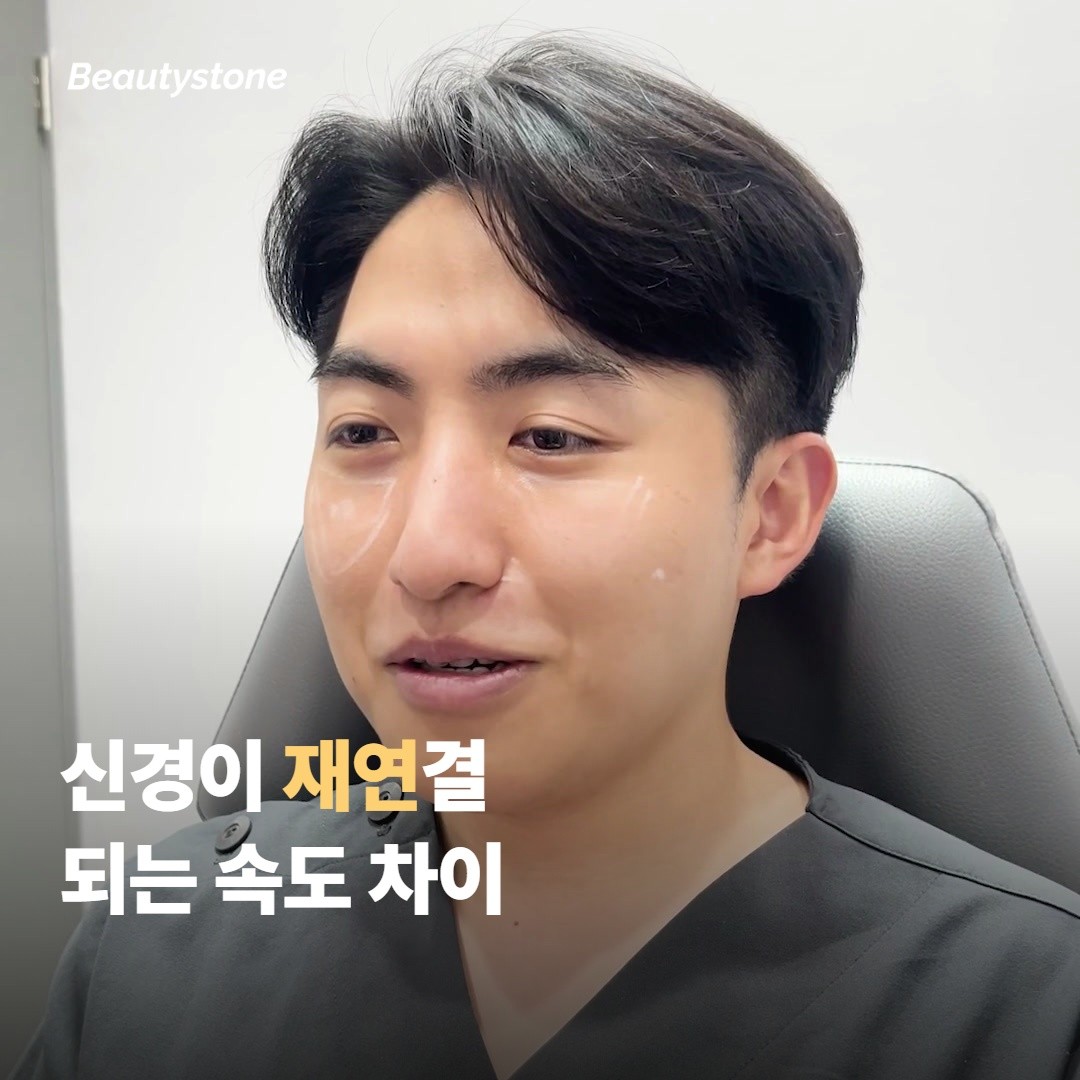
The reason Botox eventually wears off is that our nerves sprout new branches to reconnect with the muscles. Clinical reports suggest that it typically takes about 3 months for nerves to grow new terminals and for muscle weakness to resolve, though this can take longer depending on the treated area. This reconnection speed varies from person to person.
Those with a fast metabolism*, people who exercise intensely, and younger individuals tend to experience faster nerve reconnection. Conversely, using the treated muscles less frequently and having repeated treatments can actually help the effects last longer. Even for the same person, results can vary depending on when they receive the treatment, their overall body condition, and stress levels.
Metabolism*: The rate at which our body breaks down food and chemicals to convert them into energy. The faster your metabolism, the quicker your body processes substances like medications or toxins.
Duration Varies by Treatment Area
Even for the same individual, how long the effects last depends heavily on where the treatment was injected.
Areas with expressive movements, like the forehead and between the brows, have high muscle activity, which tends to lead to faster nerve reconnection. On the other hand, muscles with relatively lower activity, such as the masseter (jaw) or gastrocnemius (calves), often enjoy longer-lasting results.
This is why many people feel that contouring Botox (jaw and calves) lasts longer than wrinkle-reduction Botox.

A Dosage That is Too Low Wears Off Quickly
If the Botox dosage is insufficient, the nerve-blocking effect may not be fully complete. If you felt that your results wore off in less than 2 months after your first session, it may be worth reviewing the dosage with your doctor.
On the flip side, injecting too much can leave your expressions looking stiff and unnatural. Starting with a conservative dose and adjusting based on your personal response is a much safer approach, yielding wonderfully natural results.

How Repeated Treatments Lengthen the Duration
Among patients who have received Botox on a regular, consistent schedule for a long time, many share that "it seems to last much longer now." This is because repeated treatments cause the targeted muscle to naturally shrink (atrophy) and weaken, reducing muscle activity even without active Botox. Typically, we see a pattern where the first treatment lasts 3–4 months, the second lasts 4–5 months, and from the third session onward, it gradually extends to 5–6 months. Naturally, the time between your visits will stretch out, helping you find your ideal personal treatment cycle.
Please rest assured that this is different from the myth that "routine injections ruin your muscles." Muscle function gradually recovers once you stop treatments. Temporary atrophy* is very different from permanent damage. However, for contouring Botox (jaw and calves), if you stop treatments entirely, the muscles will eventually build back up to their original volume over time.

Why We Recommend a 6-Month Interval
The recommendation from contouring Botox clinics to "get treated every 6 months" is not just about keeping up the appearances. It takes about 3 to 4 months for a muscle blocked from nerve signals to fully shrink and for that slimmed state to stabilize. Then, it takes another 2 to 3 months for the muscle to reactivate and begin regaining its volume as the nerves reconnect. Adding this whole cycle together, it takes about 6 months for the changes from a single treatment to fully revert.
Therefore, receiving a touch-up just before the effects completely fade—right as the muscle begins to rebuild—allows the slimming effects to accumulate. This helps the results last longer and allows you to maintain the same beautiful look with smaller doses over time. Treatment too early can increase the risk of developing resistance (antibodies), while waiting too long means the muscle completely recovers, losing the cumulative benefits. This is why the "6-month interval" has become the standard in clinical practice.
Atrophy*: A state where a muscle temporarily decreases in size and strength due to lack of use. It fully recovers once you start using the muscle again.
Tips to Make Your Results Last Longer
Do Not Massage: Avoid rubbing or massaging the treated area firmly for 24 to 48 hours. This prevents the product from shifting to unintended muscles.
Avoid High-Intensity Workouts: Increased blood flow can cause the product to break down faster. It is best to rest on the day of your treatment.
Refrain from Alcohol: Drinking alcohol before and after your session can increase the risk of bruising and slow down your recovery.
Frequently Asked Questions
Q. I feel like my Botox wore off too quickly. What should I do?
First, it is helpful to check if the dosage was sufficient for your muscle size. If the dose was appropriate, you might have a faster metabolism or simply use those muscles quite frequently. Discussing this with your doctor can help determine if a slightly higher dose or a adjusted treatment interval is right for you.
Q. Can I get a touch-up before the effects have fully worn off?
Yes, absolutely. Receiving your next treatment before the effects have fully faded can help maintain a seamless, continuous result. However, getting treatments too frequently can increase the risk of developing resistance, so we recommend consulting your doctor to find the safest interval.
Q. What happens if I develop a resistance to Botox?
If your immune system develops antibodies against the botulinum toxin, you may notice reduced or minimal effects from your treatments. If this happens, your doctor may suggest switching to a different type of botulinum product or taking a break from treatments for a period of time.

![[Wi Young-jin Column] Botox droop: 19-min consult patterns](https://framerusercontent.com/images/0v9Uk6mK3YIdpWJqkstER6nDqM.jpg?width=1080&height=1080)


Lifting
XERF for a Thin Face: Depth vs. Hollowing?

Lifting
Thread Lift Swelling: What's Normal in 5 Days?

Lifting
Thermage Cost: 4 Lines to Check on a Quote

Contouring & Volume
Xeomin Cost: Why Do 50-Unit Quotes Differ?

skin
Back Acne That Won't Clear? It Might Be Fungal

Tattoo removal
Bad Brow Tattoo: Cover It Up or Fade It First?