Dr. Wi Young-jin and Dr. Kim Ga-eul, Directors of Hongdae Beautystone Clinic
Hongdae Beauty Doctor Beauty Stone Clinic

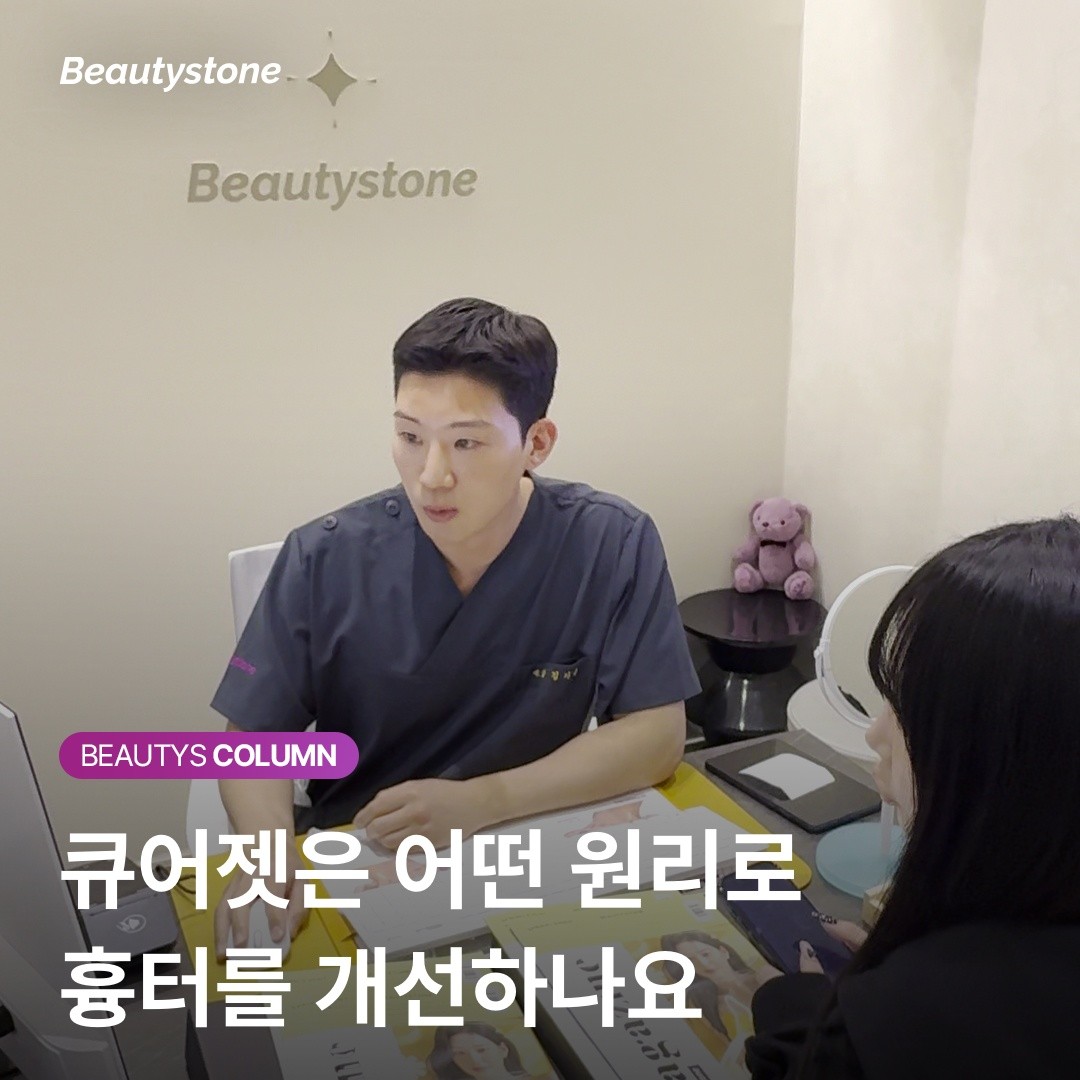
One CureJet Session Fixes Scars? Why That's Risky

One CureJet Session Fixes Scars? Why That's Risky

One CureJet Session Fixes Scars? Why That's Risky

CureJet for pitted scars: which cases work, which don't—honest principles and real experience.

Pitted scars,

can they disappear

with just one CureJet session?

Why that claim is dangerous

These days, with wider daily temperature fluctuations,

the skin barrier weakens,

and more people are bringing up

their long-standing scar concerns again.


Things outside the clinic have been hectic too,

and supply issues for device consumables

have been quietly stressful lately, but

let's get to the main point.


If you search for pitted scar treatment,

you'll find conflicting reviews like "one CureJet session" and "no effect"

all mixed together.


So what is the truth?


After personally seeing several hundred cases,

today I'm revealing what CureJet is really like.


💡 Key takeaways from today's post


Q. Is CureJet

really effective for pitted scars?

A. Yes. However, depending on the scar's depth and shape,

the response can vary greatly.


Q. How many sessions are needed to see visible results?

A. In my experience, changes appear from at least 3 sessions,

and on average, you should expect 5–6 sessions or more.


Q. How is it different from regular laser treatment?

A. It works by

injecting medication with pressure without thermal damage,

so recovery is faster,

but it also has limits for deep scars.


Pitted scars,

why do they form?

큐어젯 효과 없다고 느끼는 이유:

Before treatment, you need to understand why your scars formed

in order to choose the right approach for you.


Pitted scars (atrophic scars) occur when the skin

cannot replenish enough collagen during healing,

leaving the surface indented.


What matters here is the shape of the scar.


  • Ice pick: narrow and deeply punctured like an awl

  • Boxcar: broad with vertical, angular edges

  • Rolling: gently undulating, wave-like depressions


"Doctor, can all my scars be treated with CureJet?"


Honestly, not all of them.


Depending on the type,

the treatment approach changes completely.


How does CureJet

improve scars?
CureJet uses a high-pressure jet flow without needles

to push medication in—a needle-free injection method.


If lasers stimulate with "heat,"

CureJet stimulates the dermis with "mechanical pressure"

to induce collagen regeneration.


  1. Direct delivery of active ingredients to the dermis to stimulate regeneration

  2. No thermal damage, so recovery time is very short


However, rather than using CureJet alone,

the synergy is much greater when combined with lasers.


👨‍⚕️ Dr. Wi Young-jin's practical notes:

In my experience, CureJet showed the best response in

rolling-type scars,


while for ice-pick type scars, its limitations were clear when used alone.


For deep scars, I usually use laser first,

then combine CureJet during the recovery phase.


The claim that "everything can be resolved in one session"

is something even I, as a doctor, cannot promise.


I always make a point of explaining this upfront.


Good candidates for this,

and where it has limits

[자가 진단] 큐어젯이 유독 잘 맞는 파인 흉터 vs 레이저가 꼭 필요한 깊은 흉터

When I recommend CureJet

  • When rolling-type or shallow boxcar scars are the main concern

  • For those put off by scabbing or long recovery after laser treatment

  • For those with sensitive skin seeking a gentler treatment


Cases with limitations:

  • Narrow, deep ice-pick scars

  • When scars extend deep into the lower dermis

  • When dramatic results are expected in just 1–2 sessions


Key summary

CureJet is effective for shallow scars,

but deep scars

require a combined approach.


Treatment process and session guide

Procedure time, including anesthesia, is about 40–50 minutes,

and redness usually settles within a day or two.


Session-by-session changes recommended by the doctor:


  • 1–2 sessions: Skin feels more hydrated (scar change is minimal)

  • 3–4 sessions: Borders of shallow scars gradually soften

  • 5–6+ sessions: Meaningful improvement begins to appear


The downside is cost.

Because multiple sessions are needed,

the total cost can be a burden,

but being able to keep up with treatment consistently

without disrupting daily life is a major plus for working adults.


Frequently Asked Questions (FAQ)

Q1. Will the scar disappear completely?

A. Since this is a process of filling in lost tissue,

it's closer to "improvement" than a "complete cure."

Having realistic expectations is important.


Q2. I still have acne—

can I still get treatment?

A. When inflammation is still active,

scar treatment becomes less effective.


It's best to get your acne under control first

before starting.


Q3. Is it okay if my skin is sensitive?

A. Because no thermal energy is used,

it is less irritating than lasers.

That said, a consultation about the injectable ingredients is essential.


If you have any questions, feel free

to reach out via KakaoTalk or phone.

This is Dr. Wi Young-jin.


You might also like

Botox brands: Is the expensive one really worth it? (The truth from a practicing doctor)

Forehead filler in Hongdae—where should you go?

Red residual marks after eyebrow tattoo removal: 3 causes and solutions

Botox pricing: 50,000 KRW vs. 300,000 KRW—is it really just because it's Xeomin??

[Practical Note] Why Juvelook Glam causes less pain than Rejuran and keeps your glow longer

Pitted scars,

can they disappear

with just one CureJet session?

Why that claim is dangerous

These days, with wider daily temperature fluctuations,

the skin barrier weakens,

and more people are bringing up

their long-standing scar concerns again.


Things outside the clinic have been hectic too,

and supply issues for device consumables

have been quietly stressful lately, but

let's get to the main point.


If you search for pitted scar treatment,

you'll find conflicting reviews like "one CureJet session" and "no effect"

all mixed together.


So what is the truth?


After personally seeing several hundred cases,

today I'm revealing what CureJet is really like.


💡 Key takeaways from today's post


Q. Is CureJet

really effective for pitted scars?

A. Yes. However, depending on the scar's depth and shape,

the response can vary greatly.


Q. How many sessions are needed to see visible results?

A. In my experience, changes appear from at least 3 sessions,

and on average, you should expect 5–6 sessions or more.


Q. How is it different from regular laser treatment?

A. It works by

injecting medication with pressure without thermal damage,

so recovery is faster,

but it also has limits for deep scars.


Pitted scars,

why do they form?

큐어젯 효과 없다고 느끼는 이유:

Before treatment, you need to understand why your scars formed

in order to choose the right approach for you.


Pitted scars (atrophic scars) occur when the skin

cannot replenish enough collagen during healing,

leaving the surface indented.


What matters here is the shape of the scar.


  • Ice pick: narrow and deeply punctured like an awl

  • Boxcar: broad with vertical, angular edges

  • Rolling: gently undulating, wave-like depressions


"Doctor, can all my scars be treated with CureJet?"


Honestly, not all of them.


Depending on the type,

the treatment approach changes completely.


How does CureJet

improve scars?

CureJet uses a high-pressure jet flow without needles

to push medication in—a needle-free injection method.


If lasers stimulate with "heat,"

CureJet stimulates the dermis with "mechanical pressure"

to induce collagen regeneration.


  1. Direct delivery of active ingredients to the dermis to stimulate regeneration

  2. No thermal damage, so recovery time is very short


However, rather than using CureJet alone,

the synergy is much greater when combined with lasers.


👨‍⚕️ Dr. Wi Young-jin's practical notes:

In my experience, CureJet showed the best response in

rolling-type scars,


while for ice-pick type scars, its limitations were clear when used alone.


For deep scars, I usually use laser first,

then combine CureJet during the recovery phase.


The claim that "everything can be resolved in one session"

is something even I, as a doctor, cannot promise.


I always make a point of explaining this upfront.


Good candidates for this,

and where it has limits

[자가 진단] 큐어젯이 유독 잘 맞는 파인 흉터 vs 레이저가 꼭 필요한 깊은 흉터

When I recommend CureJet

  • When rolling-type or shallow boxcar scars are the main concern

  • For those put off by scabbing or long recovery after laser treatment

  • For those with sensitive skin seeking a gentler treatment


Cases with limitations:

  • Narrow, deep ice-pick scars

  • When scars extend deep into the lower dermis

  • When dramatic results are expected in just 1–2 sessions


Key summary

CureJet is effective for shallow scars,

but deep scars

require a combined approach.


Treatment process and session guide

Procedure time, including anesthesia, is about 40–50 minutes,

and redness usually settles within a day or two.


Session-by-session changes recommended by the doctor:


  • 1–2 sessions: Skin feels more hydrated (scar change is minimal)

  • 3–4 sessions: Borders of shallow scars gradually soften

  • 5–6+ sessions: Meaningful improvement begins to appear


The downside is cost.

Because multiple sessions are needed,

the total cost can be a burden,

but being able to keep up with treatment consistently

without disrupting daily life is a major plus for working adults.


Frequently Asked Questions (FAQ)

Q1. Will the scar disappear completely?

A. Since this is a process of filling in lost tissue,

it's closer to "improvement" than a "complete cure."

Having realistic expectations is important.


Q2. I still have acne—

can I still get treatment?

A. When inflammation is still active,

scar treatment becomes less effective.


It's best to get your acne under control first

before starting.


Q3. Is it okay if my skin is sensitive?

A. Because no thermal energy is used,

it is less irritating than lasers.

That said, a consultation about the injectable ingredients is essential.


If you have any questions, feel free

to reach out via KakaoTalk or phone.

This is Dr. Wi Young-jin.


You might also like

Botox brands: Is the expensive one really worth it? (The truth from a practicing doctor)

Forehead filler in Hongdae—where should you go?

Red residual marks after eyebrow tattoo removal: 3 causes and solutions

Botox pricing: 50,000 KRW vs. 300,000 KRW—is it really just because it's Xeomin??

[Practical Note] Why Juvelook Glam causes less pain than Rejuran and keeps your glow longer

Beauty Doctor Hongdae Beauty Stone Clinic

Recommended post

Recommended post

Latest post

Latest post

듀오덤·메디폼 습윤밴드 교체시기 — 며칠 만에 갈아야 할까

skin

듀오덤·메디폼 습윤밴드 교체시기 — 며칠 만에 갈아야 할까

습윤밴드 며칠 만에 갈아야 할까? 듀오덤(하이드로콜로이드)과 메디폼(폼)의 교체 시점, 5가지 교체 신호, 진물 색이 이상할 때 대응까지.

어깨필러의 진짜 매력 — 얼굴 작아 보임, 팔 얇아 보임, 비율까지

Contouring & Volume

어깨필러의 진짜 매력 — 얼굴 작아 보임, 팔 얇아 보임, 비율까지

어깨필러 가성비 좋게 받으려면 HA 단독보다 쥬베룩 글램(PDLLA) + 스컬트라(PLLA) + HA 필러 3중. 시간축이 다른 세 성분이 1회 시술로 2년+ 지속.

보톡스랑 필러, 같은 날 같이 받아도 괜찮을까

skin

쥬베룩은 어디서 왔을까, 콜라겐 부스터 시대를 연 한국 제품

미국 스컬트라(Sculptra)가 못 채운 빈자리를 한국 쥬베룩이 어떻게 채웠을까요? HA 결합으로 즉시 효과 + 장기 콜라겐을 동시에 잡은 K-뷰티 부스터 이야기.

보톡스랑 필러, 같은 날 같이 받아도 괜찮을까

skin

쥬베룩은 피부 안에서 정확히 무슨 일을 하나요

시술 직후엔 효과가 약한데 1개월 뒤 갑자기 좋아 보이는 이유, PDLLA가 끝나도 콜라겐이 남는 이유 — 작용 원리를 알면 이해돼요.

보톡스랑 필러, 같은 날 같이 받아도 괜찮을까

Contouring & Volume

쥬베룩 페이스 3종 — 오리지널·볼륨·스킨, 무엇이 다를까

쥬베룩(30μm)·쥬베룩 볼륨(약 40μm)·쥬베룩 스킨, 셋의 차이가 입자 크기와 농도에서 갈려요. 어떤 부위에 어느 라인을 써야 하는지 한 번에 정리했어요.

보톡스랑 필러, 같은 날 같이 받아도 괜찮을까

Body

쥬베룩 아이와 글램 — 눈가와 바디에 특화된 두 라인

눈가 다크서클과 잔주름엔 쥬베룩 아이(20μm), 엉덩이·허벅지 처짐엔 쥬베룩 글램. 페이스 3종 다음에 알아둘 쥬베룩 특화 라인업이에요.

1:1 Custom Approach

💬 Eng Available 1:1 consultations available via Whatsapp

🌸 Beautystone Clinic attends the Meditox Bangkok Cadaver Workshop 🌸

1:1 Custom Approach