

Not sure when to wash your hair after a procedure? Timing by treatment, plus gentle tips.
Published -
Updated -

Author
Wi Young-jin · Chief director
Seoul National University College of Medicine · Seoul National University Hospital Specialist
→
Once you get home from a treatment, "can I wash my hair tonight?" comes up more often than you'd think. Skipping even a day feels grimy, but you're not sure if water on the treated area is okay.
The short answer: it depends on the type of procedure, but for light facial treatments you can usually wash carefully the same day or the next day. If there's a scab or open wound at the treated area, though, it's better to wait a few more days. The safest rule of thumb is whatever your clinic told you on the day of treatment.
This article rounds up treatment information from Beautystone in Hapjeong.
What you'll get from this article
Why you're told to hold off on washing your hair after a treatment
How the waiting time differs from one procedure to the next
Gentler ways to wash your hair
What's worth checking before you wash
Why am I told not to wash my hair right away?
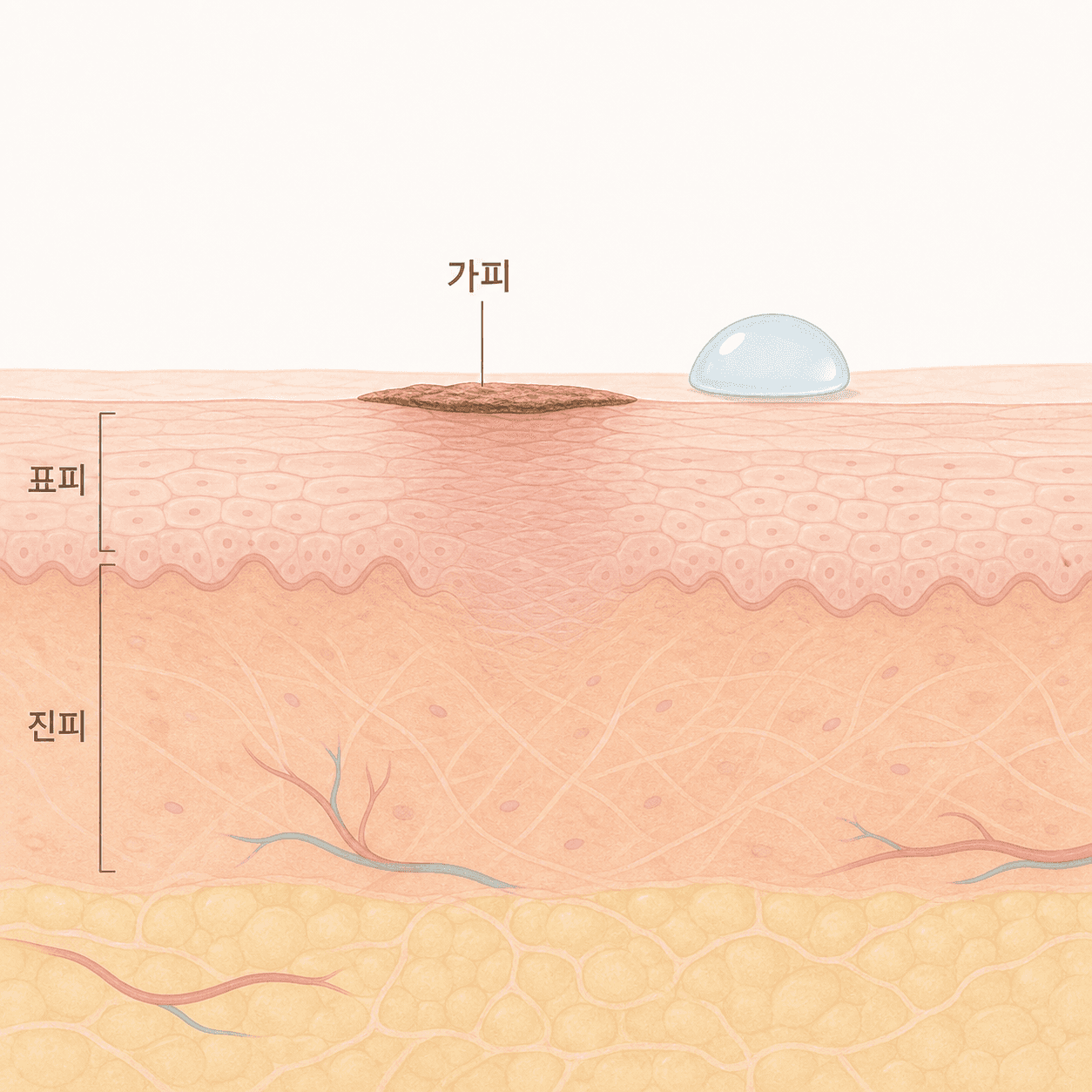
When you wash your hair, hot water, a strong stream, shampoo ingredients, and the head-down posture can all hit the treated area at once. If a crust* has formed there or the skin is still sensitive, that kind of stress can slow healing or knock the crust loose, so you're asked to be careful for a little while.
crust*: the scab that forms on the surface as a wound heals. It's best to leave it alone until it falls off on its own.
It's not that water itself is harmful, but that strong, hot stress too early in the process is. In fact, a study comparing cleansing wounds with tap water versus saline found no meaningful difference in infection or healing between gently rinsing with clean water and saline. So the key isn't "avoid water" — it's "don't go in hard, hot, or too soon."

How does the timing differ by type of procedure?
Recovery time varies from one procedure to the next, so there's no single answer for when to wash your hair. Here's the general pattern people tend to go by.
Type of procedure | When to wash | Notes |
|---|---|---|
Light facial treatment | Same day to next day | Carefully is fine |
Injectables / microneedling | From the next day | Keep it gentle |
Scab or open wound | Wait a few days | Until the crust falls off |
Boiled down to one line: with light treatments you can wash soon, and with treatments that leave a wound it's better to wait a few days. In the end the real guide is the state of the treated area, so decide by looking at both your clinic's advice and how your own recovery is going.

A few things that make washing easier on your skin
Even once you're cleared to wash, it's better to be gentler than usual for the first few days. Here's roughly how the typical waiting times line up across treatments.
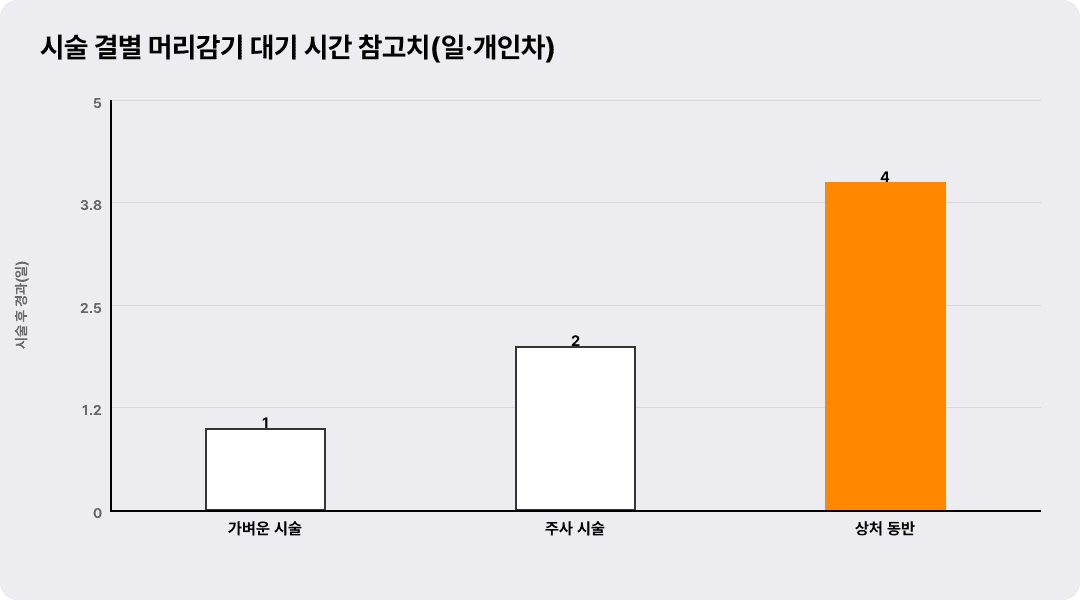
As research showing that harsh antiseptics can actually slow wound healing suggests, gentle contact is best for the treated area. Wash with lukewarm water for a short time, and keep the stream from hitting the treated area directly. Rinse lightly so shampoo lather doesn't sit on the spot for long, and avoid scratching your scalp or the treated area with your nails. For drying, skip the hot setting and use cool air from a distance for extra peace of mind. If your procedure makes keeping your head down for a while uncomfortable, washing with your head tilted back — the way they do it at a salon — can help.

Why Beautystone in Hapjeong?
At Beautystone in Hapjeong, when we walk you through a treatment we tend to cover not just the procedure itself but the small everyday things too — like washing your hair that evening. Even for the same treatment, the right timing shifts with the treated area and how your recovery is going. We're a small clinic within walking distance of Hapjeong Station, so we can listen to each person's daily routine and tailor recovery guidance that won't be a strain.

What to check before you wash your hair
Running through a few things before you wash can help you do it with confidence.
State of the treated area — if there's a scab or wound, ease up on water until it falls off
Water temperature — go lukewarm and quick rather than hot
Direction of the stream — adjust it so it doesn't hit the spot directly
Drying method — use cool air from a distance instead of a hot blast
Washing your hair after a treatment isn't hard once you've got the timing right. That said, this article is just general information — for the right timing and method for your specific procedure, the most accurate guidance comes from the medical team who actually treated you. If pain at the treated area gets worse, or the crust comes off early and fluid keeps weeping, it's safer to get it checked rather than leave it.

Frequently asked questions
Q. Can I wash my hair the evening of the treatment?
A. For a light facial treatment, you can often wash carefully even that same evening. Just keep the water stream off the treated area and wash quickly with lukewarm water. If the procedure left a scab or wound, it's better to wait a few days, so follow the advice you were given.
Q. Is it okay for shampoo to touch the treated area?
A. A quick brush of lather is usually fine, but try not to let it sit on the spot or rub it in. Rinse the lather off lightly and don't scratch the treated area with your nails. A mild, low-irritation shampoo gives you a little extra peace of mind.
Q. I've heard bending your head down to wash is bad — is that true?
A. For some procedures, keeping your head down for a while right after can affect swelling or irritation, so you're told to be careful for a bit. In that case, tilting your head back to wash or keeping it short helps. How careful you need to be varies by procedure, so use the advice you were given as your guide.
Q. My scalp feels awful if I can't wash for a few days — any options?
A. You can rinse just part of your scalp lightly while avoiding the treated area, or ease the discomfort with a waterless dry shampoo. Just be careful not to let anything touch the treated spot directly. If your procedure means waiting a few days, you'll be back to washing as usual once that's past, so there's no need to worry too much.
Further reading


skin
Ellanse Cost: Duration Beats Price Per Visit

Lifting
Alltite RF: Two Effects, Two Timelines

Contouring & Volume
Why Juvelook Volume Quotes Vary by Clinic

men's
Nose Pore Treatment: Aftercare Timing Guide

skin
How Many Sessions Does Eyeliner Removal Take?

Hair Removal
Laser Hair Removal While Pregnant or Nursing