

InMode FX suits thicker skin with early sagging. Who it fits, and when to pick another.
Published -
Updated -

Author
Wi Young-jin · Chief director
Seoul National University College of Medicine · Seoul National University Hospital Specialist
→
Read enough reviews of InMode lifting and they split cleanly: some people were delighted, others felt the change was smaller than expected. Same treatment, so why the gap, and is the problem your face shape or your skin? It is enough to stall the decision.
The honest position is that InMode does not land equally well on every face. There is a fairly defined set of skin conditions and concerns it suits, and there are cases where another treatment is clearly the better call. Working out which side you are closer to first is what keeps expectations from running ahead of the result.
This article covers how InMode works, which face shapes and skin types it suits, and, plainly, when something else would serve you better. The weight is on giving you criteria to decide with rather than marketing copy.
This is general information from Beautystone, a skin clinic in Hapjeong, Seoul.
What you'll learn
How InMode works under the skin
Which face shapes and skin types it suits best
How long collagen takes to fill back in
When another treatment is the better choice
How InMode works under the skin
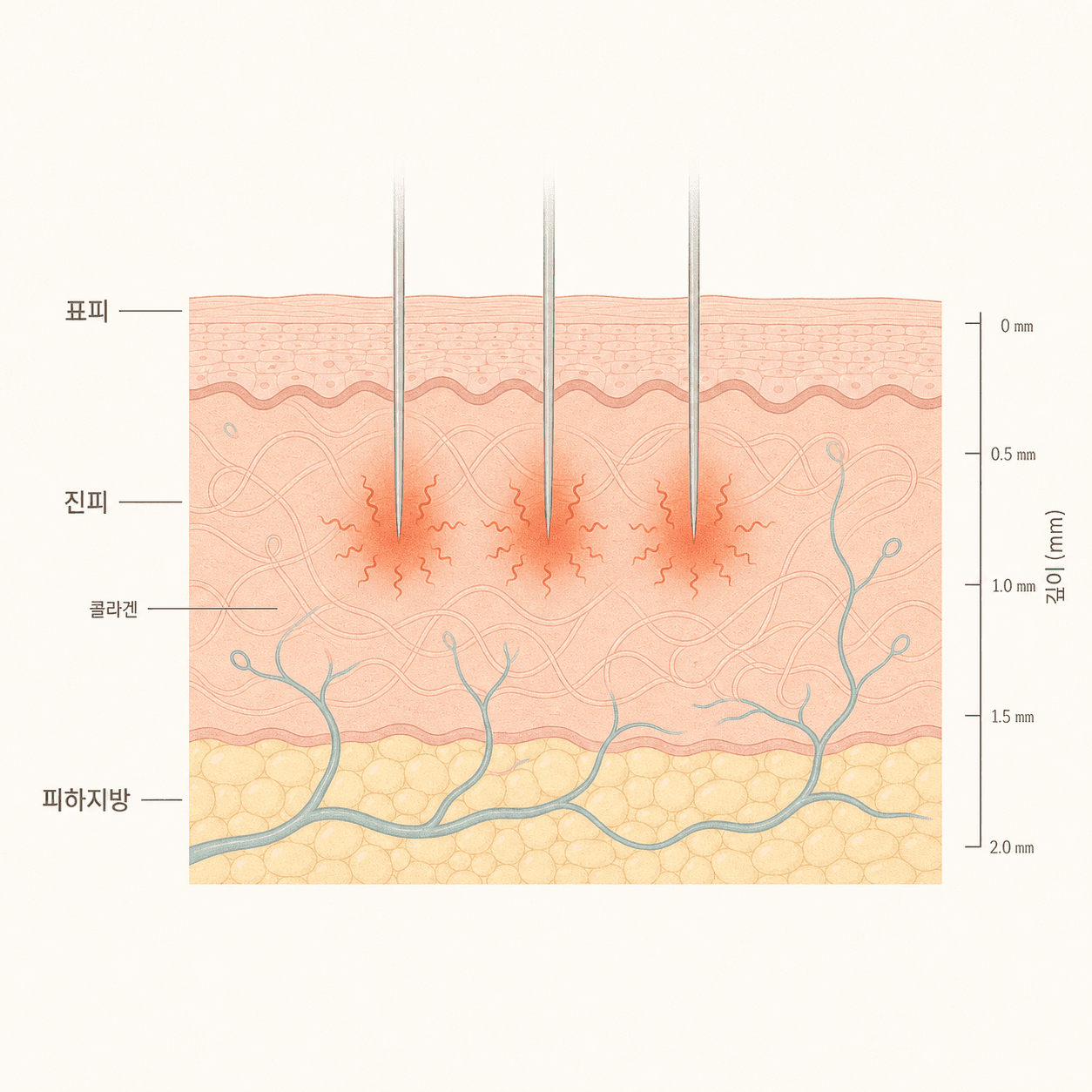
InMode delivers radiofrequency energy into the skin through fine needle tips. The microneedles reach as far as the dermis*, then release heat from the tip to warm the deeper layers. Because the surface is cooled while only the interior is stimulated, it can work at depth with less load on the skin you can see. InMode devices are FDA-cleared in the US, where cleared is the correct term for a device rather than approved.
When the dermis takes on a suitable amount of heat, loosened collagen* fibres contract and produce an immediate sense of tightening, and over time new collagen fills in and the skin gradually firms. An explanation of how radiofrequency energy heats collagen in the deeper layers to contract it immediately, with new collagen then growing over roughly six months to leave skin firmer sets out the broad arc of radiofrequency treatment more clearly.
Microneedles*: very fine needles that make minute contact with the skin. They carry radiofrequency heat from the tip directly into the dermis.
Radiofrequency (RF)*: energy that carries heat into the skin to stimulate collagen. It is used to warm the deeper layers rather than the surface.

Who InMode suits best
InMode tends to suit people whose skin is on the thicker side and whose firmness has just started to slip. Because it works by rebuilding collagen in the dermis, there needs to be a certain amount of skin thickness for the heat stimulus to have room to work with. That is why satisfaction runs higher among people from their mid-thirties to their fifties whose sagging is just beginning or still early.
In terms of face shape, it reads best when the jawline has started to soften or the cheeks have dropped enough to blur the contour. On skin type, oily skin with enlarged pores and heavy sebum, or skin left rough in texture by acne marks, can expect texture to tidy up alongside the firming. Conversely, if your skin is very thin or volume has already receded substantially, the effect may be limited.
Factor | Good fit | Consider carefully |
|---|---|---|
Skin thickness | Thicker, with firmness intact | Thin and dry |
Degree of sagging | Early to moderate | Marked sagging or lost volume |
Texture concerns | Enlarged pores or acne marks alongside | Few texture concerns |
Age range | Mid-thirties to fifties | Little loss of firmness so far |
Treat the table as a broad tendency; results differ between people even inside the same row, and individual results vary. Where you actually sit is best worked out alongside a clinician who has looked at your skin.
How collagen fills in over time
InMode is not a treatment that changes anything dramatically the moment it is done. Heated collagen contracts, so there is some early tightening, but the real change arrives as new collagen slowly fills in. That makes it a gradual firming over weeks to months, and it rewards patience. Sketched out, the trend looks roughly like this.
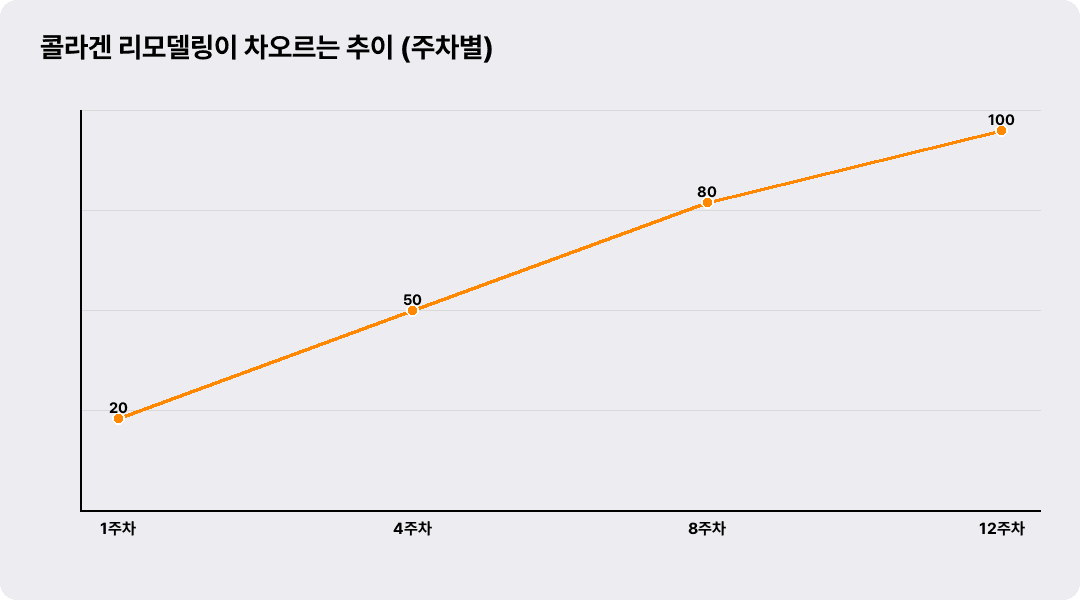
Most people build the change across roughly one to three sessions. Rather than expecting a large shift from a single visit, it is easier to think of the skin being given time to make new collagen and improving steadily. That pace also shifts with skin condition and age.

Why where you have it done still matters
At Beautystone we look at whether your concern is genuinely something this treatment improves before recommending InMode. We take in skin thickness, degree of sagging and any texture concerns, then recommend it if it fits and say so plainly if another direction would serve you better. We are a small clinic within walking distance of Hapjeong Station in Seoul, so there is time to walk each person through the likely number of sessions and the change they can reasonably expect. Recommending only as much as your skin actually calls for matters more to us than adding sessions. If you are visiting from abroad, ask how the clinic handles questions after you fly home and keep a provider near you in mind for anything that needs an in-person look.

When another treatment is the better call
InMode is not a catch-all, and depending on the concern another treatment can fit better. Here is what to have in mind for which situation.
Deep sagging with a marked loss of firmness — something that lifts from below the dermis, such as Ultherapy, an FDA-cleared device, may suit better
Volume loss that has flattened the contour — filling comes first, so Juvelook or filler-type treatments come to mind, and note that Juvelook is not FDA-approved in the US and is authorised in Korea under MFDS
Fine lines, hydration or texture as the main concern — something that works on texture from within, such as Rejuran, is more direct, and it too is not FDA-approved in the US and is authorised in Korea under MFDS
Prominent expression lines — botulinum toxin, an FDA-approved drug, reduces muscle movement and may be needed alongside
Because the starting point shifts with the type of concern, it is better to name the core of your own concern first than to try to solve everything with InMode. Even the same sagging leads in a different direction depending on whether the cause is lost firmness or lost volume. This is general information, so which treatment suits you is safest settled with the clinician who examined you.

Frequently asked questions
Q. Does a single InMode FX session do anything?
A. Some people feel a change after one session as collagen is stimulated, but most build the effect across roughly one to three sessions. New collagen takes time to fill the dermis, so rather than expecting a large shift at once, it is better to see it as gradual firming. Settle the number that suits your skin with your provider.
Q. My skin is thin. Is InMode FX still okay?
A. Thin skin leaves less room for collagen to fill in the dermis, so the effect can be limited. It is less that it is ruled out and more that knowing in advance the change may be smaller than you hoped matters. A different direction may suit thin skin better, so having thickness assessed before treatment is the safer route.
Q. Is recovery after InMode FX long?
A. Because microneedles contact the skin, there can be some redness or fine marks straight after, but these mostly settle within a day or two. Getting back to normal life is comparatively quick. Do avoid saunas and hard exercise on the day, and staying on top of moisturiser and sun protection helps recovery.
Q. I cannot decide between InMode FX and Ultherapy.
A. The two differ in the depth they reach and what they are for. InMode FX weighs towards collagen in the dermis and skin texture; Ultherapy weighs towards lifting from a deeper layer. The recommendation shifts depending on whether the sagging is deep and whether texture is also a concern, so work out the core of your concern together with a clinician.
Content
![[Wi Young-jin] Radiesse 1.5cc: Dilution Sets Longevity](https://framerusercontent.com/images/QuqLpE12goo5udav5ODoigNPs.jpg?width=1080&height=1080)
![[Wi Young-jin Column] Hard lumps after Radiesse nodules](https://framerusercontent.com/images/pHmbmCumB15G7SqX0GFlbXipTY.jpg?width=1080&height=1080)


skin
Why Does Fractional CO2 Take Longer to Heal?

Contouring & Volume
How Many cc Does Forehead Filler Need?

skin
Why Is My Skin Oily but Tight in the Fall?

Hair Removal
Underarm Laser Hair Removal Cost: Do the Math

Tattoo removal
Laser Before a Cover-Up: How Many Sessions?

skin
큐어젯 다운타임, 다음 날 출근과 화장은 언제부터 될까요?