

How Ultherapy Prime pain actually feels by area, and what numbing cream can and cannot do.
Published
Updated

Author
Wi Young-jin · Chief director
Seoul National University College of Medicine · Seoul National University Hospital Specialist
→
Research Ultherapy Prime and you will find as much written about the pain as about the results, which is enough to make anyone tense up before the appointment. Will it sting or burn? Do they numb you or not? It feels like too small a thing to ask, so plenty of people never do.
Short answer: Ultherapy Prime produces a short, sharp jolt at the moment ultrasound energy lands in the deeper layers of skin, the intensity varies by area, and numbing cream or pain relief can take a good deal of it off. The reason accounts swing between "manageable" and "quite painful" is simply that pain thresholds differ, so knowing where it hurts and why beats going in braced for the worst.
Claims like "Ultherapy always hurts" and "numbing makes it work less well" circulate without much behind them, so setting out how the pain arises and what the options are makes the day itself easier.
This is general information from Beautystone, a skin clinic in Hapjeong, Seoul.
What you'll learn
Why Ultherapy Prime produces pain in the first place
How much the sensation differs from area to area
What numbing cream and pain relief actually do
Practical ways to make the session more comfortable
Why Ultherapy Prime hurts in the first place
Ultherapy Prime focuses high-intensity focused ultrasound* at a point to deliver heat deep in the skin. When that energy passes the epidermis and dermis and reaches the SMAS*, a very small coagulation point forms there, and that is the instant you feel a jolt or a sharp pinch. Because the treatment is deliberately stimulating a deep layer so collagen fills back in, feeling something is also a sign the energy is landing. Ultherapy is an FDA-cleared device in the US, where cleared is the correct term for a device rather than approved, and Ultherapy Prime is the newer generation of that platform.
High-intensity focused ultrasound*: a method that converges ultrasound energy at a point to carry heat into the deeper layers of skin. It leaves the surface alone and stimulates depth only.
SMAS*: the firm membrane under the skin that supports the face. Stimulating this layer is what produces the lifting effect on skin that has dropped.
Because the stimulus reaches that deep, removing pain entirely is not realistic, but there are ways to dull the signal. An explanation of how topical anaesthetics block pain signals in the skin sets out how an anaesthetic applied to the skin temporarily stops pain signals travelling from the nerve endings. Ultherapy Prime uses that same principle: numbing cream goes on before the session so the stimulus lands noticeably blunter.
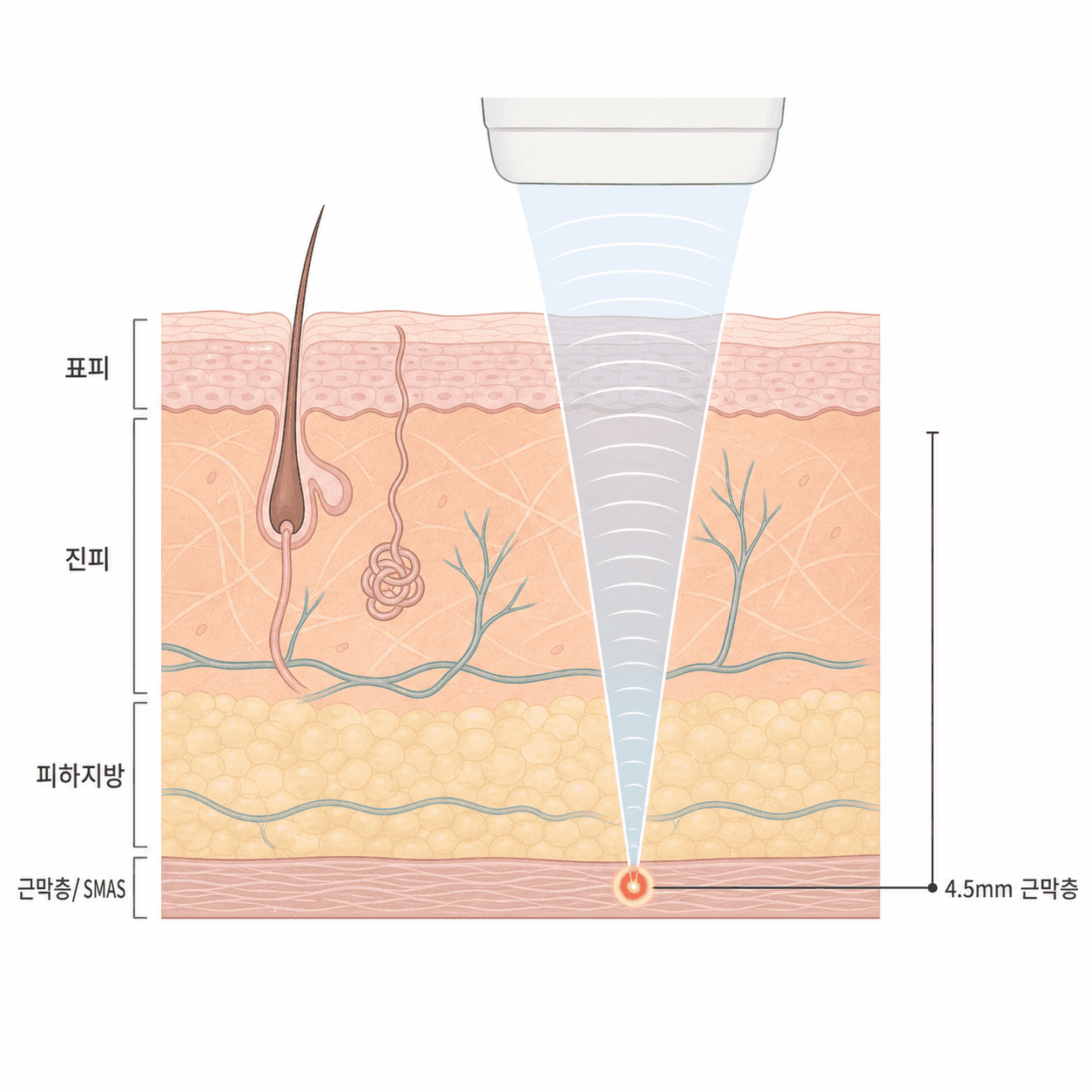

How much it hurts, area by area
Even within one Ultherapy Prime session, what you feel changes with the area. Places close to bone or where the skin is thin transmit the stimulus more sharply; areas with more soft tissue register it less. Knowing roughly what to expect where takes the surprise out of the session.
Area | Intensity | What it feels like |
|---|---|---|
Forehead and hairline | Relatively strong | Close to bone, so the jolt is distinct |
Cheekbones and cheeks | Moderate | A warmth that spreads out |
Jawline and lower jaw | Moderate to slightly strong | Over bone you catch a sharper sting |
Neck | Relatively mild | More soft tissue, so it feels blunter |
Areas near bone, such as the forehead, feeling stronger is simply the stimulus transmitting directly, and it is a normal reaction. The operator adjusts energy by area, so if one spot is unusually sensitive, saying so during the session genuinely helps with managing it. Enduring in silence is not a virtue here; if it is too much, pausing for a moment is fine.
What numbing cream and pain relief actually do
A good deal of Ultherapy Prime discomfort can be reduced with numbing cream and pain relief options. Topical numbing cream* applied beforehand dulls sensation at the skin surface as it takes hold, softening the moment each pulse lands. It usually goes on about 30 minutes to an hour before the session, and because it needs that time to build, arriving with a margin before your appointment is worth doing.
Topical numbing cream*: a cream applied to the skin to temporarily dull sensation at the surface. It has to sit for a set time before the effect comes up.
Plotted out, the way the cream builds over time looks like this.
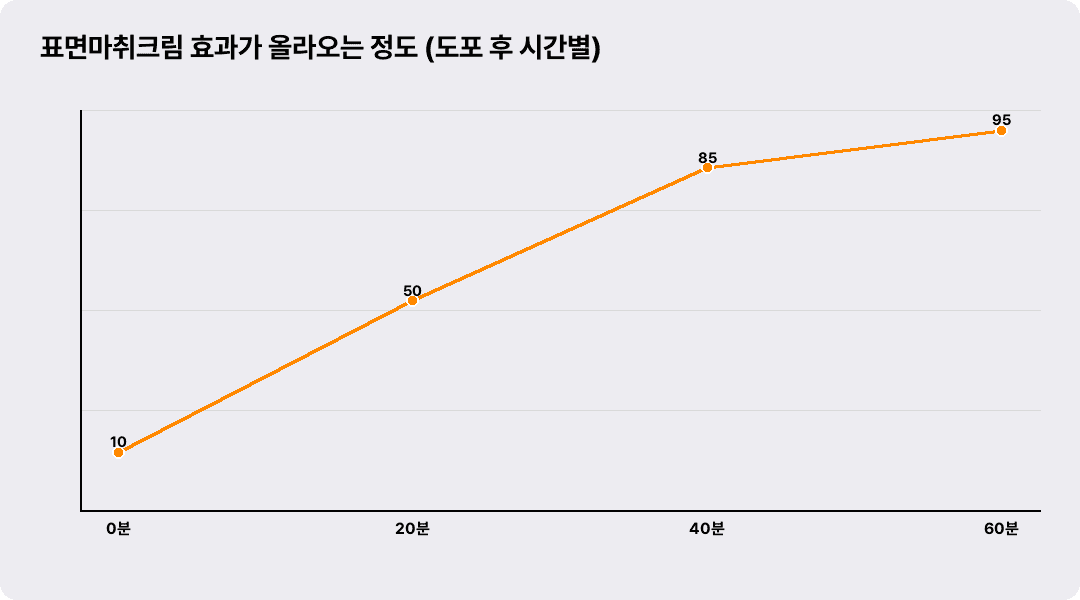
For anyone who finds cream alone insufficient, an oral pain reliever* can be used alongside it, or another approach discussed depending on the area. Numbing does not weaken the result, though. It only dulls sensation at the skin surface; it does not touch the ultrasound energy travelling down to the SMAS. Rather than putting a treatment off because the pain worries you, working out which approach suits you is the calmer path in.
Oral pain reliever: medication taken by mouth to reduce pain. It is sometimes used around a treatment to ease discomfort.
Why where you have it done still matters
At Beautystone we tend to ask how sensitive you are to pain and which treatments you have had before starting Ultherapy Prime. The same setting registers differently from person to person, and knowing that in advance lets us time the numbing and adjust energy to suit. We are a small clinic within walking distance of Hapjeong Station in Seoul, so each person gets walked through it calmly and can say where it hurts as the session goes. If you are visiting from abroad, ask how the clinic handles questions after you fly home and keep a provider near you in mind for anything that needs an in-person look.

Practical ways to make it hurt less
Beyond numbing, a few small things on the day take the edge off. None is a big preparation, but together they change how it registers.
Leave enough time for the numbing cream — giving it time to build makes the first pulse much softer
Cut back on caffeine beforehand — caffeine can sharpen how you register pain
Eat something light rather than arriving hungry — being very hungry makes you more reactive
There are things worth doing during the session too.
Tell the operator immediately where it hurts — the intensity can be adjusted
Breathe out slowly and let the tension go — bracing makes the stimulus register harder
Pause if it gets to be too much — nothing says it has to be done in one run
The character and intensity of the pain shift a little with the area and with your own sensitivity. This is general information, so which approach to numbing suits you and how to manage pain is safest settled with the clinician who examined you.

Frequently asked questions
Q. Can I have Ultherapy Prime without any numbing?
A. People who tolerate pain well sometimes go without numbing cream, but most sessions are done with it applied. Taking the edge off means less bracing during treatment, which makes the whole thing easier to sit through. Whether to numb and how is worth settling with your provider based on your sensitivity and the area being treated.
Q. Does numbing make Ultherapy Prime work less well?
A. No. Topical numbing cream only dulls sensation at the skin surface temporarily; it does not affect the ultrasound energy travelling down to the SMAS. The result depends on whether the energy is delivered properly at depth, so numbing reduces pain without weakening the outcome.
Q. How long does the pain last during treatment?
A. The pain arrives as a jolt at the moment the energy goes in and settles as soon as that point passes. It is not continuous discomfort throughout; it is a series of brief moments where the stimulus lands. The total session length varies by area but is generally not long, so it eases considerably once those moments are behind you.
Q. I am not good with pain. Can I still have this?
A. Yes. Combining numbing cream, pain relief options and adjusted energy makes it manageable for people who are sensitive to pain. Say in advance that you find pain difficult and the numbing can be timed generously and the intensity adjusted. Speaking up beats gritting your teeth, and it tends to improve how you feel about the session afterwards.


Contouring & Volume
Hip Dip Filler Before and After: 4 Checks

Body
Potenza Treatment Interval: Why 4 Weeks?

Lifting
Ultherapy Before and After: Why Wait 90 Days?

Contouring & Volume
Belotero Revive Cost: 2cc Price vs. 3 Sessions

skin
Lip Hyperpigmentation Laser: Does It Work?

Contouring & Volume
Men's Forehead Filler: Hollow or Just Lines?