Does it really not hurt if you apply numbing cream?
"Bearable" is more accurate than "it doesn't hurt."


Scared of laser hair removal pain? Wavelengths, numbing cream timing, and pain by area—explained.
Published -
Updated -

Author
Wi Young-jin · Chief director
Seoul National University College of Medicine · Seoul National University Hospital Specialist
→

In the exam room, about ten people a week
ask me the exact same question.
"Does hair removal really hurt a lot?"
The truth is, it’s hard to say simply
"it hurts" or "it doesn’t hurt."
Depending on the wavelength, the area, whether numbing cream was applied,
and how the practitioner spaces the shots,
even the same person can experience
pain that differs by a factor of two.

Hair-removal lasers work on the principle that melanin in the hair follicle
absorbs light and turns it into heat.
That heat damages the follicle.
But there’s one important point here.
Even with the same hair-removal treatment, depending on the wavelength of light,
the depth it reaches into the skin is different,
and that changes the quality of the pain.
Alexandrite (755nm)
is absorbed relatively near the surface,
while Nd:YAG (1064nm) penetrates deeper.
Diode (800~810nm)
sits somewhere in between.

Director Wi Young-jin’s
key insight
1064nm penetrates deeper, so
the pain is a little stronger than 755.
It feels like being snapped with a rubber band
with a slightly heavier impact —
If numbing cream is applied for 30 minutes,
it’s definitely tolerable.
There was someone similar in today’s clinic too.
A 28-year-old woman
came in for an armpit and bikini-line consultation.
She had tried it once at another clinic,
and because it was "much more painful than expected," she got a refund that day
and came to us just for a consultation first.
She put the procedure on hold instead of booking right away.
Her case was a textbook example of a pain issue.
Her skin tone was slightly darker,
so if we use 755nm Alexandrite aggressively,
it also absorbs into the epidermal melanin, causing more stinging
and slightly increasing the risk of hyperpigmentation.
For patients like this, 1064nm Nd:YAG is
safer.
But because 1064nm has a longer wavelength,
it reaches deeper layers of the dermis, about 4~5mm.
It disturbs the epidermis less, but
because heat is generated deeper down,
the "rubber band snap" sensation feels a little heavier.
The pain level is slightly stronger than 755.
Still, if numbing cream is applied properly for 30 minutes,
it’s a level most people can tolerate.
In fact, when we ask patients after treatment,
about eight out of ten say,
"It was better than I expected."
One thing I definitely need to mention is that
if you go in after applying numbing cream for only 5~10 minutes,
it has almost no effect.
It takes at least 25~30 minutes for lidocaine
to pass through the stratum corneum.
About half of the times people say,
"I applied numbing cream, but it still hurts,"
the real cause is not enough application time.
1064nm goes deeper and feels heavier,
while 755nm is near the surface and stings.
More than the wavelength itself, whether you properly applied numbing cream for
30 minutes
is the real variable that can cut the pain in half for the same person.
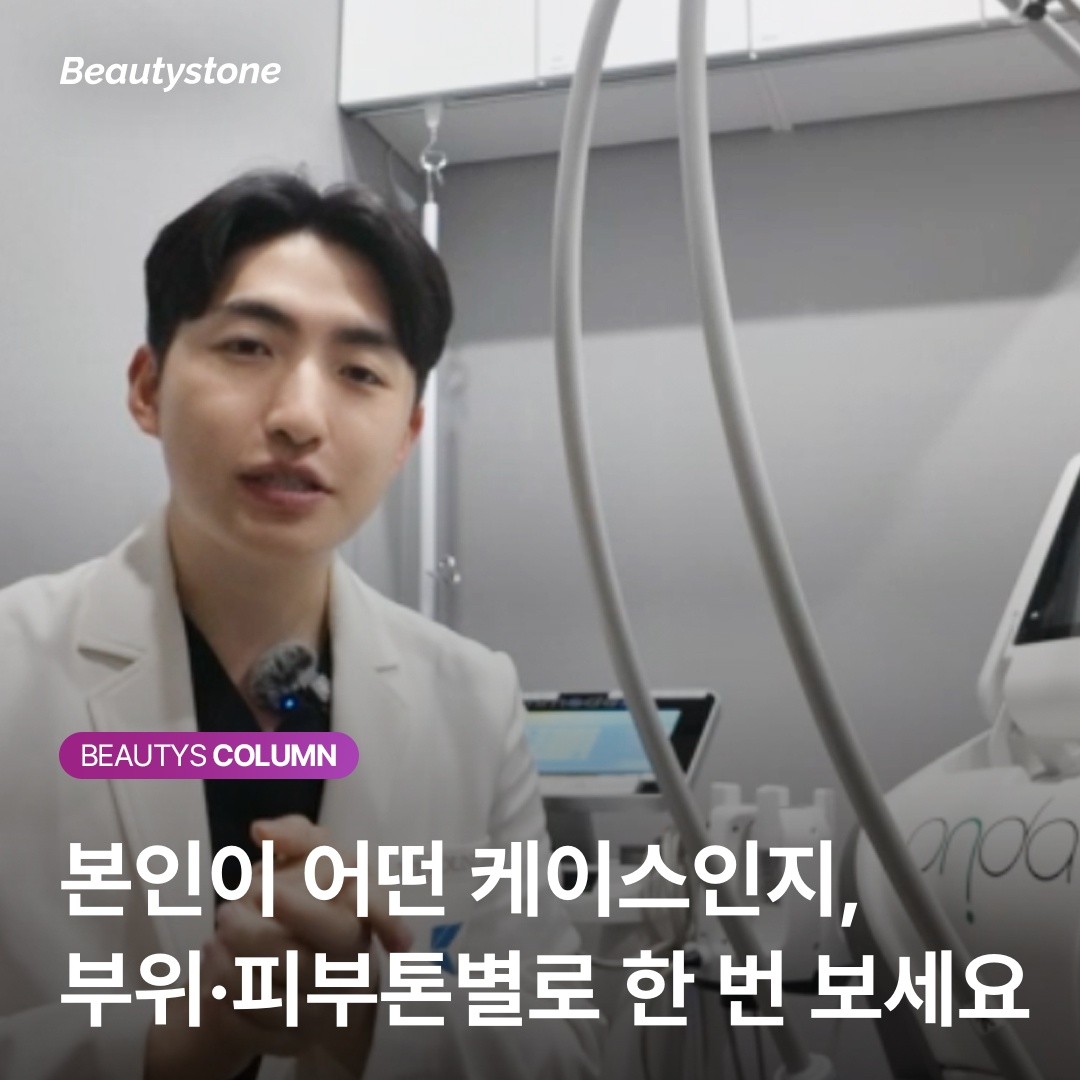
If you can see this at a glance, the difference will be obvious.
Area | Pain scale (10-point) | Recommended wavelength | Numbing cream |
Arms·Legs | 2~3 | 755nm suitable | Optional |
Armpit | 4~5 | Depends on skin tone | Recommended |
Bikini·Hip | 6~7 | 1064nm safe | Required, 30 min |
Philtrum·Chin | 5~6 | Mostly 755nm | Recommended |
If your skin tone is light and hair density is average,
755nm Alexandrite is efficient
and the pain is just a brief sting, so it’s manageable.
If your skin tone is darker or you’ve just tanned,
or if it’s a deep area like the bikini line or hip,
1064nm Nd:YAG is safer,
and you should not skip the 30-minute numbing cream application.
Also, one more thing: when it comes to reducing pain,
the practitioner’s skill matters more than you might expect.
Even with the same device, how tightly the cooling handpiece is
pressed against the skin,
and how the shot intervals are spaced,
can change the perceived pain by 30~40%.
Honestly, this is something that
isn’t listed in the device specs.
A. This question comes up a lot, actually.
Rather than "it doesn’t hurt,"
"it’s tolerable" is more accurate.
Numbing cream reduces surface-level pain by about 70%,
but the heavy feeling of deep-penetrating 1064nm
can’t be completely eliminated.
That said, someone who applies it properly for 30 minutes
and someone who goes in after just 10 minutes
can have pain scores that differ by a factor of two, even for the same procedure.
For sensitive areas like the bikini line and hip,
we always follow the 30-minute rule.
A. This is a little tricky,
because in theory the hair amount decreases,
so it should hurt less, but in reality some people say
the 2nd or 3rd session stings more than the first.
This varies from person to person, because
the hairs in the active growth phase are picked up differently
from session to session.
Usually, from the 4th session onward,
patients say it definitely gets easier.
So the most disappointing pattern is when someone gets 1 or 2 sessions
and then quits, saying
"I can’t do this because it hurts too much."
A. Feeling a burning sensation for about 30 minutes to 2 hours after treatment
is a normal reaction.
Mild swelling around the follicles
or redness is also common.
It usually calms down the same day.
However, if the burning is severe the next day,
or if blisters or oozing appear, there may be a burn,
so you should come in right away.
On the day of treatment, avoid hot water, saunas, and intense exercise,
and if you keep up with moisturizing and sun protection,
most people feel fine by the next day.
If you take away just one thing today,
— pain depends less on the wavelength and more on 30 minutes of numbing cream
and how tightly the practitioner keeps the handpiece against the skin.
In the next post,
"How to not quit hair removal after 1~2 sessions
— why the peak pain comes early"
I’ll break it down.
If you look at it together with the hair-growth cycle,
you’ll really understand
"why people say it gets easier from the 4th session."
This was Wi Young-jin.
GentleMax beard hair removal: Why simply increasing the number of sessions doesn’t help
Underarm laser hair removal: How many sessions will it take? A realistic session breakdown
In the exam room, about ten people a week
ask me the exact same question.
"Does hair removal really hurt a lot?"
The truth is, it’s hard to say simply
"it hurts" or "it doesn’t hurt."
Depending on the wavelength, the area, whether numbing cream was applied,
and how the practitioner spaces the shots,
even the same person can experience
pain that differs by a factor of two.
Hair-removal lasers work on the principle that melanin in the hair follicle
absorbs light and turns it into heat.
That heat damages the follicle.
But there’s one important point here.
Even with the same hair-removal treatment, depending on the wavelength of light,
the depth it reaches into the skin is different,
and that changes the quality of the pain.
Alexandrite (755nm)
is absorbed relatively near the surface,
while Nd:YAG (1064nm) penetrates deeper.
Diode (800~810nm)
sits somewhere in between.
Director Wi Young-jin’s
key insight
1064nm penetrates deeper, so
the pain is a little stronger than 755.
It feels like being snapped with a rubber band
with a slightly heavier impact —
If numbing cream is applied for 30 minutes,
it’s definitely tolerable.
There was someone similar in today’s clinic too.
A 28-year-old woman
came in for an armpit and bikini-line consultation.
She had tried it once at another clinic,
and because it was "much more painful than expected," she got a refund that day
and came to us just for a consultation first.
She put the procedure on hold instead of booking right away.
Her case was a textbook example of a pain issue.
Her skin tone was slightly darker,
so if we use 755nm Alexandrite aggressively,
it also absorbs into the epidermal melanin, causing more stinging
and slightly increasing the risk of hyperpigmentation.
For patients like this, 1064nm Nd:YAG is
safer.
But because 1064nm has a longer wavelength,
it reaches deeper layers of the dermis, about 4~5mm.
It disturbs the epidermis less, but
because heat is generated deeper down,
the "rubber band snap" sensation feels a little heavier.
The pain level is slightly stronger than 755.
Still, if numbing cream is applied properly for 30 minutes,
it’s a level most people can tolerate.
In fact, when we ask patients after treatment,
about eight out of ten say,
"It was better than I expected."
One thing I definitely need to mention is that
if you go in after applying numbing cream for only 5~10 minutes,
it has almost no effect.
It takes at least 25~30 minutes for lidocaine
to pass through the stratum corneum.
About half of the times people say,
"I applied numbing cream, but it still hurts,"
the real cause is not enough application time.
1064nm goes deeper and feels heavier,
while 755nm is near the surface and stings.
More than the wavelength itself, whether you properly applied numbing cream for
30 minutes
is the real variable that can cut the pain in half for the same person.
If you can see this at a glance, the difference will be obvious.
Area | Pain scale (10-point) | Recommended wavelength | Numbing cream |
Arms·Legs | 2~3 | 755nm suitable | Optional |
Armpit | 4~5 | Depends on skin tone | Recommended |
Bikini·Hip | 6~7 | 1064nm safe | Required, 30 min |
Philtrum·Chin | 5~6 | Mostly 755nm | Recommended |
If your skin tone is light and hair density is average,
755nm Alexandrite is efficient
and the pain is just a brief sting, so it’s manageable.
If your skin tone is darker or you’ve just tanned,
or if it’s a deep area like the bikini line or hip,
1064nm Nd:YAG is safer,
and you should not skip the 30-minute numbing cream application.
Also, one more thing: when it comes to reducing pain,
the practitioner’s skill matters more than you might expect.
Even with the same device, how tightly the cooling handpiece is
pressed against the skin,
and how the shot intervals are spaced,
can change the perceived pain by 30~40%.
Honestly, this is something that
isn’t listed in the device specs.
A. This question comes up a lot, actually.
Rather than "it doesn’t hurt,"
"it’s tolerable" is more accurate.
Numbing cream reduces surface-level pain by about 70%,
but the heavy feeling of deep-penetrating 1064nm
can’t be completely eliminated.
That said, someone who applies it properly for 30 minutes
and someone who goes in after just 10 minutes
can have pain scores that differ by a factor of two, even for the same procedure.
For sensitive areas like the bikini line and hip,
we always follow the 30-minute rule.
A. This is a little tricky,
because in theory the hair amount decreases,
so it should hurt less, but in reality some people say
the 2nd or 3rd session stings more than the first.
This varies from person to person, because
the hairs in the active growth phase are picked up differently
from session to session.
Usually, from the 4th session onward,
patients say it definitely gets easier.
So the most disappointing pattern is when someone gets 1 or 2 sessions
and then quits, saying
"I can’t do this because it hurts too much."
A. Feeling a burning sensation for about 30 minutes to 2 hours after treatment
is a normal reaction.
Mild swelling around the follicles
or redness is also common.
It usually calms down the same day.
However, if the burning is severe the next day,
or if blisters or oozing appear, there may be a burn,
so you should come in right away.
On the day of treatment, avoid hot water, saunas, and intense exercise,
and if you keep up with moisturizing and sun protection,
most people feel fine by the next day.
If you take away just one thing today,
— pain depends less on the wavelength and more on 30 minutes of numbing cream
and how tightly the practitioner keeps the handpiece against the skin.
In the next post,
"How to not quit hair removal after 1~2 sessions
— why the peak pain comes early"
I’ll break it down.
If you look at it together with the hair-growth cycle,
you’ll really understand
"why people say it gets easier from the 4th session."
This was Wi Young-jin.
GentleMax beard hair removal: Why simply increasing the number of sessions doesn’t help
Underarm laser hair removal: How many sessions will it take? A realistic session breakdown
"Bearable" is more accurate than "it doesn't hurt."
Theoretically, since there’s less hair, it should hurt less, but in practice, some people say the 2nd or 3rd session stings more than the first.
A burning sensation for about 30 minutes to 2 hours immediately after the procedure is a normal reaction.
Yes, there is indeed a difference. The close contact of the cooling handpiece and the interval between shots can make the perceived pain levels vary by 30% to 40%, meaning the practitioner’s skill actually plays a surprisingly big role.


Latest post
Latest post

Hair Removal
레이저 제모 1회에도 남는 몫이 있어요 — 밀도를 모자이크로 보는 법

Tattoo removal
Why Extremity Tattoos Are Slower to Remove

Tattoo removal
Tattoo Removal Cost: Why Quotes Vary by Area

Tattoo removal
Unused Tattoo Removal Sessions: What Happens?

Lifting
Forehead Thread Lifting: How Far Can It Go?

skin
Skin Booster Prices: What to Check in a Quote
1:1 Custom Approach
1:1 Consultation Whatsapp
🌸 Beautystone Clinic attends the Meditox Bangkok Cadaver Workshop 🌸
1:1 Custom Approach