

Wondering how many Onda sessions it takes to see real results on a double chin? We break down fat reduction vs. skin tightening timelines and what to expect.
Published -
Updated -

Author
Wi Young-jin · Chief director
Seoul National University College of Medicine · Seoul National University Hospital Specialist
→
If you've been staring at your double chin in video calls and wondering whether Onda is worth a try, you're not alone. It's one of the most common questions we hear at Beautystone: How many sessions do I actually need?
The honest answer is: it depends — and the reason it depends is more interesting than most clinics explain. In this article, we'll cover what Onda is, how it targets the double-chin area specifically, what a realistic session plan looks like, what side effects to watch for, and how to tell whether results are on track. Read on.

What Is Onda, Exactly?
Onda (manufactured by DEKA) is a non-invasive body and face contouring device that uses 2.45 GHz microwave energy — the same frequency band used by microwave ovens, but delivered in controlled, targeted pulses through a specialized handpiece called Coolwaves.
That distinction matters when it comes to the double chin. Most energy-based lifting devices — HIFU, RF monopolar, ultrasound — are designed primarily to heat the dermis or the SMAS layer to stimulate collagen. Onda's Coolwaves technology, by contrast, is designed to selectively heat subcutaneous fat while simultaneously cooling the skin surface. That selectivity is what makes it useful for areas like the submental region (the under-chin zone), where a pocket of localized fat coexists with skin that's starting to lose elasticity.
Studies suggest that selective microwave-based heating can disrupt adipocyte (fat cell) membranes and trigger a local inflammatory response that prompts the body to gradually clear damaged fat cells — a process that takes weeks to months, not days. Individual results vary significantly based on the volume of fat present, skin quality, and metabolic factors.
Why Double-Chin Sessions Need a Two-Track Plan
Here's the part that most people don't hear before they book: the double chin isn't just one problem. It's typically two overlapping problems — submental fat accumulation and early skin laxity — and Onda addresses them through two different biological timelines.
Fat reduction track: Microwave energy damages and disrupts fat cells (adipocytes). The body then clears the debris through the lymphatic system over roughly 6–12 weeks. You won't see results immediately after the session — in fact, some mild swelling in the first week can briefly make the area look slightly fuller.
Skin tightening track: The thermal effect of microwave energy on the dermis triggers a secondary collagen-remodeling response. This is slower — typically beginning to show around weeks 4–8 and continuing to mature for up to 3–6 months after the final session.
Because these two processes run on different clocks, a well-designed session plan doesn't treat them as a single outcome. Your provider will typically stagger assessment points to evaluate fat volume reduction separately from skin firmness improvement. The key sentence to keep in mind: fat reduction and tightening are sequential, not simultaneous — and session spacing should reflect that.
Research on subcutaneous fat anatomy confirms that the submental fat pad is anatomically distinct and relatively accessible to energy-based devices compared with deeper visceral fat (StatPearls, NCBI Bookshelf: Anatomy, Subcutaneous Fat).

What a Realistic Session Plan Looks Like
There's no universal formula, but here's how providers at Beautystone typically structure an Onda plan for the double-chin area. Keep in mind that this is a framework — your provider will adjust based on your assessment at each visit.
Sessions 1–2 (fat reduction focus): The first two sessions are usually spaced 4–6 weeks apart. Energy settings are calibrated for deeper penetration into the submental fat pad. These sessions are laying the groundwork — don't expect visible change yet. Most people notice only minor swelling and warmth for a few days.
Assessment at week 8–10: Rather than booking a third session automatically, a good provider reassesses here. Has fat volume noticeably reduced? Is skin starting to firm? This check-in shapes whether additional fat-targeting passes are needed or whether the plan pivots toward maintenance and tightening optimization.
Sessions 3–4 (tightening and refinement): If fat reduction is on track, later sessions may use slightly different settings or handpiece positioning to focus on the skin-tightening response. This phase is about consolidating the result, not adding more aggressive fat disruption.
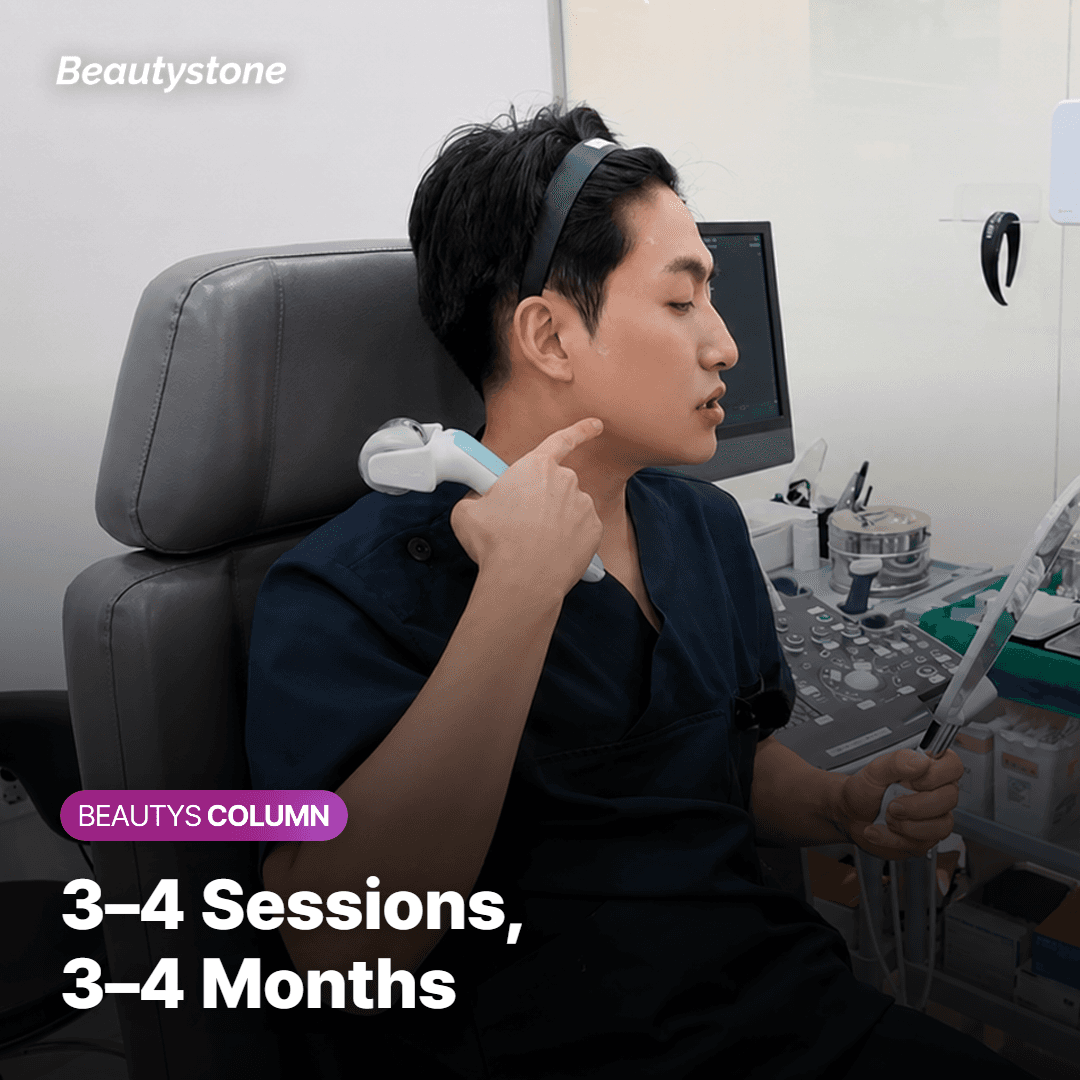
Typical course length: Most double-chin plans involve 3–4 sessions over roughly 3–4 months. Some people with higher fat volume may benefit from 5 sessions; others with mild concerns may see adequate results at 2. Individual results vary.
One thing worth knowing: Onda is not a replacement for deoxycholic acid (DCA) injections or surgical liposuction when fat volume is substantial. It's most effective for mild-to-moderate submental fat in combination with early-stage skin laxity — not for dramatic volume reduction. Talk to your provider honestly about your expectations before committing to a plan.
When Will You Start Seeing a Difference?
The most common expectation mismatch we see is this: people book Onda expecting visible change after the first session, and when nothing dramatic happens, they assume it isn't working.
Here's what a more realistic timeline looks like:
Days 1–7: Mild warmth, possible redness, and some swelling under the chin are normal. This is not a result — it's inflammation, which is part of how the treatment works.
Weeks 2–4: Swelling resolves. Some people start to notice very subtle changes in jaw definition, but many don't notice anything yet. This is normal.
Weeks 6–10: The first measurable fat reduction becomes visible for most people. The chin-to-neck angle often becomes slightly sharper. Skin firmness may also start improving.
Weeks 12–20: The collagen-remodeling response peaks. This is usually when the most noticeable improvement in skin tightness becomes apparent — well after the fat reduction phase has stabilized.
6 months post-final session: Results are typically at their fullest at this point. From here, the primary concern shifts to maintenance — how weight changes, lifestyle habits, and further natural aging interact with the result.
Individual results vary. People with significant volume of fat, very lax skin, or underlying weight fluctuations may see slower or less dramatic changes than those with moderate localized concerns and stable weight.

Side Effects and Risks to Know
Onda is generally considered a low-downtime procedure, but that doesn't mean risk-free. Here's what's typical and what to watch for.
Common, expected side effects:
Redness and warmth: Usually resolves within a few hours to a day.
Mild swelling: Especially under the chin. Typically settles within 3–5 days.
Temporary skin sensitivity: The treated area may feel tender to the touch for a few days.
Mild bruising: Less common but possible, particularly in those prone to bruising. Usually fades within a week.
Less common but possible:
Prolonged swelling: If swelling persists beyond 2 weeks, let your provider know.
Irregular skin texture: Rare, and usually temporary. Consistent with the inflammatory response in the treated layer.
Temporary numbness: Some people notice mild sensory changes in the treated area. This typically resolves within a few weeks.
If you notice spreading redness, fever, worsening pain beyond the first 48 hours, or any signs of skin breakdown, seek medical care right away. These are not typical post-procedure experiences and should be assessed promptly.
People with active infections in the treatment area, metal implants near the submental region, or certain implanted electronic devices (including pacemakers) are generally not candidates for microwave-based treatments. Your provider will screen for contraindications at your consultation.

Is Onda Worth It for a Double Chin? Who's a Good Fit
The short answer? For the right candidate, yes — with realistic expectations.
You're likely a good fit for Onda double-chin treatment if:
You have mild-to-moderate submental fat — not a large volume, but more than just loose skin.
Your skin has some laxity but hasn't significantly lost elasticity (early-to-mid stage).
You're at or near a stable weight — significant weight fluctuations after treatment will affect results.
You're willing to wait for results — 3–6 months, not 3–6 days.
You prefer a non-invasive option with minimal downtime over a surgical approach.
You may want to consider other options if:
Your double chin involves primarily skin laxity with minimal fat — in that case, HIFU or RF lifting may be more appropriate.
Fat volume is substantial — Onda's modest fat reduction effect may not meet your expectations; DCA injections or liposuction may be worth discussing.
You want fast, dramatic results — microwave-based fat disruption is a gradual, biological process.
That said, one of the reasons Onda is often chosen for the double-chin area is that it doesn't force a choice between fat and tightening. A well-planned multi-session course can address both — just on different timelines. Ultimately, the choice depends on your anatomy, your goals, and your patience for a slow-build result. Everyone's skin is different.
The Bottom Line
Onda Coolwaves can be an effective option for the double chin — but the results are built session by session, not session by session immediately. Here's a quick recap:
Double-chin concerns involve both fat and laxity, and Onda addresses each through a different biological process with a different timeline.
Most plans involve 3–4 sessions over 3–4 months, with an assessment checkpoint after the first two.
Fat reduction typically becomes visible around weeks 6–10; skin tightening matures around months 3–6.
Side effects are generally mild and short-lived, but spreading redness, fever, or worsening pain should be reported immediately.
Like any procedure, it comes with trade-offs — primarily the time investment and the gradual pace of results. If you're considering Onda for your double chin, a thorough consultation is the best way to assess whether your anatomy is a good match and what a realistic plan looks like for you.
Beautystone is a dermatology clinic in Seoul's Hapjeong area. If you'd like to explore current offers or learn more, visit /en/promotion.
Frequently asked questions
Q. Does Onda hurt on the under-chin area?
A. Most people describe a warming sensation rather than sharp pain during the treatment. The Coolwaves handpiece actively cools the skin surface, which helps manage discomfort. The under-chin area tends to be well-tolerated, though individual sensitivity varies. A topical numbing cream can be applied beforehand if needed — ask your provider at your consultation.
Q. How long do Onda double-chin results last?
A. Results are considered long-lasting once fat cells are cleared, since those specific cells don't regenerate. However, remaining fat cells can still enlarge with weight gain, and ongoing skin laxity is a natural part of aging. Most people maintain results for 1–2 years with stable weight before considering a touch-up session. Individual results vary.
Q. Can I combine Onda with other treatments for the double chin?
A. Yes, combination approaches are common. Onda is sometimes paired with DCA injections for greater fat reduction, or with RF lifting treatments to enhance the skin-tightening component. However, timing matters — your provider will usually allow several weeks between different energy-based treatments in the same area to avoid over-treatment and let each modality's response run its course.
Q. How soon can I go back to daily activities after Onda on the chin?
A. Most people return to normal daily activities the same day or the day after treatment. Redness and mild swelling usually settle within a few days. Strenuous exercise, saunas, and direct heat exposure are typically avoided for 48–72 hours. There's no dressing or wound care required.
Content


skin
Why Does Fractional CO2 Take Longer to Heal?

Contouring & Volume
How Many cc Does Forehead Filler Need?

skin
Why Is My Skin Oily but Tight in the Fall?

Hair Removal
Underarm Laser Hair Removal Cost: Do the Math

Tattoo removal
Laser Before a Cover-Up: How Many Sessions?

skin
큐어젯 다운타임, 다음 날 출근과 화장은 언제부터 될까요?