

Why does the 4-week interval between pico toning sessions matter more than the device name? Here's what actually drives the results — and the cost.
Published
Updated

Author
Wi Young-jin · Chief director
Seoul National University College of Medicine · Seoul National University Hospital Specialist
→
If you've been researching pico toning, you've likely fallen down a rabbit hole of device names, wavelength specs, and per-session price comparisons. You're not alone — it's one of the most common patterns we see before a first consultation. In this article, we'll cover what pico toning actually is, why the 4-week interval between sessions matters more than which device is used, how epidermal and dermal pigment respond differently, and what drives the real cost of a full treatment plan. Below, we walk through each of these questions in plain language.
What Is Pico Toning, Exactly?
Pico toning is a low-fluence laser technique that uses picosecond pulse durations — pulses measured in trillionths of a second — to target melanin in the skin without generating enough heat to cause visible downtime. The "toning" label distinguishes it from high-fluence pico treatments used for tattoo removal or deep pigment; toning sessions are gentler, designed for repeated use over a series.
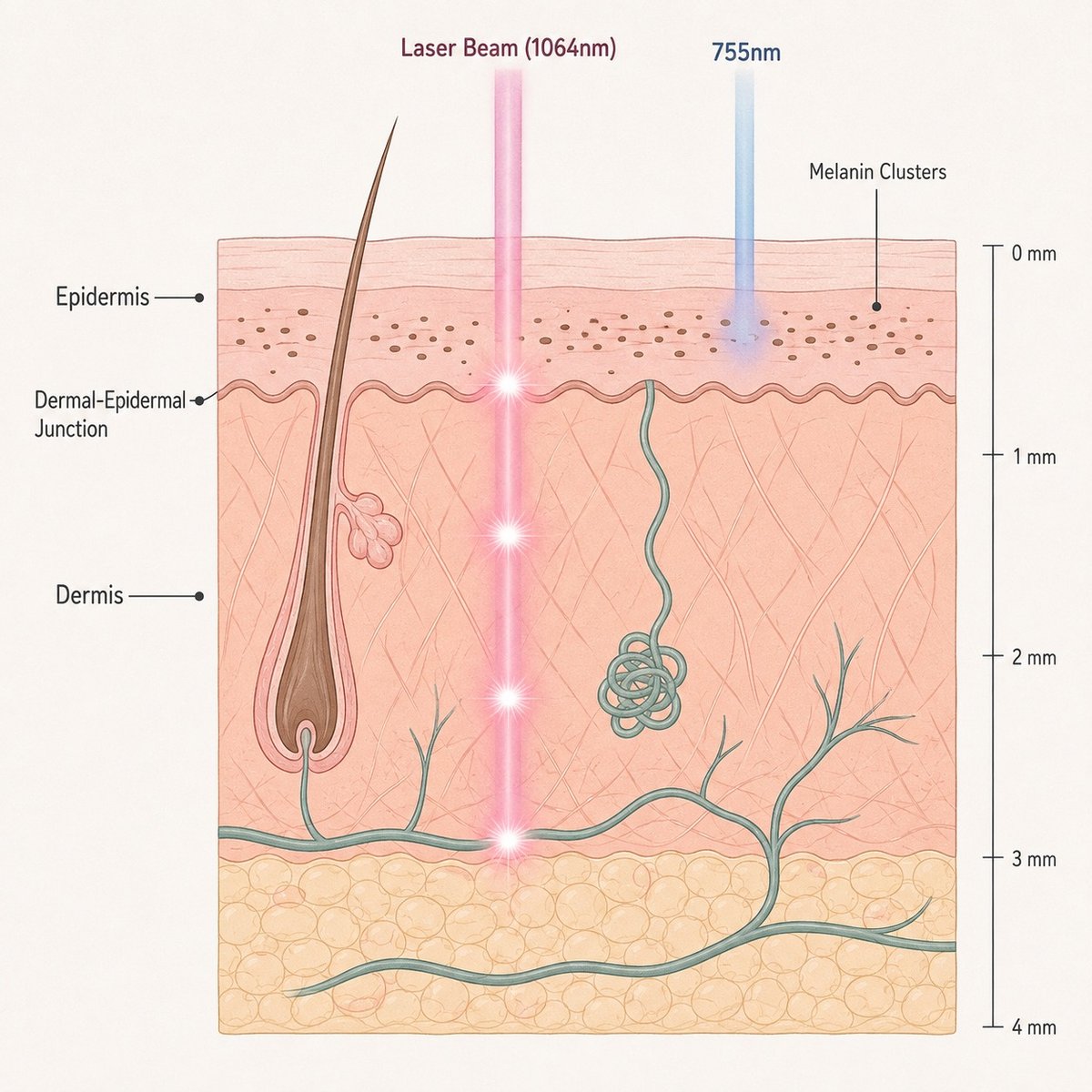
The name covers a range of approaches. A clinic might use a 1064nm Nd:YAG wavelength, a 755nm alexandrite wavelength, or a combination — each reaching different depths and targeting different types of melanin. The device brand matters far less than whether the protocol is matched to your specific lesion type. That diagnostic step is where the real work happens.
Pico toning is most commonly used for melasma, post-inflammatory hyperpigmentation (PIH), freckles, and general uneven tone. Individual results vary by lesion depth, skin type, and how consistently aftercare is followed.
Epidermal vs. Dermal Pigment: Why They Need Different Plans
Not all pigmentation sits at the same depth, and that depth is what determines how many sessions you'll need and how far apart they should be spaced.
Epidermal pigment — freckles, sun spots, and most PIH — lives in the outer layers of skin. These lesions tend to respond faster to pico toning, sometimes showing visible improvement within two to three sessions. The epidermis turns over relatively quickly, meaning treated melanin fragments can be cleared by the skin's own mechanisms within a few weeks.
Dermal pigment — deeper melasma, certain types of birthmarks, and pigmentation that has migrated downward over years — is a different story. Dermal melanin sits below the epidermal-dermal junction, where clearance is slower and the risk of post-inflammatory hyperpigmentation from over-treatment is higher. Sessions need to be spaced out so the skin can process what's already been fragmented before new energy is applied. Pushing sessions too close together doesn't accelerate clearance — it compounds inflammation.
This is why a clinic that evaluates your lesion type before quoting a session count is giving you more accurate information than one that offers a flat package. The number of sessions you'll need depends on where your pigment actually lives, not on a standard protocol applied to everyone.
The 1064nm and 755nm Wavelengths: What Each One Does
Wavelength determines how far laser energy penetrates into the skin and which chromophores (light-absorbing targets) it preferentially hits.
1064nm (Nd:YAG): Longer wavelength, deeper penetration. This is the workhorse for dermal pigment, vascular targets, and general skin toning. It's also safer across a wider range of skin tones because melanin in the epidermis absorbs it less aggressively, reducing the risk of surface burns in darker complexions.
755nm (Alexandrite): Shorter wavelength, stronger melanin absorption. It's highly effective for superficial pigment like freckles and certain types of sun damage, but requires more careful fluence calibration on medium-to-darker skin tones where epidermal melanin competes for the energy.
Many protocols use 1064nm as the primary wavelength and add 755nm selectively for focal epidermal lesions. The combination isn't always necessary — using 755nm on the wrong lesion type can increase PIH risk. Knowing which wavelength is being applied, and why, is a fair question to ask at your consultation. Individual results vary based on skin tone and how your immune system clears fragmented pigment.
Why the 4-Week Interval Is the Most Important Variable
Here's the part that tends to surprise people: the spacing between sessions may matter more than the device, the wavelength, or even the fluence setting — at least for typical pico toning use cases.
When a pico laser fractures melanin clusters into smaller particles, your immune system (specifically macrophages in the dermis) takes over the job of clearing those fragments. That clearance process takes time — typically three to four weeks. If the next session is scheduled before clearance is complete, a few things can happen:
The laser is working on partially cleared tissue, making it harder to assess progress accurately.
Cumulative inflammation increases, raising PIH risk — especially for dermal pigment and darker skin tones.
The skin's barrier function may be compromised, making aftercare less effective and sun sensitivity higher.
A standard starting protocol is three sessions spaced four weeks apart. This gives the clearance cycle enough time to complete between visits. Dermal-type melasma may benefit from slightly longer intervals — five to six weeks — while purely epidermal lesions often respond well at the four-week mark. Your provider will adjust based on how your skin responds after the first session or two.
The short version: don't compress the schedule to see results faster. The biology doesn't accelerate on demand, and pushing sessions too close can set you back by generating reactive pigmentation that then needs its own fix.
Side Effects, Risks, and What to Watch For
Pico toning at standard toning fluence is considered a low-downtime procedure, but "low downtime" doesn't mean "no risk." Understanding what's normal versus what needs attention will help you respond appropriately.
Common, expected reactions:
Redness: Usually resolves within a few hours to a day. Normal inflammatory response.
Mild warmth or tingling: During and immediately after treatment. Typically settles quickly.
Temporary darkening of treated spots: Some pigmented lesions look darker for a week before they start to fade. This is the laser-induced oxidation process working as intended — not a sign of worsening.
Mild dryness or sensitivity: The skin barrier is slightly disrupted after each session. Gentle, fragrance-free moisturizing and strict sun protection are essential during the treatment course.
Less common but possible:
Post-inflammatory hyperpigmentation (PIH): Can occur if the fluence is too high for your skin type, intervals are too short, or sun exposure is not controlled during the treatment period. PIH from toning typically resolves, but may require additional treatment.
Paradoxical darkening: Rare, but possible in certain melasma subtypes — particularly vascular-component melasma. This is one reason an initial diagnosis of the lesion type matters.
If you notice spreading redness, significant swelling, blistering, or any sign of infection after a session, contact your provider right away. These are not expected reactions from standard toning fluence and warrant prompt evaluation. Fever combined with skin symptoms is a reason to seek medical care right away.
How Much Does Pico Toning Cost? What Actually Drives the Price
The price of pico toning is one of the first things people search for — and it's one of the harder things to give a useful answer on without knowing your situation. Here's why, and what actually moves the number.
Lesion type and depth: Epidermal pigment typically responds in fewer sessions than dermal pigment. More sessions means a higher total cost, regardless of per-session price. A clinic that quotes you three sessions for melasma without evaluating lesion depth is giving you an optimistic number.
Treatment area and session length: Full-face toning sessions require more time and energy delivery than spot treatments. Larger treatment areas or combination wavelength protocols typically cost more per session.
The aftercare plan: This is the part most people forget when comparing quotes. Prescription brightening actives, medical-grade SPF, and any follow-up skin booster or soothing treatment between sessions are part of the real cost of a pico toning course. A lower per-session price that doesn't include aftercare planning may result in a higher total spend if reactive pigmentation needs additional treatment.
Number of sessions: Three sessions is a common starting plan, but the actual number depends on your skin's response. Stubborn dermal melasma may need more; mild epidermal freckles often need fewer. Discuss pricing in the context of a realistic session plan — not just a per-session rate.
For current Seoul clinic pricing, see /en/price and /en/promotion. Pricing is subject to change and should be confirmed at consultation.

What Happens at the First Visit Before the Laser Starts
What distinguishes a careful pico toning protocol is what happens before the first session. At Beautystone in Seoul's Hapjeong area, the intake process involves recording the specific lesion names before any laser energy is applied.
Melasma, PIH, solar lentigines, and Ota's nevus all look like "dark spots" — but they respond differently to pico toning and may need different wavelengths or session intervals. Vascular-component melasma can worsen with aggressive treatment; identifying it first prevents a cycle of treatment-induced PIH that then needs its own fix.
If your consultation skips this step and moves straight to a price quote, that's worth noting. Knowing the lesion type isn't optional — it's the foundation of an appropriate plan.

The Bottom Line
Pico toning can be an effective approach to pigmentation, but the way you plan the treatment course matters as much as the treatment itself. Here's what to carry with you:
The 4-week interval between sessions exists for a biological reason — clearance of fragmented melanin takes time, and compressing the schedule can generate new pigmentation problems rather than solving existing ones.
Epidermal and dermal pigment respond differently. A diagnosis of what type of lesion you have should come before any session count or price discussion.
Wavelength (1064nm vs. 755nm) is a clinical tool, not a marketing point. The right choice depends on your skin tone and lesion type, not on which device name sounds more advanced.
The full cost of pico toning includes aftercare — prescription actives, medical-grade sun protection, and any adjunct treatments — not just the per-session rate.
Like any procedure, pico toning comes with trade-offs: the potential for pigmentation improvement balanced against the risk of PIH if timing or aftercare is mishandled. Individual results vary, and no toning protocol can guarantee a specific outcome.
Ultimately, the choice depends on your skin type, lesion characteristics, and realistic expectations about the timeline. If you're considering pico toning, a proper diagnostic consultation is where the plan should start — not a per-session price comparison. Beautystone is a dermatology clinic in Seoul's Hapjeong area. See current offers at /en/promotion.
Frequently Asked Questions
Q. Does pico toning hurt?
A. Most people describe the sensation as a series of quick snaps or mild heat — not sharp pain. Numbing cream is commonly applied before toning sessions to keep discomfort low. Sensitivity varies by area and individual, and darker spots may feel slightly more intense. If you're concerned, ask about numbing options at your consultation.
Q. How many sessions of pico toning will I need?
A. A standard starting plan is three sessions spaced four weeks apart, but this varies based on the type and depth of your pigmentation. Purely epidermal lesions like freckles may respond in fewer sessions; dermal melasma often requires more. Your provider will give a more specific recommendation after evaluating your lesion type at the initial visit.
Q. Can I wear makeup the day after pico toning?
A. In most cases, yes — pico toning at standard toning fluence doesn't typically cause significant downtime. Some clinics recommend waiting 24 hours if there's any residual redness or sensitivity. Mineral-based or fragrance-free formulas are gentler on post-treatment skin. Confirm the specific aftercare instructions at your clinic, as protocols can vary.
Q. What makes the price of pico toning different from one clinic to another?
A. Several factors move the number: session length, treatment area size, whether single or dual wavelengths are used, and whether aftercare products or follow-up visits are included. A low per-session rate that doesn't account for the full treatment plan — including aftercare — may not be the most cost-effective option overall. Getting a quote in the context of a realistic session plan gives you a more useful comparison.





Contouring & Volume
Hip Dip Filler Before and After: 4 Checks

Body
Potenza Treatment Interval: Why 4 Weeks?

Lifting
Ultherapy Before and After: Why Wait 90 Days?

Contouring & Volume
Belotero Revive Cost: 2cc Price vs. 3 Sessions

skin
Lip Hyperpigmentation Laser: Does It Work?

Contouring & Volume
Men's Forehead Filler: Hollow or Just Lines?