

Sofwave works the mid dermis, Shurink reaches the SMAS. That depth gap decides your result.
Published -
Updated -

Author
Wi Young-jin · Chief director
Seoul National University College of Medicine · Seoul National University Hospital Specialist
→
Ask about lifting and you will often hear Sofwave and Shurink introduced in the same breath, both filed under ultrasound. Which makes it easy to assume they are more or less interchangeable. Then you compare results and one reads as firmer, better-textured skin while the other reads as a jawline that has been pulled back up, and the two clearly are not doing the same job.
Almost all of that difference comes down to one variable: the depth at which each device drops its ultrasound energy. Sofwave concentrates on the mid dermis. Shurink reaches from the dermis down to the fascial layer beneath it. Different target, different outcome. Get the depth question straight and choosing between them stops being guesswork.
This article is general information from Beautystone, a skin clinic in Hapjeong, Seoul.
What you will learn
How deep Sofwave and Shurink each reach
Why targeting the dermis and targeting the fascia give different results
Whether your concern is closer to skin texture or to sagging
Which device to raise in consultation, based on your own skin
Why ultrasound lifting splits by depth
Ultrasound lifting works without touching the skin surface. It concentrates heat at a specific depth underneath to trigger new collagen* production. Which tissue actually responds depends on where that heat lands, and the result follows from there. In the US, Sofwave is an FDA-cleared device. Shurink is a Korean HIFU platform authorised by Korea's MFDS and is not FDA-cleared, so American readers will not find it at home.
Collagen*: the protein that gives skin its firmness and support. Heat makes it contract, and new collagen forms during the repair that follows, which is what leaves skin feeling tighter.
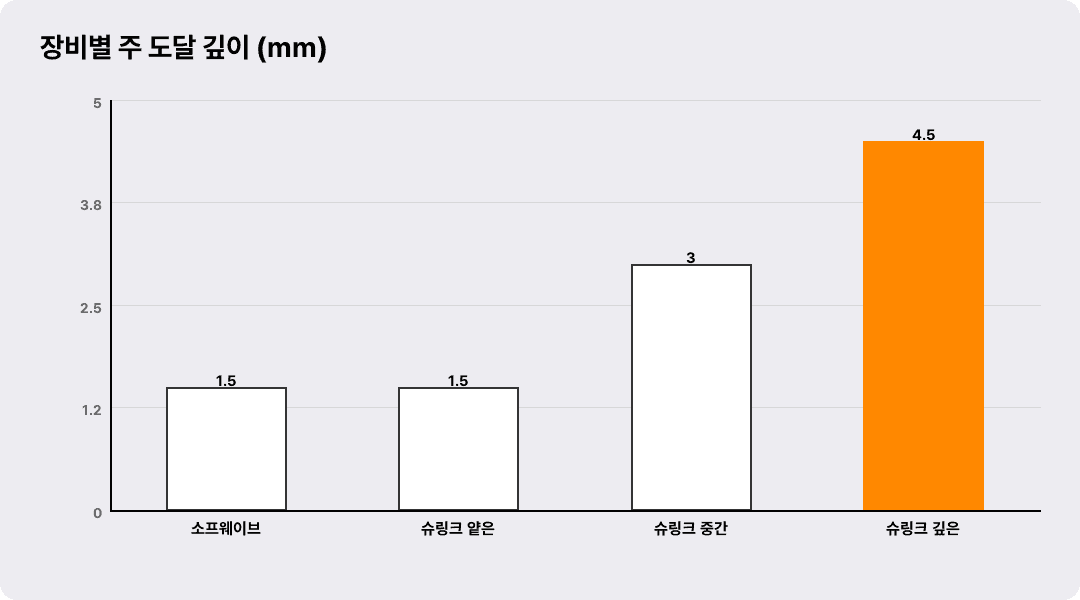
Skin stacks as epidermis, dermis, subcutaneous fat, and beneath that a fascial layer known as the SMAS*. The dermis governs texture and elasticity. The fascial layer works more like the scaffolding holding the whole face up. So the same category of ultrasound tilts toward texture and firmness when heat lands in the dermis, and toward pulling a dropped line back up when it reaches the fascia. Descriptions of focused ultrasound devices note focal depths adjustable to 1.5mm, 3.0mm and 4.5mm, spanning the dermis down to the SMAS, which makes depth control the defining feature of how these treatments work rather than an incidental setting.
SMAS*: the fascial layer connecting facial muscle to skin. When it descends, the whole lower face reads as having dropped, which is why it is treated as a key support structure in lifting.
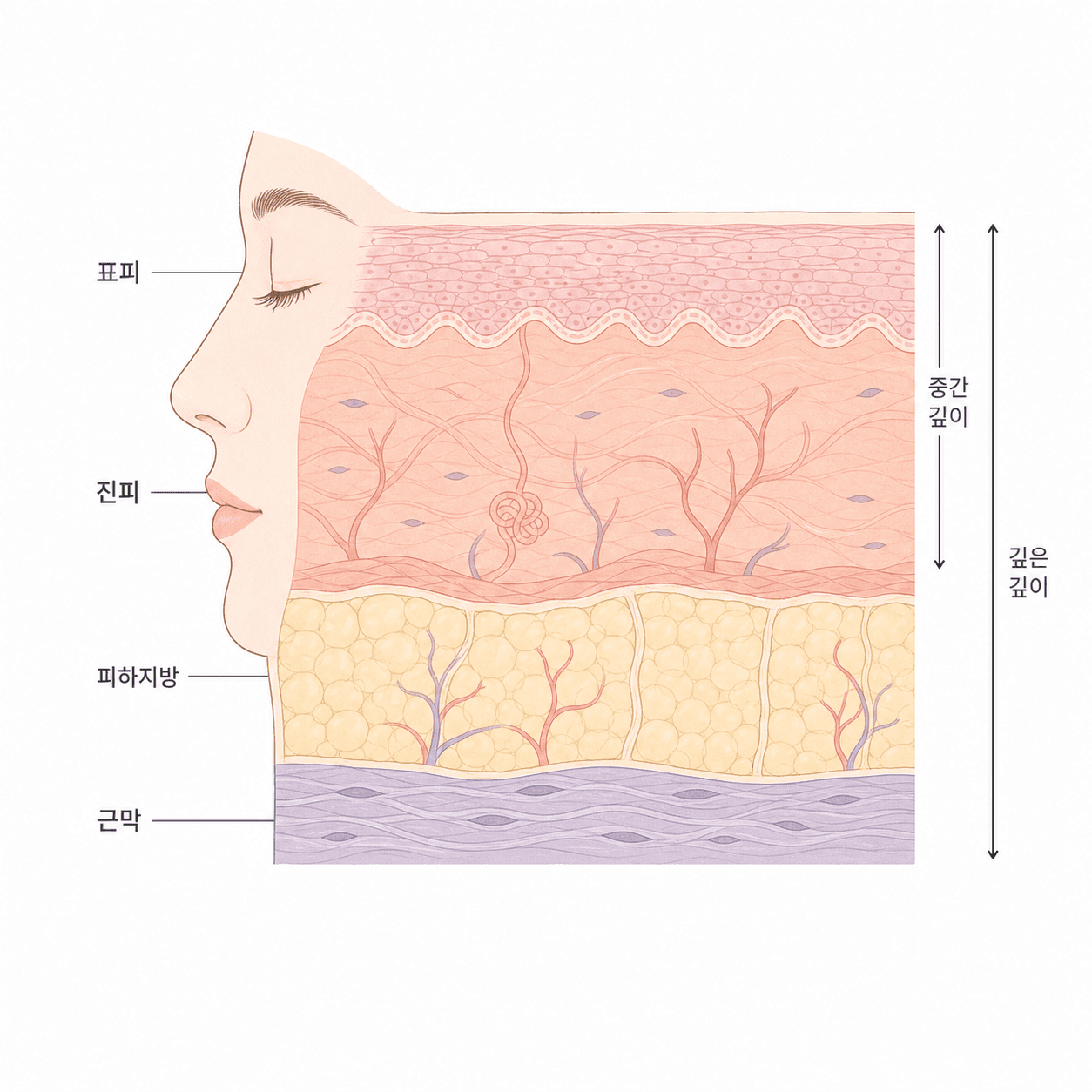

Sofwave stops at the mid dermis, Shurink goes to the fascia
Sofwave gathers its ultrasound energy in the mid dermis, roughly around 1.5mm. That is the layer immediately under the epidermis where elasticity lives, so it responds well to texture, fine lines and early loss of firmness. It is closer to tightening the skin itself than to hoisting the whole face upward.
Shurink changes cartridges to reach several depths. The commonly used set is 1.5mm, 3.0mm and 4.5mm, with the shallower cartridges working the dermis and the 4.5mm cartridge carrying heat into the fascial layer. When heat concentrates in the fascia, the support structure holding the face goes through contraction and repair, and a dropped line gets drawn back up. Published work describes concentrating heat in the fascial layer so collagen denatures and then regenerates, producing the lifting effect, which is exactly why reaching the deeper layer is the mechanism behind sagging improvement.
Put simply: Sofwave works one depth densely, Shurink divides its depths from the dermis to the fascia. Side by side the difference is sharper.
Item | Sofwave | Shurink |
|---|---|---|
Main target depth | Mid dermis, around 1.5mm | Dermis to fascia, 1.5, 3.0 and 4.5mm |
Target layer | Mostly dermis | Dermis plus SMAS fascia |
Result it leans toward | Texture and firmness | Lifting a dropped line |
How it feels | Mostly a sharp warmth | Comes with a deeper sensation |
Downtime | Generally short | Slightly more redness and a dull heaviness |
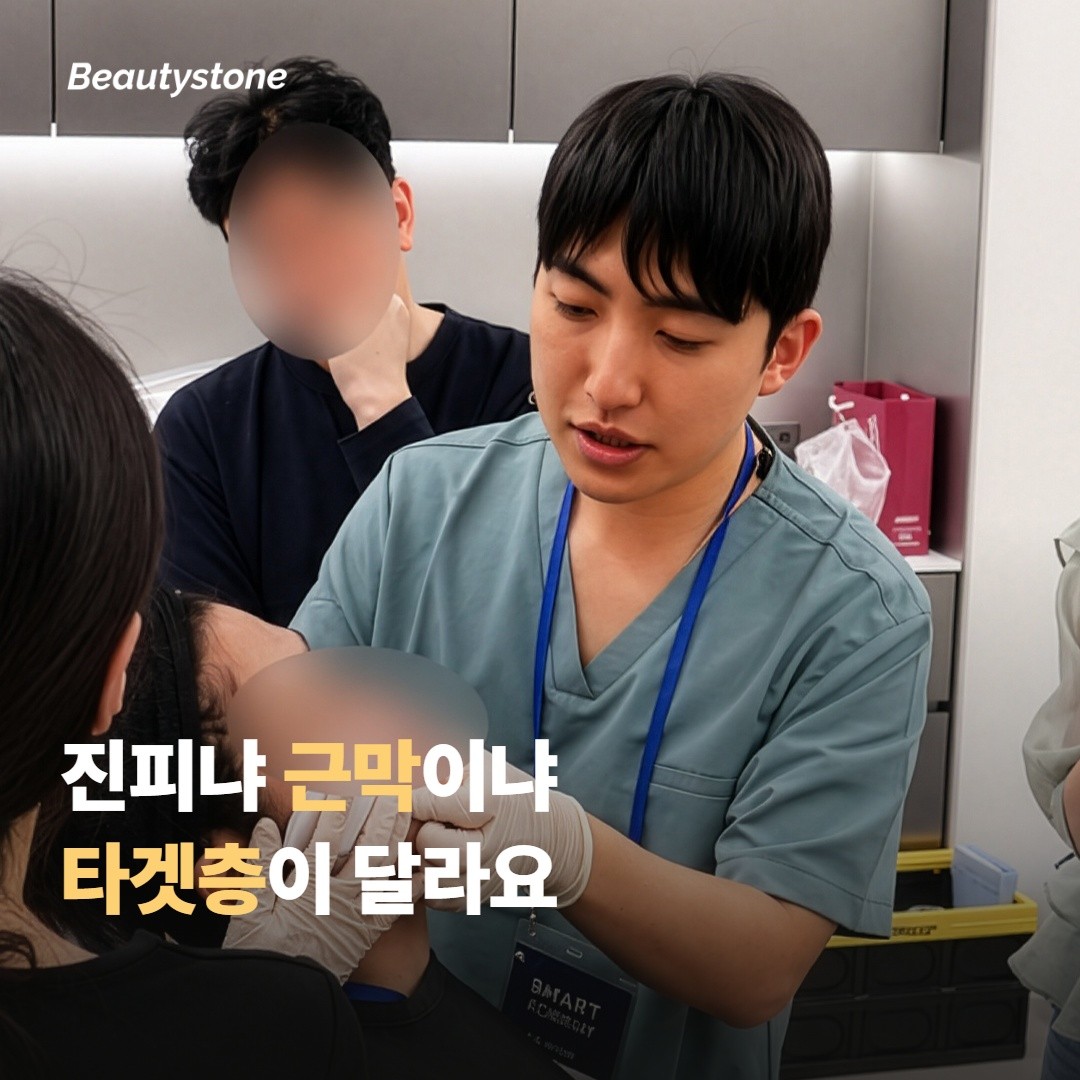
Targeting the dermis and targeting the fascia give different results
Same ultrasound, different tissue responding, so the character of the result diverges. Heat concentrated in the dermis tightens the collagen there and prompts new collagen, which smooths texture and brings back some surface resilience. That suits skin quality and early loss of firmness better than it suits broad sagging.
Reaching the fascia is a different story. The fascia acts as the support holding the face, so when that layer contracts, the skin and fat resting on top of it get carried upward with it. That gives it a relative advantage where a line has already dropped, along the lower cheek or the jaw. The illustration below places the two target depths side by side.
Which is why deeper is not automatically better. Texture and early firmness point toward working the dermis densely. A dropped line points toward reaching the fascia. The sequence that makes sense is to identify which layer your concern actually lives in first, and pick the device second. Individual results and recovery vary, so treat this as direction rather than a prediction.

Which one to raise in your own consultation
Knowing the depth difference still leaves the practical question of what to book. Sorting whether the thing bothering you is texture or a dropped line usually settles it. Rough guide below.
Rough texture or early loss of firmness — Sofwave, working the dermis densely, tends to be the better fit
Cheek or jawline starting to drop — the deeper Shurink cartridge reaching the fascia has the advantage here
Both texture and line bother you — worth discussing combining the two, or sequencing them
Sensitive skin, or downtime is a problem — energy levels need adjusting with sensation and recovery time factored in
That said, this is orientation, not assessment. Actual skin thickness and the degree of laxity have to be seen and felt to be judged. Two people describing the same sagging, one carrying more fat volume and one who has simply lost elasticity, will suit different approaches.

Why the provider you choose still matters
The habit worth looking for is a clinic that identifies which layer is losing support before it names a device. Sofwave and Shurink reach different depths, so the better choice varies from face to face, and picking by brand name alone is how expectations and outcomes drift apart. At Beautystone, a small clinic a short walk from Hapjeong Station in Seoul, that assessment comes first, and whether to stay in the dermis or go to the fascia gets decided together. If you are travelling for treatment, note that these results build over months rather than days, and any follow-up after you fly home will need a provider where you live.

Frequently asked questions
Q. Is Sofwave simply the better treatment of the two?
A. Neither is better in the abstract. They target different depths, so they suit different concerns. Sofwave works the mid dermis densely and has the edge on texture and early firmness, while Shurink reaches the fascial layer and has the edge on lifting a line that has already dropped. Which one fits depends on whether your concern is texture or sagging.
Q. If Shurink goes deeper, does it cover what Sofwave does as well?
A. Shurink can target the dermis with its shallower cartridges, but Sofwave is designed to concentrate energy densely at one dermal depth, so the character of the texture result is not identical. It is more useful to read these as different tendencies than as a ranking. Some outcomes overlap, others genuinely diverge.
Q. Do either of them hurt, or need much downtime?
A. Both generally let you get back to normal quickly. The deeper Shurink cartridge, reaching the fascial layer, can bring a stronger sensation during treatment and a dull heaviness afterwards. Pain and recovery vary a lot between people, so it is better to adjust the energy level rather than push through.
Q. When does it show, and how long does it hold?
A. Ultrasound lifting works through new collagen forming after the heat, so rather than an immediate change it settles in gradually over about 2 to 3 months after treatment. Duration differs between people but is generally viewed as around six months to a year, and individual results vary. Set the exact timing and any repeat interval with the clinician who treated you.
Content





skin
Why Does Fractional CO2 Take Longer to Heal?

Contouring & Volume
How Many cc Does Forehead Filler Need?

skin
Why Is My Skin Oily but Tight in the Fall?

Hair Removal
Underarm Laser Hair Removal Cost: Do the Math

Tattoo removal
Laser Before a Cover-Up: How Many Sessions?

skin
큐어젯 다운타임, 다음 날 출근과 화장은 언제부터 될까요?