

Why Sofwave feels gentler—its dermal depth and spread-out energy, plus 3–6 month change.
Published
Updated

Author
Wi Young-jin · Chief director
Seoul National University College of Medicine · Seoul National University Hospital Specialist
→
When looking into ultrasound lifting treatments, your very first thought might be, "Aren't all ultrasound treatments painful?" However, when you read reviews from those who have tried Sofwave, people often say, "It was much more manageable than I thought." Why does it feel so different when it's still an ultrasound treatment?
In short, it is because Sofwave delivers heat to a different depth and in a different way compared to conventional ultrasound. Instead of delivering intense, point-by-point energy into the deeply inner layers of the skin, Sofwave gently warms the mid-dermis layer over a wider area while cooling the skin's surface, which helps disperse any discomfort.
This content is a summary of the clinical treatment details from Hapjeong Beautystone.
What You'll Learn in This Article
What kind of ultrasound technology Sofwave uses
Why it feels much less prickly than other treatments
How and where it produces results
How long it takes for the visible changes to settle in
What kind of ultrasound is Sofwave?
Sofwave is a treatment that places multiple ultrasound transducers* directly against the skin to deliver heat energy precisely to the mid-dermis. Rather than focusing energy intensely at a single deep point, its design uses a parallel array of transducers to disperse uniform heat at a consistent, safe depth.
Ultrasound Transducer*: A component that converts electrical signals into ultrasonic vibrations to generate heat inside the skin. Sofwave utilizes several of these transducers arranged side-by-side.
Clinical studies on the Sofwave ultrasound device demonstrate that the 7 parallel transducers maintain direct contact with the skin to deliver heat directly to the mid-dermis (about 1 to 2mm deep) while carefully preserving the epidermis. Even within ultrasound treatments, the depth and manner in which heat is delivered make all the difference in how comfortable the treatment feels.
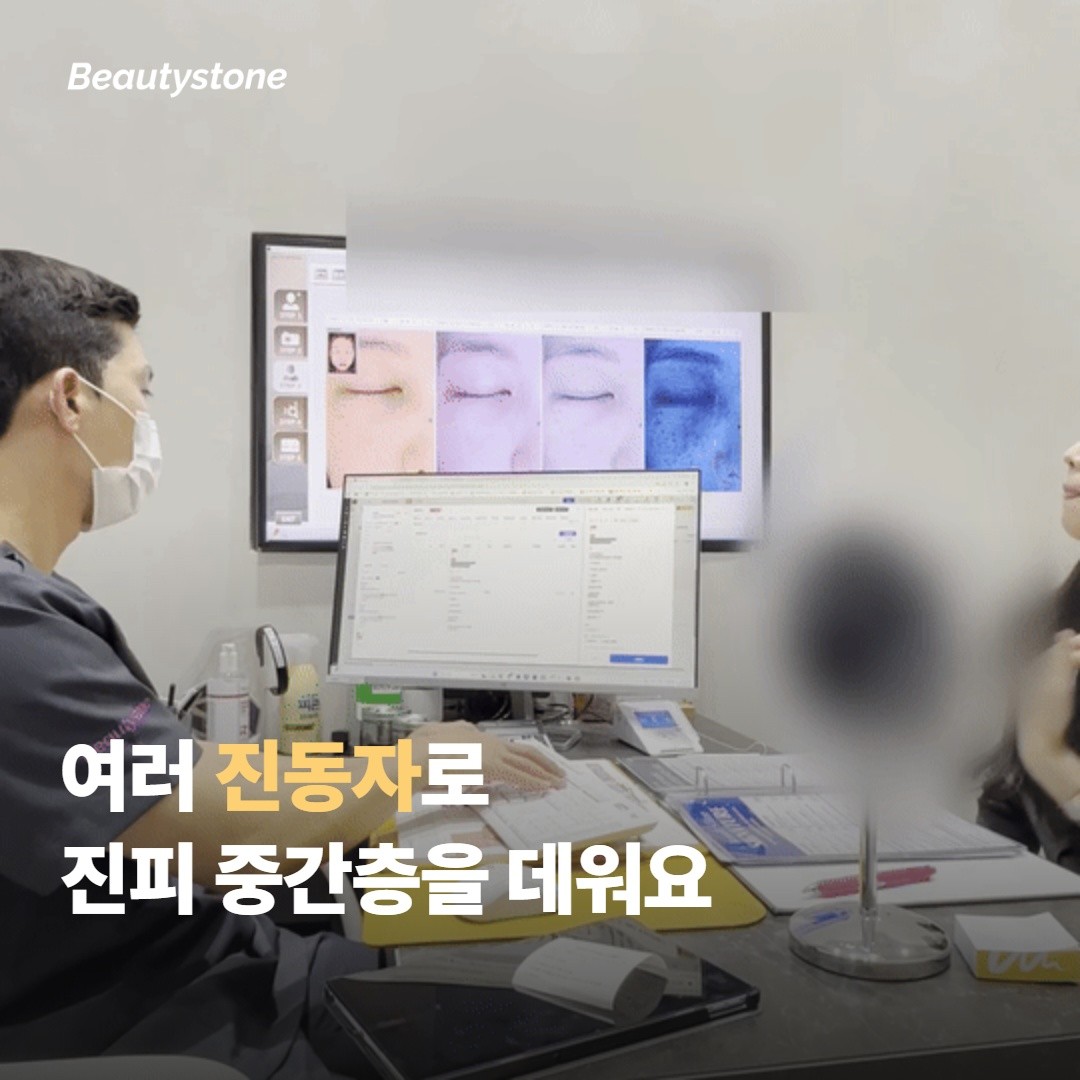
Why does it feel less prickly?
Some traditional ultrasound lifting procedures rely on delivering sharp, intense stimulation to the deeply nestled layers of the skin (close to the fascia*). Because these methods target deep and localized points, they can often cause sharp, sudden pinpricks of pain.
Fascia (SMAS)*: A thin layer of connective tissue wrapping beneath the skin and muscles. In lifting treatments, heat stimulation is often directed here to achieve a skin-tightening effect.
In contrast, Sofwave gently warms the shallower mid-dermis over a broader area while cooling the surface of the skin. Because the energy dispersion prevents it from concentrating intensely on one single point, the stinging sensation is significantly minimized. Here is how conventional deep ultrasound lifting compares with Sofwave.
Even in the clinical study mentioned above, the procedure was performed after applying a topical numbing cream, and no side effects such as fat loss, long-lasting redness, or swelling were reported. However, pain tolerance is highly personal, and each person may feel the sensation differently.
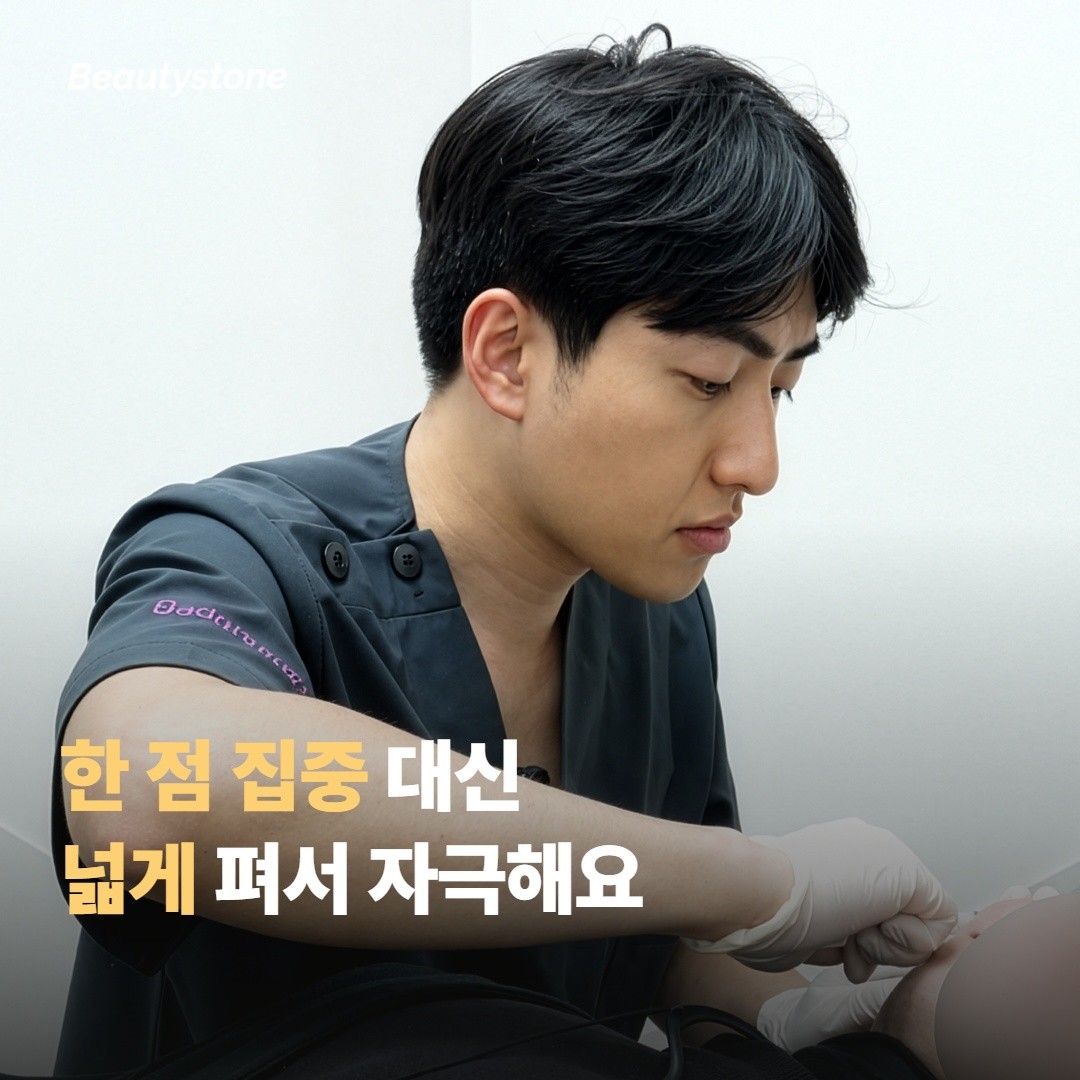
How does it work?
When Sofwave delivers heat to the mid-dermis*, it triggers an immediate contraction of existing collagen*, followed by a natural process of building fresh, new collagen over time. Looking at a cross-section of where the heat reaches makes this process much easier to visualize.
Mid-Dermis*: The middle section of the dermis layer located just beneath the outer epidermis. Richly packed with collagen and elastic fibers, heating this specific layer directly helps restore youthful elasticity.
Collagen*: The essential protein that keeps our skin firm, plump, and elastic. As we age, collagen naturally declines, leading to wrinkles and sagging. Stimulation through heat to trigger collagen rejuvenation is the core principle of lifting treatments.
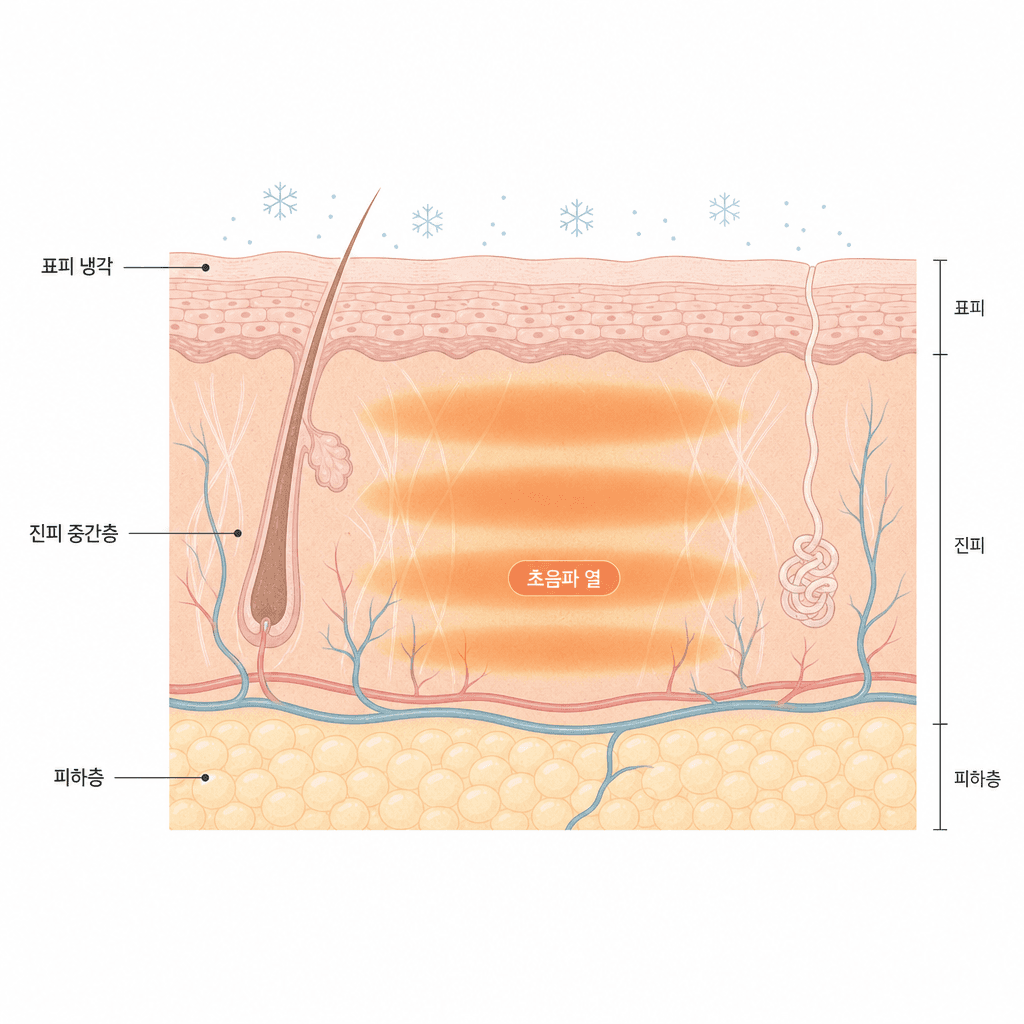
Clinical studies have reported a visible increase in collagen fiber density two months after the treatment. In other words, rather than taking effect instantly, the natural rejuvenation develops gradually from the inside out over the course of several weeks to months.

Why Hapjeong Beautystone?
At Hapjeong Beautystone, we do not simply dismiss ultrasound lifting as "just a painful procedure." Instead, we guide you by thoroughly explaining the exact depth of heat delivery. For guests who are concerned about pain, we carefully adjust the application of anesthetic creams and personalize the pace of the procedure.
Clinical reviews on ultrasound skin tightening suggest that ultrasound treatments are best carried out after experienced skin specialists carefully assess your individual skin type. Conveniently located just steps away from Hapjeong Station, you can easily stop by for a brief consultation to check your skin condition, discuss your pain sensitivity, and map out the perfect custom plan.
It's helpful to understand the timeline of the results
The beautiful changes from Sofwave unfold gradually, rather than all at once. Accordingly, rather than looking for a radical change in just a few days, it is best to observe the natural progress over a span of several months.
Immediately after: Light tightening sensation and mild temporary redness
1–2 months: Gradual collagen production begins to smooth out skin texture
3–6 months: Full skin elasticity improvements establish and settle in
Data from the American Society for Dermatologic Surgery (ASDS) also explains that collagen-stimulating tightening treatments generally take about 3 to 6 months to showcase their optimal results. Please note that this information is for general educational purposes; the ideal treatment plan and pain management strategy should always be decided during a personal consultation with a medical professional.
Frequently Asked Questions
Q. Is Sofwave truly pain-free?
A. While it is not completely sensation-free, it is known to be much more comfortable and less prickly than traditional deep-reaching ultrasound options. The warmth is evenly dispersed across the mid-dermis while the epidermis is continuously cooled. However, individual sensitivity to pain can vary.
Q. How does it differ from other ultrasound treatments like Ulthera?
A. While standard lifting treatments deliver highly concentrated, point-by-point energy deeper into the skin layers, Sofwave warms the mid-dermis layer broadly using multiple parallel transducers. The targeted depth and the method of dispersing the energy are entirely different.
Q. When will I start seeing results?
A. You may experience a subtle tightening effect immediately after. However, the true collagen remodeling process develops naturally over 3 to 6 months. It is best to give your skin a few months to show its full rejuvenation.
Q. Can I return to my daily routine immediately after the treatment?
A. Yes, there might be a light warmth or mild redness right after the treatment, but it generally does not interfere with daily activities. As skin responses can vary, please be sure to follow the post-treatment care instructions provided by your clinical team.


Contouring & Volume
Hip Dip Filler Before and After: 4 Checks

Body
Potenza Treatment Interval: Why 4 Weeks?

Lifting
Ultherapy Before and After: Why Wait 90 Days?

Contouring & Volume
Belotero Revive Cost: 2cc Price vs. 3 Sessions

skin
Lip Hyperpigmentation Laser: Does It Work?

Contouring & Volume
Men's Forehead Filler: Hollow or Just Lines?