

Two clinics, the same 300 shots, two different totals. Here's why one disposable tip sets an Ulthermage quote, and the four counts to check first.
Published
Updated

Author
Wi Young-jin · Chief director
Seoul National University College of Medicine · Seoul National University Hospital Specialist
→
Ask two clinics for an Ulthermage quote, line up the shot counts, and you'll often find the same number attached to two different totals. That's usually the moment people stop and try to work out which clinic is padding the price. Most of the time neither one is. The two quotes are counting different things, and the shot count is the part that hides it. In this article, we'll cover where the number 300 actually comes from, why one disposable part decides so much of the total, and how to read a quote by counting parts instead of staring at the final figure.
What Ulthermage Actually Bills You For
Ulthermage isn't a single machine. It's two treatments booked into one visit: Ultherapy, which focuses ultrasound down to the fascia layer beneath the face, and Thermage, which lays heat more broadly through the dermis above it. The depths they target don't overlap much, which is why doing them in the same sitting caught on in the first place, and why the combined nickname stuck.
The name is the only thing that merged. The devices are separate, the disposable parts are separate, and the billing units stay separate too. Neither treatment is covered by national health insurance in Korea, so each clinic sets its own figure and is required to publish it. A quote, then, isn't a fixed rate handed down from anywhere. It's a description of what that particular clinic decided to open for you.
That's also why naming one area doesn't settle the plan. If a cheek reads shadowed because volume has been lost, adding more tightening energy leaves the shadow sitting right where it was. If the fascia layer has descended, warming the dermis alone won't pull hard enough. Ulthermage works better as a question about which layer is more urgent than as a decision to do both, and the answer to that question is what sets the number of parts on the page.
Where the Number 300 Really Comes From
Start with what a Thermage tip has to do, because the physics makes the accounting obvious. Thermage is a monopolar RF device, meaning current runs from a single electrode toward a return pad and warms the dermis as a whole instead of in a narrow band. Researchers describe this arrangement as producing heat that spreads relatively evenly through the treated tissue. Ultherapy does the opposite: it gathers ultrasound at a point and makes heat only at a set depth. Spreading wide and concentrating at a point are two different jobs, which is exactly why they call for two different consumables.
The same work describes the temperature window that makes any of it useful. For collagen to actually contract, the tissue under the skin has to reach somewhere between 65 and 68 degrees Celsius, while the surface is held down closer to 38 to 42 degrees. One part is responsible for producing both of those numbers at the same time, and that part is the tip.
At Beautystone, a clinic in the Hapjeong area of Seoul, that is why a quote starts with which parts are being opened rather than with a headline figure.
It also isn't a part that gets used twice. One tip is opened for one session and thrown away afterwards, and inside it sits a thin membrane whose job is to spread heat evenly across the contact surface. If that membrane tears, energy can crowd into a single spot and cause a burn, which is why the published guidance is to inspect the membrane before the first shot and check it again every 50 shots.
Here's where the accounting starts. Tips are bought by the unit and discarded by the unit, so 300 shots is frequently not a number that came out of a treatment plan at all. It's the shot capacity of the one tip that clinic chose to open, copied straight onto the quote. Cut the shot count in half and the tip still costs whatever a tip costs. Push past that capacity and a second one gets opened, and a new line appears on the page. Decide what's being opened, and the shot count follows.

Why the Eye Area Adds Another Tip
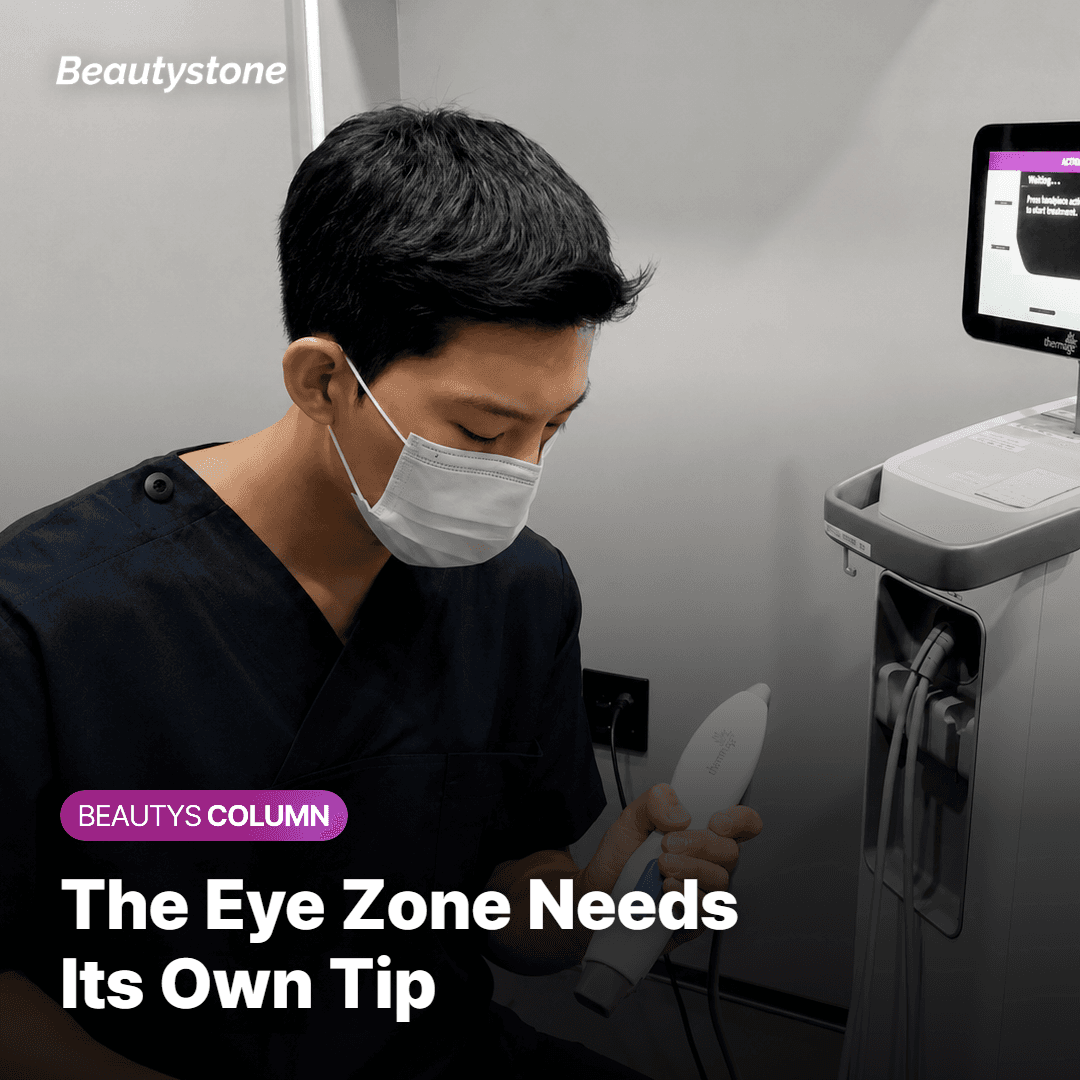
A face tip can't stand in for the eye area. The skin around the eye is thin and the globe sits directly behind it, so a smaller dedicated tip exists for that zone. Smaller sounds like it should cost less. In practice it works the other way.
Shrinking the electrode changes where the energy goes. Current crowds toward the surface as the electrode gets smaller, so the heating turns shallow and precise, and reaching the depth where tightening happens takes a plan of its own rather than the face settings turned down.
So the eye price isn't a percentage layered onto the face price. It's one more disposable being counted. Wide zones behave the same way for the same reason: a neck or an under-chin covers more surface than one tip is built to handle, so the count goes up there too.
Choosing between the options comes down to cause. If the shadow under the eye traces back to lost volume, more tightening energy is the wrong lever and filling deserves the first look. If loose eyelid skin is what's leading, the dedicated tip is the right call. The physician's opening question at that spot is which of those two is actually driving the shadow, not how many shots to book.
Side Effects, Safety, and What the Tip Protects
The membrane check isn't paperwork. Uneven energy delivery is the main way a tightening session goes sideways, and a compromised tip is the most direct route there. A clinic that opens a fresh, genuine tip in front of you and looks at it again through the session is handling that risk the way the literature describes handling it.
The ordinary reactions still apply on top of that. Redness, mild swelling and tenderness are common afterwards and usually settle on their own. Individual results vary, and so does how strongly any of it registers. If swelling worsens, spreads, or arrives with a fever, don't wait it out at home. Seek medical care right away.
Discomfort is normally addressed before anyone touches the shot count. Numbing cream and output adjustment come first, partly because they're the tools built for the job and partly because trimming shots rarely trims the bill in proportion. Half a tip still costs a whole tip. At the consultation stage it's more useful to say where the pain is worst than to ask for a smaller number.

How to Read a Quote by Counting Parts, Not Price
Cover the money column for a minute and read the parts column instead. When all four lines below are filled in, the total tends to explain itself. When one is blank, that blank is where the count got quietly reduced.
Line item | How it lands on the bill | What to ask |
|---|---|---|
Thermage tip | Priced per genuine unit opened | Is the tip genuine, and how many are you opening? |
Shots per tip | Go past this number and a second unit gets opened | How many shots is this tip rated for? |
Ultherapy cartridge | A separate consumable for each depth used | Which depths, and how many cartridges? |
Eye-area tip | Cannot be covered by the face tip | Is the eye area counted as one more tip? |
The second line goes missing more often than any of the others. Without a tip's rated capacity, there's no way to tell whether 300 shots finishes inside one unit or calls for two, which means the two quotes you're holding were never sitting on the same shelf to begin with. Doubting the figure comes later. Filling in these four counts comes first.
Two questions cover most of it in the room: how many shots is this tip rated for, and is the eye area counted as a separate tip? At Beautystone, a clinic in the Hapjeong area of Seoul, the consultation note lists how many tips and cartridges a plan uses before any total gets written down, because a plan recorded in counts makes the next visit easy to price when the eye area comes off or the neck goes on.

The Bottom Line
The 300 usually describes a tip: it's the capacity of the unit being opened, not the output of a treatment design.
Parts are counted whole: halving the shots rarely halves the total, because half a tip still costs a tip.
Eyes and wide zones add units: the eye area, the neck and the under-chin each bring their own consumable rather than a surcharge.
Four counts make quotes comparable: tip, shots per tip, cartridges, eye tip.
Like any energy-based treatment, this one comes with trade-offs, and a fresh genuine tip is the part of the process that keeps those trade-offs where they belong. Ultimately the choice depends on which layer is actually bothering you, what your skin can take, and what you want to spend. If you're weighing an Ulthermage quote right now, a consultation that starts with counts rather than a headline figure is the fastest way to find out what you're really comparing.




Contouring & Volume
Hip Dip Filler Before and After: 4 Checks

Body
Potenza Treatment Interval: Why 4 Weeks?

Lifting
Ultherapy Before and After: Why Wait 90 Days?

Contouring & Volume
Belotero Revive Cost: 2cc Price vs. 3 Sessions

skin
Lip Hyperpigmentation Laser: Does It Work?

Contouring & Volume
Men's Forehead Filler: Hollow or Just Lines?