

The under-eye is the thinnest skin. Fillers add volume, RE2O reinforces dermis: how to choose.
Published
Updated

Author
Wi Young-jin · Chief director
Seoul National University College of Medicine · Seoul National University Hospital Specialist
→
When you are concerned about your under-eye area looking dark and hollow, you might find yourself looking into clinical treatments rather than dark circle creams. Since the under-eye area has exceptionally thin skin, taking a texture-refining approach to replenish the skin using a skin booster like RE2O, rather than traditional fillers, is a very natural option.
This content compiles treatment information from Hapjeong Beautystone.
In short, RE2O is an hADM*-based skin booster that reinforces the structure of the dermal layer to help plump up sunken-looking textures. While both are injectable treatments, fillers instantly fill in volume, whereas RE2O takes time to stabilize the dermis. This makes RE2O a popular choice for naturally brightening and softening thin areas like the under-eye.
What You'll Learn from This Article
The structural reasons why the under-eye area can look hollow.
How the RE2O skin booster works within the skin layers.
Why under-eye fillers and RE2O deliver different results.
A guided self-assessment to see if RE2O is right for your under-eye concerns.
The Structural Reasons Why the Under-Eye Area Looks Hollow
The skin under our eyes is among the thinnest on the face. Because the epidermis and dermis here are about half the thickness of other areas, the underlying blood vessels, muscles, and bone structure can easily show through. That hollow look is typically a combination of three different factors:
Vascular type: Blood vessels (blue or purple) show through the thin, delicate skin.
Pigment type: Pigmentation deep within the skin creates a brown or grayish tone.
Structural type: The supporting dermal layer under the eyes weakens, leading to a sunken texture.
Often, a mix of all three is present. Dermanet data analyzing under-eye dark circles also explains the causes divided into multiple categories, such as pigment increase, vessels showing through thin skin, and shadows caused by a loss of under-eye fat and structure. Since "hollowness" itself stems from a weakened dermal structure rather than pigment, the treatment approach needs to be different.

How Does the RE2O Skin Booster Work?
RE2O is a skin booster based on hADM. It works by entering the dermal layer to reinforce its structural integrity. Rather than instantly adding artificial volume, it requires time to naturally stabilize the dermal layer, meaning your results will gradually emerge over 1 to 3 months following the treatment.
*hADM (human acellular dermal matrix): An ingredient in matrix form where cellular components have been removed from human dermis, leaving behind only structural proteins like collagen. It acts as a supportive scaffold to lift and hold the dermal texture.
Since the under-eye area has a very thin epidermis and dermis, looking at a cross-section of where RE2O settles makes its mechanism of action much clearer.
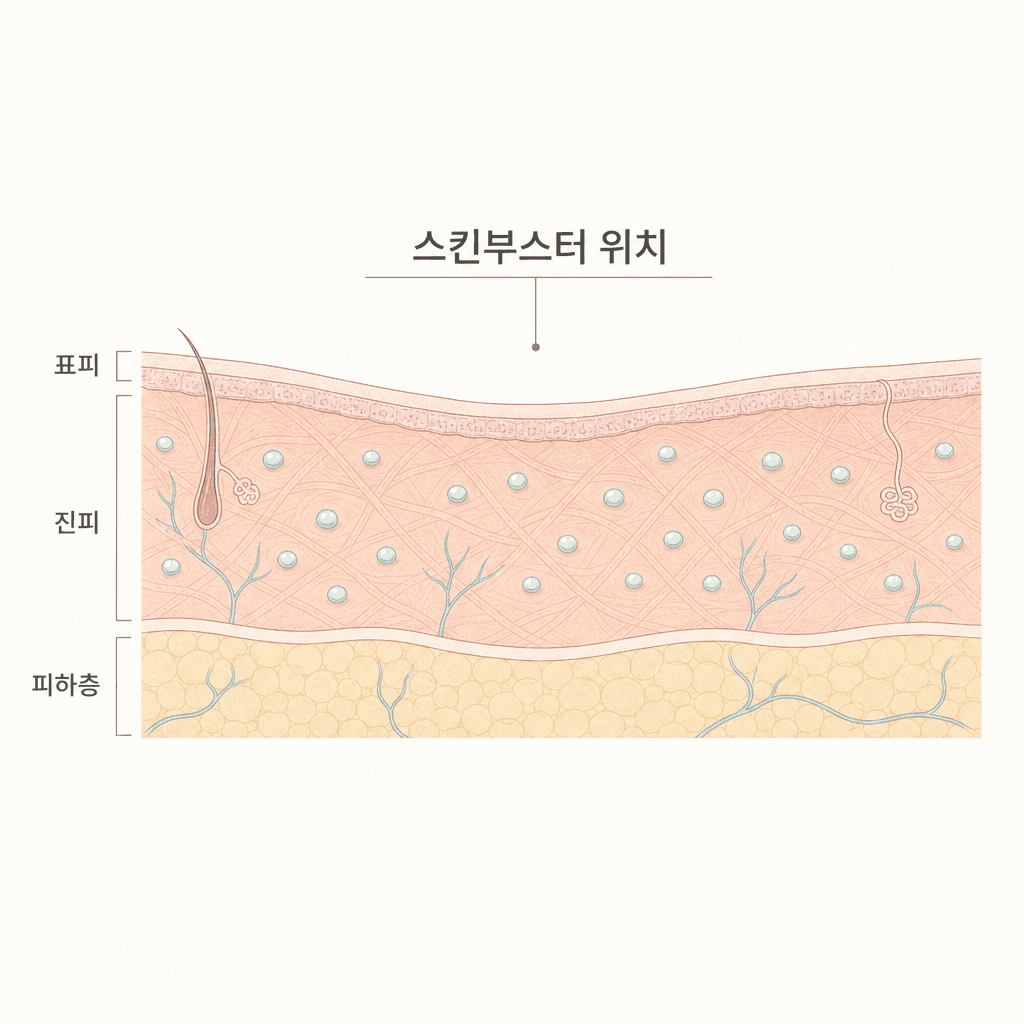
Clinical studies evaluating injectable human acellular dermal matrix as a skin booster show that this component acts as a scaffold to rebuild the dermis, improving skin density, elasticity, and wrinkle depth. As the dermal layer is reinforced, the overlying epidermis is naturally lifted, which helps hollow areas and fine lines fade away together. It resembles a lifting of the entire tissue area rather than filling a single spot with volume.

Why Under-Eye Fillers and RE2O Deliver Different Results
When exploring under-eye treatments, you will often find both fillers and skin boosters suggested. These two methods differ because their underlying mechanisms of action are completely distinct.
As mentioned, fillers instantly add volume to the sunken area, yielding quick, noticeable results. However, if injected too shallowly into thin-skinned areas like the under-eye, the product can clump or look puffy, making the provider’s expertise absolutely crucial. On the other hand, while RE2O takes more time, it works by lifting the entire tissue bed, creating a beautifully natural softening rather than artificial volume.
If your under-eye concern is a "sunken spot in one specific point," a filler might be more suitable. If you have "overall thin skin with fine wrinkles," RE2O is often the better fit. However, if your dark circles are primarily brown and pigment-based, they are closer to hyperpigmentation influenced by UV rays and hormones (like melasma). In this case, structural reinforcement with RE2O alone may not be enough, requiring a different approach.
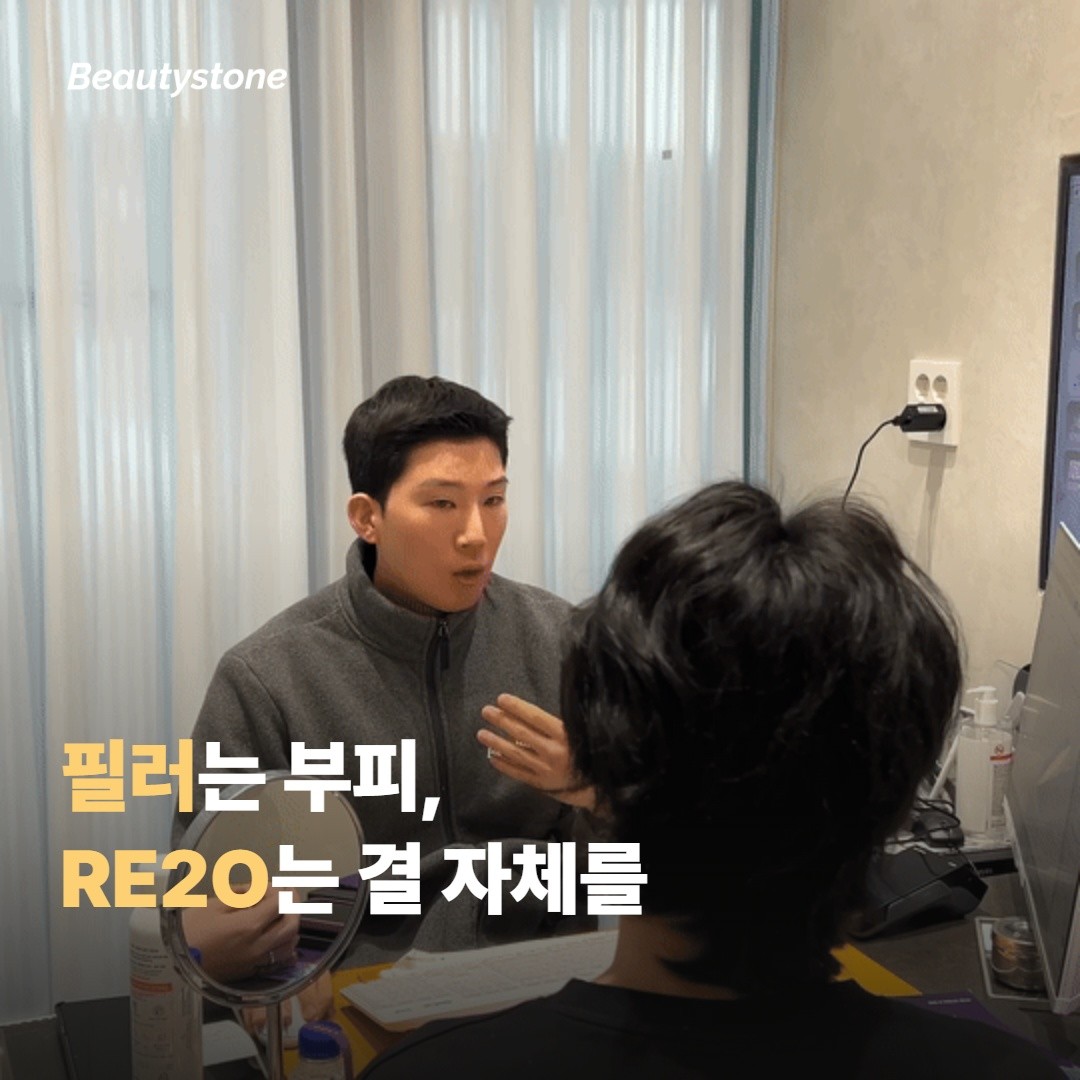
At Hapjeong Beautystone, We Structure Treatments in Gentle, Phased Sessions
At Hapjeong Beautystone, we do not recommend rushing into multiple sessions all at once. Instead, we structure our treatments in separate phases so we can monitor your personal results. For under-eye RE2O, we check your progress 4 to 6 weeks after the first session and decide together whether to proceed with additional rounds.
Because dermal reinforcement builds up gradually with each session, we prefer taking it one session at a time based on your recovery, rather than recommending multi-session packages right away. Conveniently located within walking distance of Hapjeong Station, you can easily drop by for a quick check-in between treatments to adjust your next schedule. Tailoring the stages of RE2O to your unique under-eye contour is the key to achieving the most natural-looking results.

Is RE2O Right for Your Under-Eye Concerns? A Quick Guide
An RE2O skin booster treatment is a highly natural option if you meet most of the following criteria:
Your under-eye area feels thin overall and is accompanied by fine lines.
The hollow look is generalized across the area rather than sunken in a single pin-point spot.
You have previously experienced a clumpy or uneven look after filler treatments.
You prefer a natural, gradual improvement over immediate dramatic changes.
Conversely, we typically recommend fillers or alternative treatment combinations for the following cases:
There is a distinct, sharply sunken spot (where blood vessels or bone structure are highly visible).
You need immediate results for an upcoming event (e.g., within 2 weeks).
Your concern is predominantly pigment-based dark circles.
Here is an illustration showing the general trend of how the skin texture improves over time as RE2O treatments accumulate. Please keep in mind that this is an average progression, and individual recovery times vary.
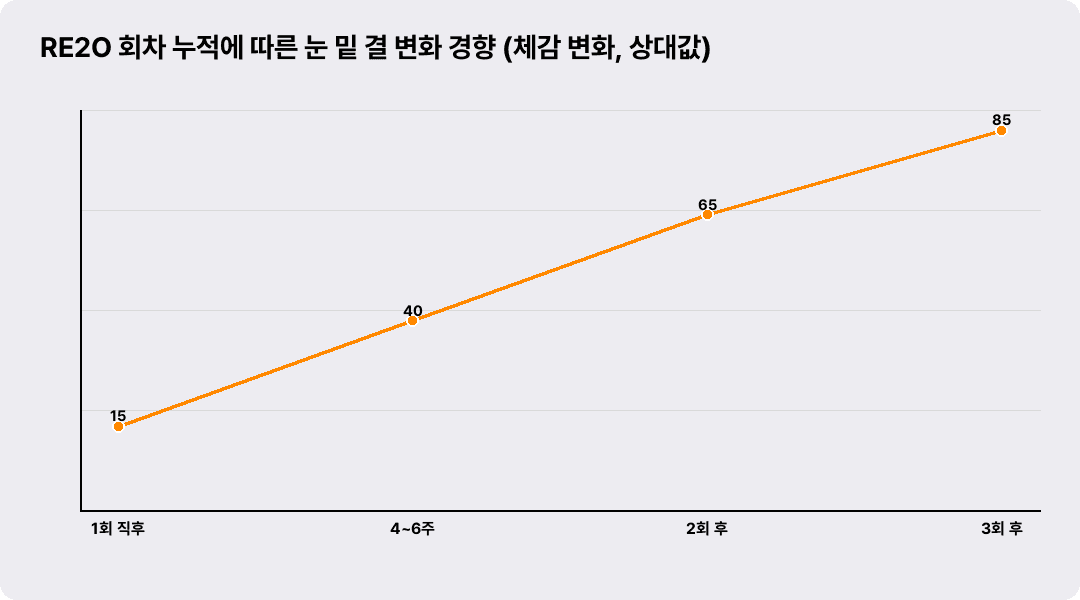
If you are unsure which category your under-eye concerns fall into, it is safest to determine this during a personalized consultation using a Wood’s lamp diagnostic device.

Frequently Asked Questions
Q. Can I see results with just one session of RE2O?
A. You will begin to notice subtle improvements in texture around 4 to 6 weeks after your first treatment. However, because RE2O works cumulatively, the skin texture generally settles beautifully after multiple sessions, with optimal results appearing at the 1 to 3-month mark. Rather than expecting dramatic changes from a single session, we recommend observing the gradual improvements phase by phase.
Q. How long will the swelling last after the treatment?
A. Mild swelling and redness typically last about 1 to 3 days. Because the skin under the eyes is very thin, swelling may look slightly more noticeable here than in other areas. We advise avoiding saunas and vigorous exercise for 24 hours post-treatment.
Q. Can I get fillers and RE2O at the same time?
A. We do not recommend combining both treatments in the same area during the same period. If the results overlap, it becomes difficult to evaluate which treatment worked, and it may increase the risk of swelling or sensitivity. Typically, we recommend starting with one treatment, assessing the results, and then deciding on the next step.
Q. How long do the results last?
A. Once your RE2O sessions are complete, the results generally last for about 1 to 2 years. Longevity depends on your body’s unique collagen regeneration rate and lifestyle factors like UV exposure and sleep quality. Since sun protection and daily skincare are essential to maintaining your results, we recommend planning your treatment and aftercare in close consultation with our medical team.



Contouring & Volume
Hip Dip Filler Before and After: 4 Checks

Body
Potenza Treatment Interval: Why 4 Weeks?

Lifting
Ultherapy Before and After: Why Wait 90 Days?

Contouring & Volume
Belotero Revive Cost: 2cc Price vs. 3 Sessions

skin
Lip Hyperpigmentation Laser: Does It Work?

Contouring & Volume
Men's Forehead Filler: Hollow or Just Lines?