

Sagging and hollowing are different problems. Why lifting alone can leave cheeks flat.
Published
Updated

Author
Wi Young-jin · Chief director
Seoul National University College of Medicine · Seoul National University Hospital Specialist
→
You notice in the mirror that your cheeks have gone flat and the shadow running down from your nose has deepened, and the obvious conclusion is that a lifting treatment will pull all of it back up. Then you read enough accounts of people who had the lifting and still looked hollow afterwards, and you start wondering whether lifting really fills anything at all.
Here is the short answer first: lifting and volume are answers to two different problems. Lifting draws loosened tissue upward. Hollowing is what happens when the fat and the bony support underneath recede with age, and pulling from above does not put that back. Once the distinction is clear, it becomes obvious why some people are delighted with lifting alone and others come away feeling something is still missing.
This is general information from Beautystone, a small skin clinic in Hapjeong, Seoul. Whether a treatment suits you, and how it should be done, is a decision for the clinician who examines you.
What you will learn
Why a face can still look hollow after lifting
How sagging and hollowing actually differ
How lost volume gets approached instead
What to keep in mind about managing volume over time
Why the hollows survive a lifting treatment
A face looking hollow with age is not simply skin that has loosened. The fat sitting deep in the face shrinks and the bone that supported it retreats, and the tissue above it settles downward as a result. As the account explaining that loss of deep fat with age is a principal reason facial support gives way, producing the pseudo-sagging in which the tissue above appears to droop describes, hollowing and sagging have tangled roots.
Deep fat*: the fat sitting in the deeper layers of the face. As it shrinks with age, the cheeks and the front of the cheekbones lose volume and the support holding up the tissue above weakens with it.
Pseudo-sagging*: a look created less by tissue genuinely loosening than by volume dropping out underneath, so the tissue above settles and reads as sagging.
Which is why lifting can draw loosened tissue upward and the face can still look hollow, if the empty space beneath it is untouched. Pulling from above, where the support underneath has collapsed, does not fill it back in.
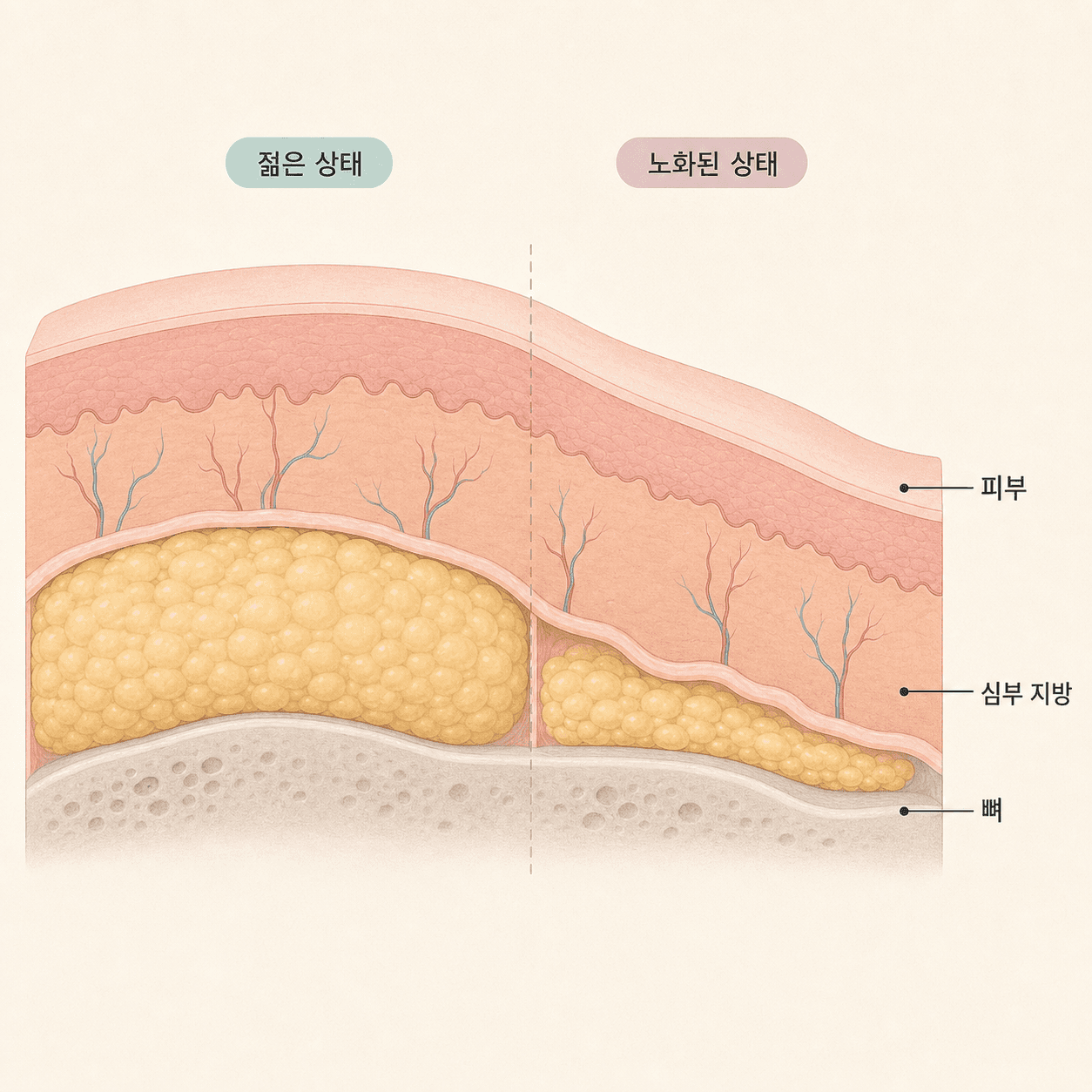

Sagging and hollowing are not the same thing
They can look alike from the outside, but they are approached differently. Sagging is handled by drawing loosened tissue up. Hollowing is handled by restoring what has been lost. Separating the two is what shows you where to start.
What differs | Sagging | Hollowing |
|---|---|---|
Main cause | Tissue loosening downward | Fat and bony support receding |
How it looks | Jawline and cheeks settling low | Cheeks and front cheekbones sunken |
What suits it | Lifting, drawing tissue upward | Restoring volume underneath |
How they interact | Frequently overlaps with hollowing | Makes sagging look more pronounced |
In most faces the two arrive together. Which is why treating only one side of it leaves something wanting, and why working out which of the two dominates in your own face comes first.

Why we separate the two before recommending anything
Beautystone is a small skin clinic in Hapjeong, Seoul, and rather than telling you lifting solves everything, we start by separating whether your face is dominated by sagging or by hollowing. Two people can describe the same complaint and still need different approaches, one having lost volume and the other having loosened, so the consultation is where we set the priority together. Being small and a short walk from Hapjeong Station means we can follow how one face is changing and adjust what gets addressed first. If you are visiting from abroad, plan for the fact that any follow-up you need may have to happen with a provider where you live.

How lost volume is approached instead
Hollowing is approached by supporting what has emptied out rather than by pulling from above. Which method fits depends on which layer has receded and by how much, and looking at the order in which volume tends to leave the face gives you a sense of where to look first.
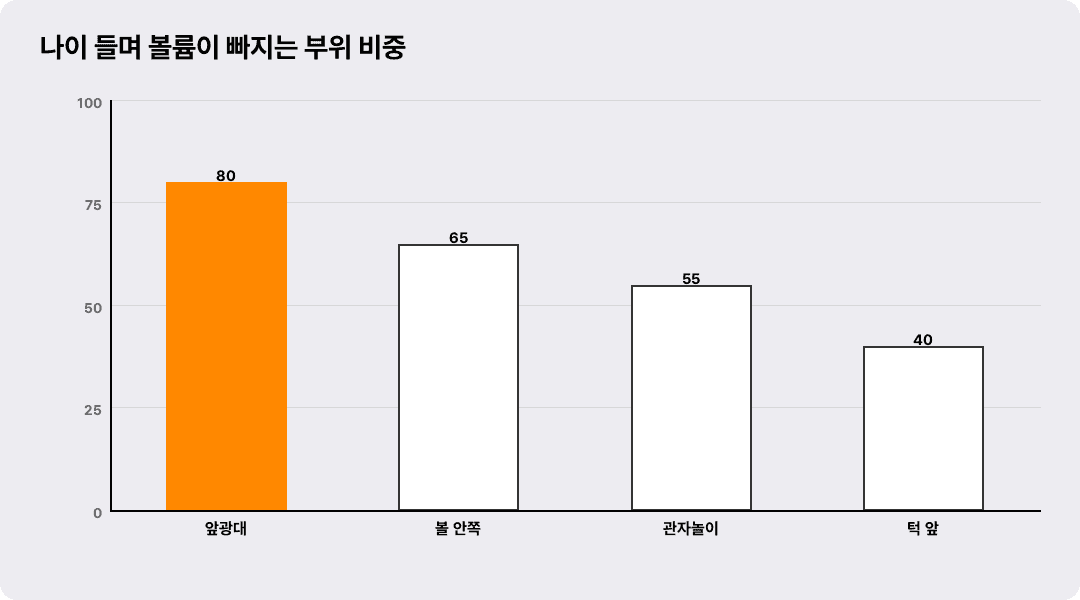
What matters is checking the collapsed support first. Whether you need pulling from above or supporting from below is what shapes the plan. Lifting and volume are often planned together, and where hollowing dominates, volume sometimes gets looked at first.

What to keep in mind about volume over time
The main thing to hold on to is that lifting and volume are not competitors. They do different jobs. Loosened tissue gets drawn up, hollowed areas get supported, and the two complete each other. So rather than leaning on either "lifting fixes everything" or "just add volume", start by seeing how the two are tangled together in your own face.
The other thing is that the collapse of that support is a process that keeps going with age. Changes in facial bone begin earlier than most people expect, so it helps to think of this as something managed over time rather than finished in a single treatment. Individual results vary. This article is general information, so what suits you is a decision for the clinician who examines you.

Frequently asked questions
Q. Will lifting alone fill hollow cheeks?
A. Lifting draws loosened tissue upward, so it does not replace the volume that has gone. Where hollowing dominates, lifting on its own can leave you wanting more. The approach depends on whether sagging or hollowing is the bigger factor in your face, so it is worth setting the priority in consultation.
Q. Should I deal with sagging or hollowing first?
A. There is no single right answer. Where loosening is prominent, drawing tissue up may come first; where volume loss is greater, restoring it may. In most faces both are present, so the order follows whichever carries more weight in yours.
Q. Why do cheeks hollow in the first place?
A. The fat in the deeper layers of the face shrinks with age, and the bone supporting it weakens along with it. So unlike simply losing weight, the supporting structure changes too. It happens gradually, which is why a long-term view helps.
Q. Can this be settled with one treatment?
A. Changes in volume and supporting structure continue with age, so one treatment does not stop them outright. Rather than trying to solve everything at once, it is more natural to manage it in stages as things change. Set the specific plan with the clinician who examines you.


Contouring & Volume
Hip Dip Filler Before and After: 4 Checks

Body
Potenza Treatment Interval: Why 4 Weeks?

Lifting
Ultherapy Before and After: Why Wait 90 Days?

Contouring & Volume
Belotero Revive Cost: 2cc Price vs. 3 Sessions

skin
Lip Hyperpigmentation Laser: Does It Work?

Contouring & Volume
Men's Forehead Filler: Hollow or Just Lines?