How is rosacea treated at a dermatology clinic?
Rosacea treatment—where should you start? Without vascular treatment, it will continue to get worse.
How Is Rosacea Treated at a Dermatology Clinic?
![[의사 고백] 주사피부염, 완치가 아니라 '조절'이 목표여야 실패하지 않습니다](https://framerusercontent.com/images/X0lrBoi1cM8Xlh7xuFyM2jtBD2c.jpg)
These days, perhaps because it's the spring transitional season,
"My face keeps turning red."
"It's not getting better even with home care."
I've been seeing a lot more patients coming in saying exactly this.
Quite a few of them turn out to actually have
rosacea.
It's a fairly well-known condition by now,
but with so much information out there,
some people end up feeling more confused than ever.
Today, I'd like to give you an honest, straightforward summary of rosacea treatment
based on what I've seen and experienced in the clinic.
💡 Key Takeaways from Today's Post
Q. Do I really need to see a dermatologist?
A. Home care alone is not enough for real treatment.
Laser treatment is essential.
Q. What treatment options are available?
A. Topical medication, oral antibiotics, and vascular laser
are combined appropriately based on the stage of symptoms.
Q. Is a complete cure possible?
A. It's closer to management than a complete cure, but
vascular laser can restore your skin
to how it looked before the flushing started.
Lifestyle management to reduce recurrence
is more important than anything else.
Rosacea —
What Exactly Is It?
Many people misunderstand this, but rosacea
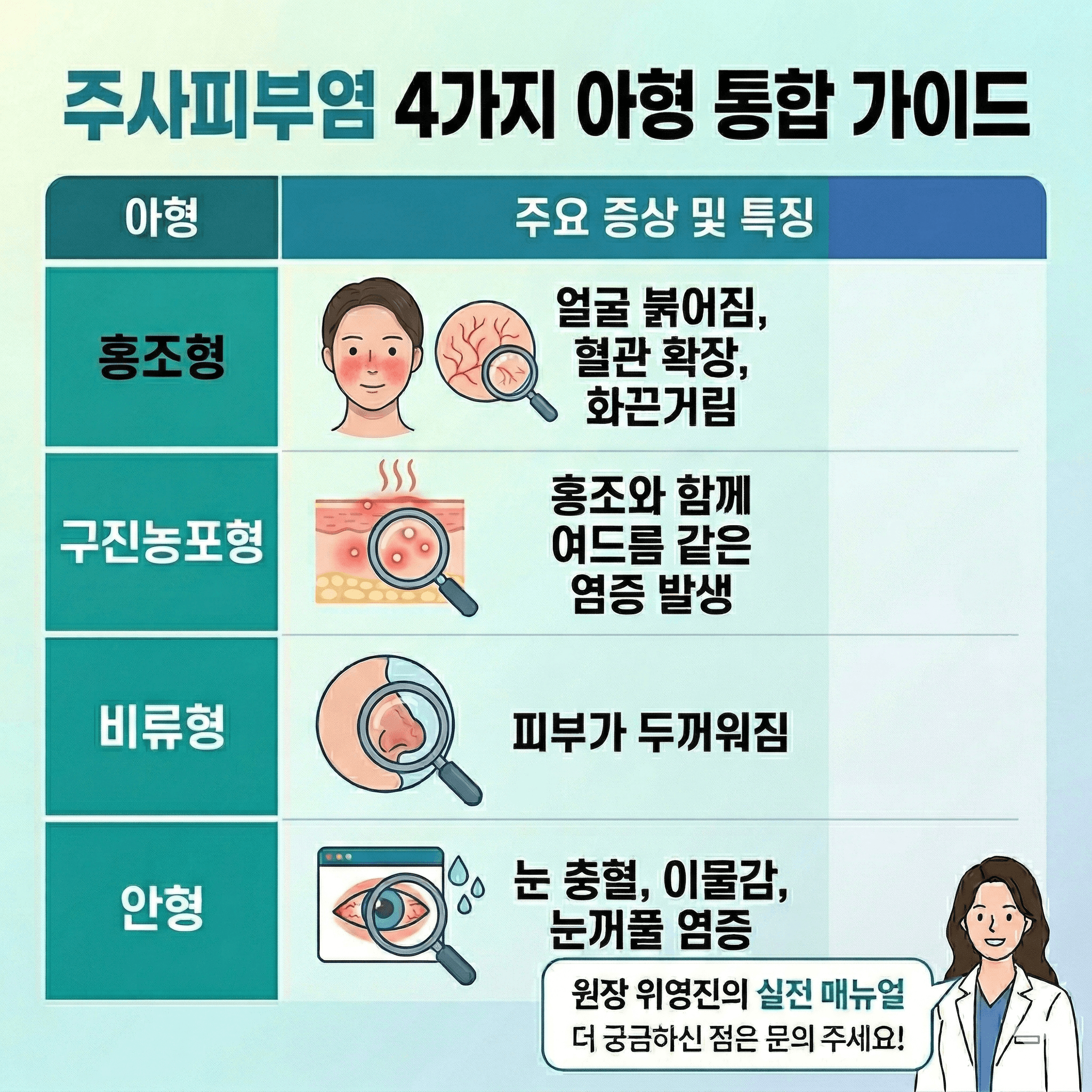
is not simply having a "naturally red face."
It is a chronic condition in which flushing repeatedly occurs in the central face,
accompanied by visible capillaries
or acne-like inflammation.
The papulopustular type in particular resembles acne,
so many cases worsen after receiving the wrong treatment —
accurate differentiation is absolutely essential.
Rosacea Treatment —
What Options Are There?
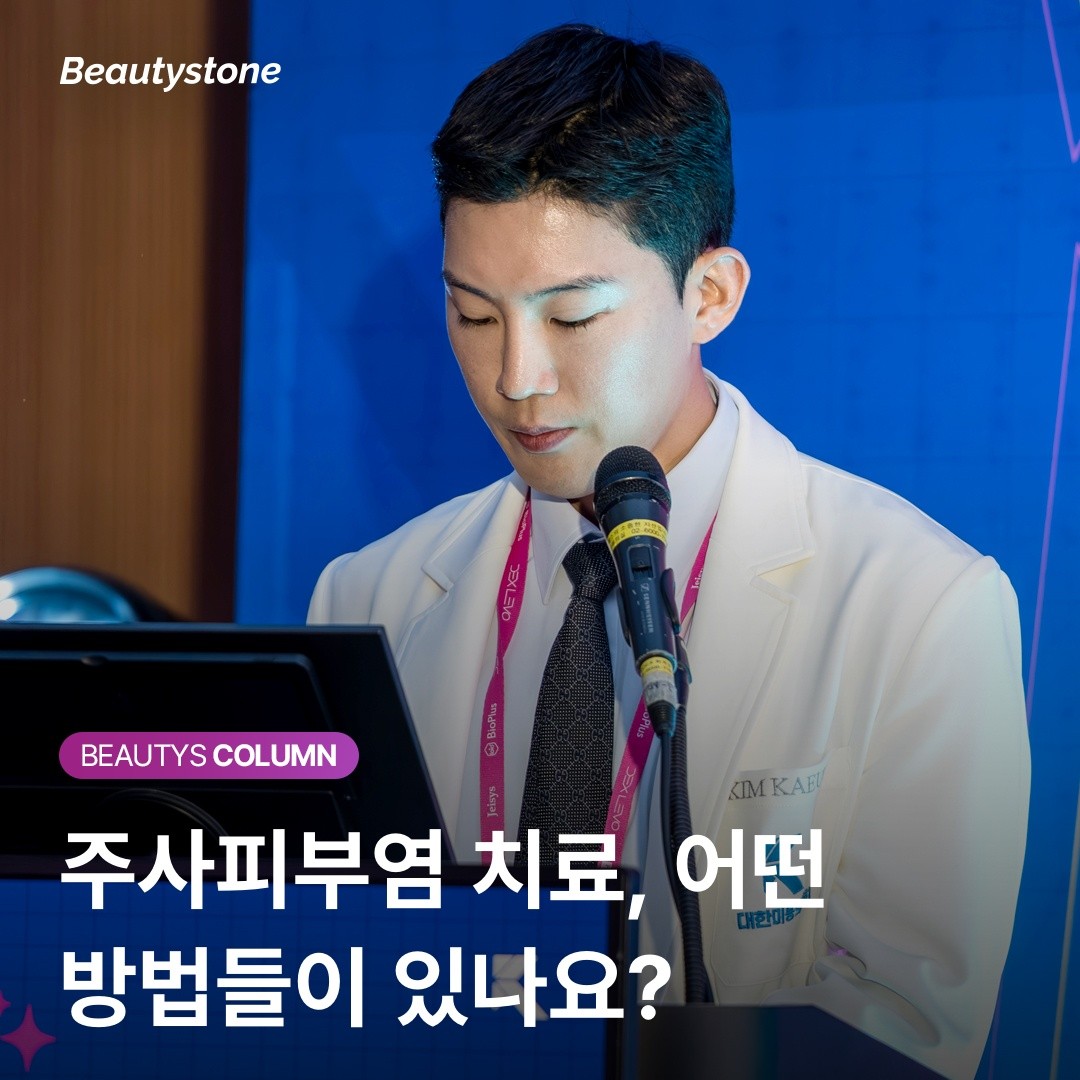
Treatment broadly falls into three approaches.
Topical agents (applied to the skin)
Used to control inflammation and flushing
in the form of ointments or creams.
Oral antibiotics (taken by mouth)
Rather than to kill bacteria, these are used for their anti-inflammatory effects,
prescribed at a low dose for a short period.
Vascular laser
For capillaries that are already dilated and hardened,
medication alone has its limits,
so laser treatment is used in combination.
👨⚕️ Dr. Wi Youngjin's Clinical Notes:
With rosacea, the goal after treatment should be
"well managed" — not "completely cured."
In my experience, topical medication alone
has rarely been enough to reduce dilated blood vessels.
And I've seen many cases where patients had laser treatment
but kept the same lifestyle habits and relapsed quickly.
If harsh cleansing or sauna use continues,
even the best treatment will only deliver half the results.
Lifestyle Habits —
Why Are They Just as Important as Treatment?

![[뷰티스톤 리포트] 주사피부염 환자가 절대 하지 말아야 할 3가지 스킨케어 습관](https://framerusercontent.com/images/lcTkMeLbjOQu1BuHlBD0xf7rY.jpg)
To be honest, lifestyle management
isn't just something that supports treatment —
it is the core of treatment.
UV exposure: the most common aggravating factor.
Diet: alcohol (especially wine), spicy and hot foods
Environment: excessive exercise or sudden temperature changes
Skincare: be cautious with strong ingredients like retinol
Following all of this may make daily life a little inconvenient,
but sun protection is absolutely non-negotiable.
Please make a habit of using a mineral (physical) sunscreen
every single day.
When You Should
See a Dermatologist
If any of the following apply to you,
it's a good idea to come in for a consultation.
Flushing that persists or spreads for more than 2 weeks
Recurring acne-like inflammation
Eyes that keep getting bloodshot or feel gritty
Irritation every time you use skincare products
I start by identifying the subtype and stage,
then work through the most pressing issues
one by one in order of priority.
Adding vascular laser to the plan
does come with some cost,
but addressing it properly in the early stages
is ultimately the most economical approach.
Frequently Asked Questions (FAQ)
Q1. Do I really have to go to a clinic?
A. Rosacea tends to worsen gradually if left untreated.
Getting on the right treatment path early is far more efficient.
Q2. How is it different from acne?
A. With rosacea, the breakouts don't have blackheads
and are usually accompanied by flushing.
Q3. Can it be completely cured?
A. With good management of known triggers,
it can be controlled well enough that it's barely noticeable in everyday life.
If you have any questions,
feel free to reach out to us on WhatsApp.
This was Dr. Wi Youngjin.
Related Reading
▶Hapjeong Dermatology Beauty Stone Clinic
▶Nose Filler: Side Effects, Results, and How Long It Lasts
▶"Others say theirs was removed in 5 sessions?" The Real Reason Your Tattoo Removal Costs More
▶My Cheeks Look Hollow After Jaw Botox — Why Does That Happen?
How Is Rosacea Treated at a Dermatology Clinic?
![[의사 고백] 주사피부염, 완치가 아니라 '조절'이 목표여야 실패하지 않습니다](https://framerusercontent.com/images/X0lrBoi1cM8Xlh7xuFyM2jtBD2c.jpg)
These days, perhaps because it's the spring transitional season,
"My face keeps turning red."
"It's not getting better even with home care."
I've been seeing a lot more patients coming in saying exactly this.
Quite a few of them turn out to actually have
rosacea.
It's a fairly well-known condition by now,
but with so much information out there,
some people end up feeling more confused than ever.
Today, I'd like to give you an honest, straightforward summary of rosacea treatment
based on what I've seen and experienced in the clinic.
💡 Key Takeaways from Today's Post
Q. Do I really need to see a dermatologist?
A. Home care alone is not enough for real treatment.
Laser treatment is essential.
Q. What treatment options are available?
A. Topical medication, oral antibiotics, and vascular laser
are combined appropriately based on the stage of symptoms.
Q. Is a complete cure possible?
A. It's closer to management than a complete cure, but
vascular laser can restore your skin
to how it looked before the flushing started.
Lifestyle management to reduce recurrence
is more important than anything else.
Rosacea —
What Exactly Is It?

Many people misunderstand this, but rosacea
is not simply having a "naturally red face."
It is a chronic condition in which flushing repeatedly occurs in the central face,
accompanied by visible capillaries
or acne-like inflammation.
The papulopustular type in particular resembles acne,
so many cases worsen after receiving the wrong treatment —
accurate differentiation is absolutely essential.
Rosacea Treatment —
What Options Are There?

Treatment broadly falls into three approaches.
Topical agents (applied to the skin)
Used to control inflammation and flushing
in the form of ointments or creams.
Oral antibiotics (taken by mouth)
Rather than to kill bacteria, these are used for their anti-inflammatory effects,
prescribed at a low dose for a short period.
Vascular laser
For capillaries that are already dilated and hardened,
medication alone has its limits,
so laser treatment is used in combination.
👨⚕️ Dr. Wi Youngjin's Clinical Notes:
With rosacea, the goal after treatment should be
"well managed" — not "completely cured."
In my experience, topical medication alone
has rarely been enough to reduce dilated blood vessels.
And I've seen many cases where patients had laser treatment
but kept the same lifestyle habits and relapsed quickly.
If harsh cleansing or sauna use continues,
even the best treatment will only deliver half the results.
Lifestyle Habits —
Why Are They Just as Important as Treatment?
![[뷰티스톤 리포트] 주사피부염 환자가 절대 하지 말아야 할 3가지 스킨케어 습관](https://framerusercontent.com/images/lcTkMeLbjOQu1BuHlBD0xf7rY.jpg)
To be honest, lifestyle management
isn't just something that supports treatment —
it is the core of treatment.
UV exposure: the most common aggravating factor.
Diet: alcohol (especially wine), spicy and hot foods
Environment: excessive exercise or sudden temperature changes
Skincare: be cautious with strong ingredients like retinol
Following all of this may make daily life a little inconvenient,
but sun protection is absolutely non-negotiable.
Please make a habit of using a mineral (physical) sunscreen
every single day.
When You Should
See a Dermatologist
If any of the following apply to you,
it's a good idea to come in for a consultation.
Flushing that persists or spreads for more than 2 weeks
Recurring acne-like inflammation
Eyes that keep getting bloodshot or feel gritty
Irritation every time you use skincare products
I start by identifying the subtype and stage,
then work through the most pressing issues
one by one in order of priority.
Adding vascular laser to the plan
does come with some cost,
but addressing it properly in the early stages
is ultimately the most economical approach.
Frequently Asked Questions (FAQ)
Q1. Do I really have to go to a clinic?
A. Rosacea tends to worsen gradually if left untreated.
Getting on the right treatment path early is far more efficient.
Q2. How is it different from acne?
A. With rosacea, the breakouts don't have blackheads
and are usually accompanied by flushing.
Q3. Can it be completely cured?
A. With good management of known triggers,
it can be controlled well enough that it's barely noticeable in everyday life.
If you have any questions,
feel free to reach out to us on WhatsApp.
This was Dr. Wi Youngjin.
Related Reading
▶Hapjeong Dermatology Beauty Stone Clinic
▶Nose Filler: Side Effects, Results, and How Long It Lasts
▶"Others say theirs was removed in 5 sessions?" The Real Reason Your Tattoo Removal Costs More
▶My Cheeks Look Hollow After Jaw Botox — Why Does That Happen?
Latest post
Latest post

Contouring & Volume
리투오는 인간동종진피가 원료라는데, 안전성까지 이미 다 검증됐다고 볼 수 있을까요
동종진피 원료인 리투오, 볼륨 교정 한계와 안전성 데이터가 아직 쌓이는 중인 이유를 정리했어요.

Lifting
Sofwave for Thin, Delicate Under-Eye Skin
Can Sofwave firm thin under-eye skin? How it works and how it compares to Shurink.

Contouring & Volume
Juvelook for a Hollow Forehead and Fine Lines
Can Juvelook help a hollow forehead? How this collagen booster differs from filler.

Hair Removal
GentleMax Pro Plus vs Alexandrite Hair Laser
How GentleMax Pro Plus and Alexandrite differ for hair removal, and which may fit you.

Lifting
Heat and Redness After Onda Lifting: Care
Heat and redness after Onda lifting? How to care for it and when to call the clinic.

skin
When to Lift Again After a Skin Procedure
When can you restart sweaty weight training after a skin procedure? A calm guide.
1:1 Custom Approach
1:1 Consultation Whatsapp
🌸 Beautystone Clinic attends the Meditox Bangkok Cadaver Workshop 🌸
1:1 Custom Approach