Shrink side effects? Misconceptions about 'sunken cheeks' and the director's reliable prevention tips
Dr. Wi Young-jin and Dr. Kim Ga-eul, Directors of Hongdae Beautystone Clinic
Hongdae Beauty Doctor Beauty Stone Clinic

Shrink HIFU Side Effects: Cheek Loss Truth

Shrink HIFU Side Effects: Cheek Loss Truth

Shrink HIFU Side Effects: Cheek Loss Truth

Noticed cheek hollowing after Shurink, it was likely due to the treatment design.

Don't automatically assume cheek hollowing after Shurink is a side effect


It used to be super, super hot,

but these days, more people are getting Ulthera.

I still think Shurink is a great procedure, though.

By coagulating the base of the subcutaneous fat layer,

it creates a lifting effect.

Let me talk about Shurink Universe.


Shurink treatment,


a side effect where the cheeks looked hollow after treatment

You're scared of this, so you hesitate, right?


Q. If I get Shurink, will my cheeks hollow out?
A. Not everyone experiences hollowing.
It tends to be more noticeable in people with little cheek fat, or when the procedure is performed without proper planning and design.


Q. Is cheek hollowing temporary or permanent?
A. In most cases, it does not recover significantly.

Something like Juvelook may be a better option at that point.


Q. Can cheek hollowing be prevented before Shurink?
A. Yes, it can. I'll cover how to prevent it in the main text.
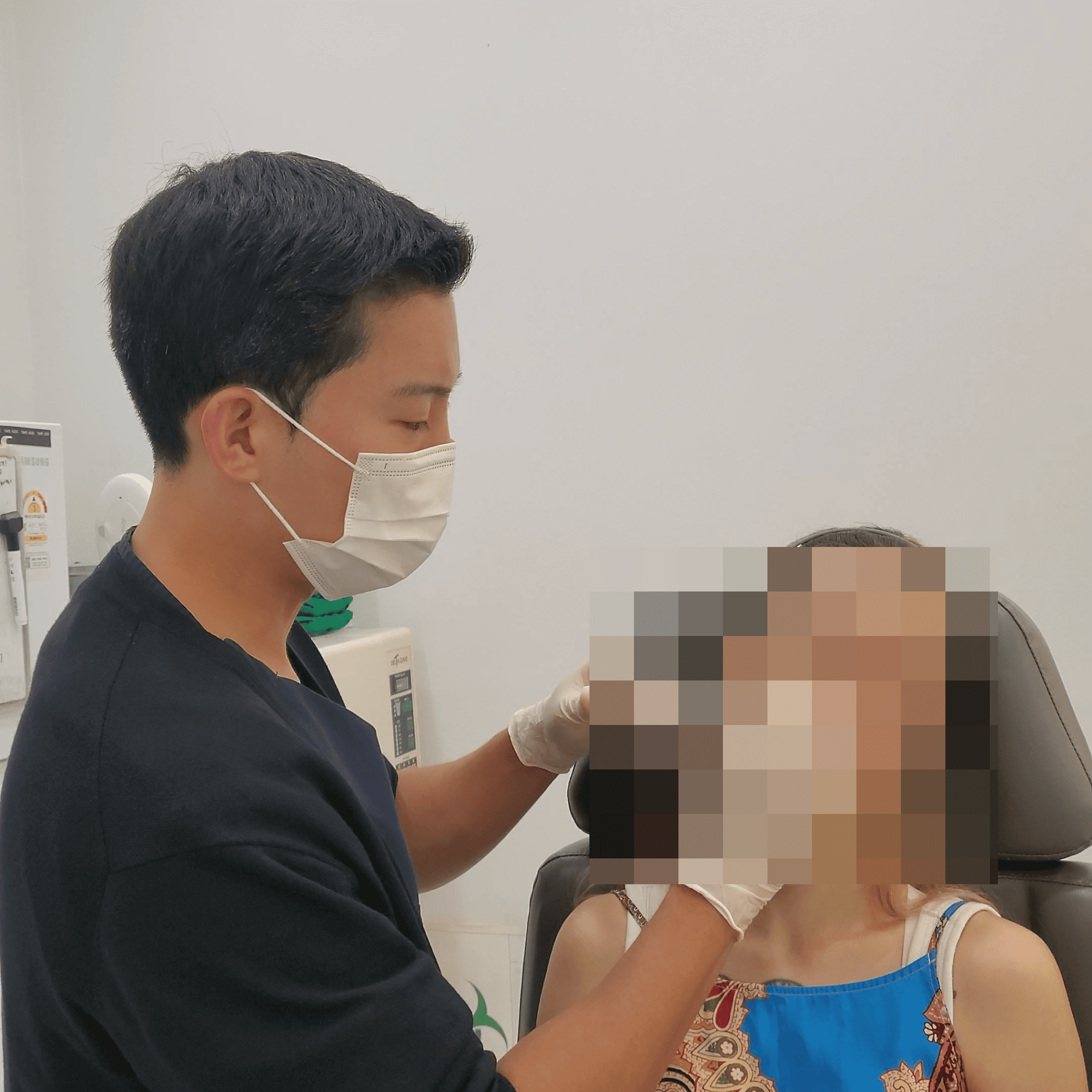
슈링크 볼 꺼짐 부작용 원인과 예방 설명

Cheek hollowing—is it really a side effect, or was it already like that?

This is something many people misunderstand:
the Shurink procedure itself does not directly dissolve cheek fat.

Shurink (HIFU, high-intensity focused ultrasound)
concentrates thermal energy in the SMAS layer (fascia layer) beneath the skin
to contract tissue and create a lifting effect.

But there is one important point here.

As this thermal energy passes through the fat layer,
it can indirectly affect fat cells.


Especially if someone doesn't naturally have much cheek fat
and that area is not skipped during treatment,


the cheeks can end up looking hollow.

There's really no ambiguity about this—

it was treated in an area that shouldn't have been.

Some people even feel they look older as their volume decreases.


In other words, if you're unhappy with the cheek hollowing,

then yes, it would be considered a side effect.
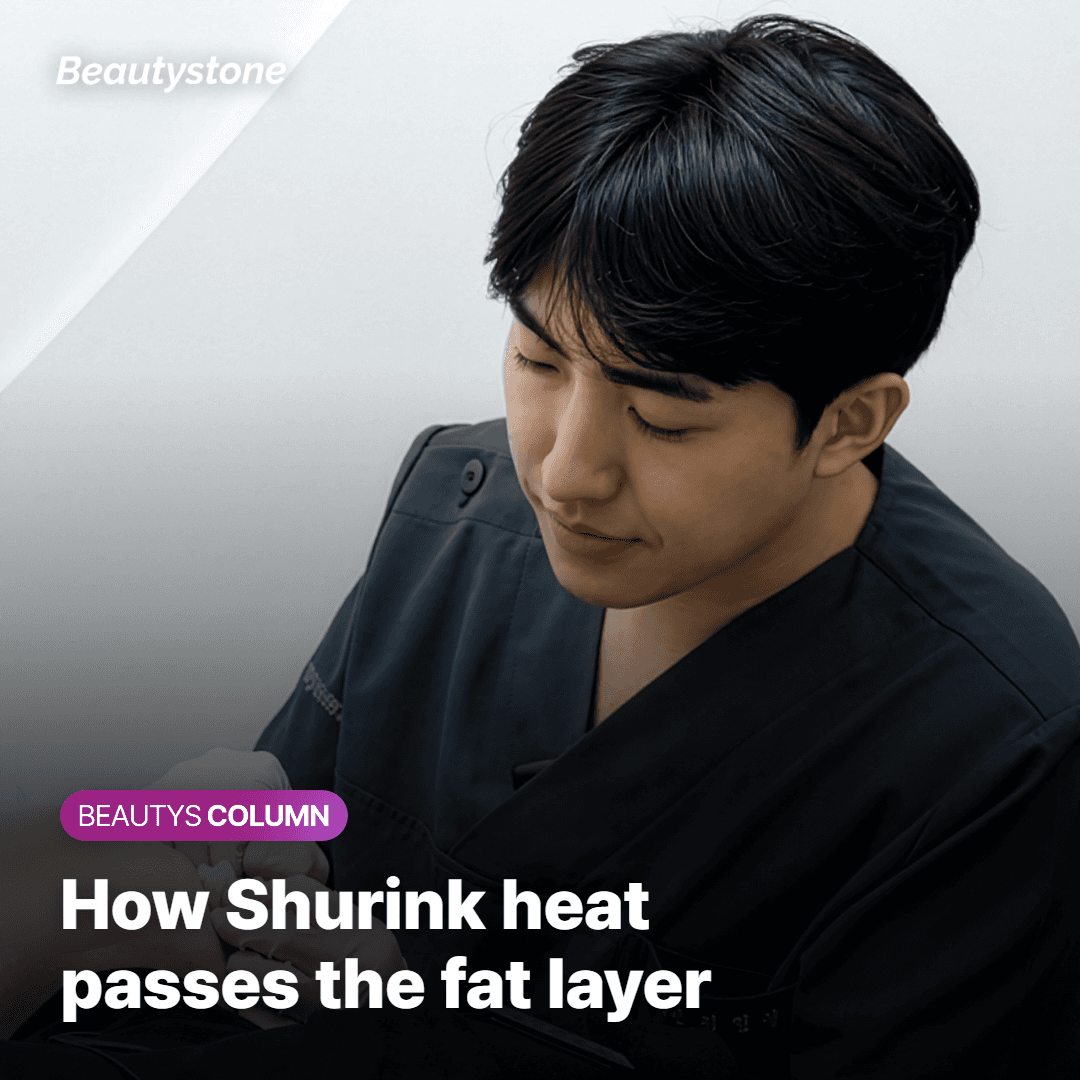


슈링크 HIFU 에너지가 볼 지방층에 미치는 영향 설명

There are specific cases where cheek hollowing is more likely to occur

It varies by case, but I usually categorize it like this.


  1. People who naturally have little cheek fat
    If energy is delivered when volume is already insufficient,
    cheek hollowing may feel more pronounced than any lifting effect.


  2. People with thin subcutaneous fat (the shallow fat layer under the skin)
    Because Shurink energy passes through the fat layer quickly,
    its impact can become concentrated in that layer.


  3. When energy settings were not appropriate
    No matter how good the device is,
    firing energy uniformly at a high level makes it hard to achieve good results
    and can end up leaving only cheek hollowing.


  4. When too many shots are accumulated
    Doing too much at once, or repeating at short intervals,
    can cause cumulative damage to the fat layer.


But the important thing is, as I mentioned,

this is an area that should not be treated.


Dr. Wi Young-jin's practical note:

I always bring this up with patients in advance.
Especially for those who already feel their cheeks are hollow,
or who appear to have little cheek fat,
I always establish an energy-control plan for the cheek area before proceeding with Shurink.

In my experience, even with the same Shurink device,
adjusting energy levels differently by facial area
makes a real, practical difference in preventing cheek hollowing.
Along the cheek-to-temple line in particular, I lower the energy
and keep the shot count on the conservative side.

It's a bit of a shame, honestly,
but because so many clinics treat with standardized settings,
these cases tend to repeat.


What needs to be different to prevent cheek hollowing?


Honestly,
more than "which device you use,"
"how you set it and where you apply it" matters more.


Here's what actually needs to change to prevent cheek hollowing:


  1. Check facial fat distribution before treatment
    The approach itself should differ
    between people with low cheek volume and those with adequate volume.

    With proper facial mapping, areas that are already lacking volume

    should simply not be treated with Shurink.


  2. Lower cheek-area energy or adjust the tip
    The target depth differs between the 3mm and 4.5mm tips.
    For people with thin cheek fat, reducing use of deeper tips
    or lowering the energy settings is the right call.


  3. Review whether to combine with filler or fat grafting
    If cheek hollowing already exists,
    it is often more realistic to consider volume restoration first or alongside treatment,
    rather than proceeding with Shurink alone.


That said, lowering energy isn't always straightforward.
If you reduce energy, the lifting effect can decrease along with it.
So for this part, we discuss and decide together
where to prioritize: lifting effect versus maintaining cheek volume.


슈링크 볼 꺼짐 예방을 위한 에너지 설정과 부위별 조절 방법

Key summary: Cheek hollowing after Shurink is often preventable depending on energy settings and individual fat distribution.


If your cheeks are already hollow, here's what you can do now


There's one thing I want to be clear about:
cheek hollowing after Shurink
does not always remain permanent.

Some people see a meaningful recovery within 3–6 months after treatment.
That's because some cases only look hollow due to swelling or tissue reaction,
not actual fat-cell damage.

However, if recovery is insufficient,
or if it's more visible because you didn't have much fat to begin with,
the following options are worth considering.


  1. Filler (hyaluronic acid)
    A method that directly restores volume to hollow areas.
    Immediate and clearly effective.
    However, results have a maintenance period and may require follow-up treatments.


  2. Fat grafting
    Since your own fat is used,
    natural-looking volume restoration is possible.
    Do keep in mind that graft survival rates can vary.


  3. Observation for a period of time
    If it's right after treatment, in many cases
    it's more practical to monitor for about 3 months rather than doing something right away.



슈링크 후 볼 꺼짐 회복 방법 필러 지방이식 비교


Frequently Asked Questions


Q1. It hasn't been long since my Shurink, but my cheeks suddenly seem hollow. Should I wait?


A. Right after treatment, swelling and tissue reactions can make your cheeks look more hollow than they actually are.

It's best to wait at least 4–8 weeks,
and if there's no improvement after 3 months, additional consultation is recommended.
In most cases, it's better to observe progress
than to add volume immediately.


Q2. My cheeks are naturally a bit hollow—can I still get Shurink?


A. You can, but the approach needs to be different.
We can adjust by lowering energy in the cheek area,
or excluding the cheeks from the Shurink treatment zone entirely.
The most important thing is to mention upfront during your consultation that your cheeks are already somewhat hollow.


Q3. If I lower the energy to avoid cheek hollowing after Shurink, will the lifting effect also decrease?


A. Honestly, it can.
Energy and effect are proportional to some degree.
That's why it's important to discuss and agree on priorities
before treatment.
If you want both lifting and volume retention,
a combination approach may be worth considering rather than Shurink alone.

If you have any questions, feel free to reach out via KakaoTalk.
You're welcome to ask before your visit.

This was Dr. Wi Young-jin.


✦ Read more

Don't automatically assume cheek hollowing after Shurink is a side effect


It used to be super, super hot,

but these days, more people are getting Ulthera.

I still think Shurink is a great procedure, though.

By coagulating the base of the subcutaneous fat layer,

it creates a lifting effect.

Let me talk about Shurink Universe.


Shurink treatment,


a side effect where the cheeks looked hollow after treatment

You're scared of this, so you hesitate, right?


Q. If I get Shurink, will my cheeks hollow out?
A. Not everyone experiences hollowing.
It tends to be more noticeable in people with little cheek fat, or when the procedure is performed without proper planning and design.


Q. Is cheek hollowing temporary or permanent?
A. In most cases, it does not recover significantly.

Something like Juvelook may be a better option at that point.


Q. Can cheek hollowing be prevented before Shurink?
A. Yes, it can. I'll cover how to prevent it in the main text.

슈링크 볼 꺼짐 부작용 원인과 예방 설명

Cheek hollowing—is it really a side effect, or was it already like that?

This is something many people misunderstand:
the Shurink procedure itself does not directly dissolve cheek fat.

Shurink (HIFU, high-intensity focused ultrasound)
concentrates thermal energy in the SMAS layer (fascia layer) beneath the skin
to contract tissue and create a lifting effect.

But there is one important point here.

As this thermal energy passes through the fat layer,
it can indirectly affect fat cells.


Especially if someone doesn't naturally have much cheek fat
and that area is not skipped during treatment,


the cheeks can end up looking hollow.

There's really no ambiguity about this—

it was treated in an area that shouldn't have been.

Some people even feel they look older as their volume decreases.


In other words, if you're unhappy with the cheek hollowing,

then yes, it would be considered a side effect.


슈링크 HIFU 에너지가 볼 지방층에 미치는 영향 설명

There are specific cases where cheek hollowing is more likely to occur

It varies by case, but I usually categorize it like this.


  1. People who naturally have little cheek fat
    If energy is delivered when volume is already insufficient,
    cheek hollowing may feel more pronounced than any lifting effect.


  2. People with thin subcutaneous fat (the shallow fat layer under the skin)
    Because Shurink energy passes through the fat layer quickly,
    its impact can become concentrated in that layer.


  3. When energy settings were not appropriate
    No matter how good the device is,
    firing energy uniformly at a high level makes it hard to achieve good results
    and can end up leaving only cheek hollowing.


  4. When too many shots are accumulated
    Doing too much at once, or repeating at short intervals,
    can cause cumulative damage to the fat layer.


But the important thing is, as I mentioned,

this is an area that should not be treated.


Dr. Wi Young-jin's practical note:

I always bring this up with patients in advance.
Especially for those who already feel their cheeks are hollow,
or who appear to have little cheek fat,
I always establish an energy-control plan for the cheek area before proceeding with Shurink.

In my experience, even with the same Shurink device,
adjusting energy levels differently by facial area
makes a real, practical difference in preventing cheek hollowing.
Along the cheek-to-temple line in particular, I lower the energy
and keep the shot count on the conservative side.

It's a bit of a shame, honestly,
but because so many clinics treat with standardized settings,
these cases tend to repeat.


What needs to be different to prevent cheek hollowing?


Honestly,
more than "which device you use,"
"how you set it and where you apply it" matters more.


Here's what actually needs to change to prevent cheek hollowing:


  1. Check facial fat distribution before treatment
    The approach itself should differ
    between people with low cheek volume and those with adequate volume.

    With proper facial mapping, areas that are already lacking volume

    should simply not be treated with Shurink.


  2. Lower cheek-area energy or adjust the tip
    The target depth differs between the 3mm and 4.5mm tips.
    For people with thin cheek fat, reducing use of deeper tips
    or lowering the energy settings is the right call.


  3. Review whether to combine with filler or fat grafting
    If cheek hollowing already exists,
    it is often more realistic to consider volume restoration first or alongside treatment,
    rather than proceeding with Shurink alone.


That said, lowering energy isn't always straightforward.
If you reduce energy, the lifting effect can decrease along with it.
So for this part, we discuss and decide together
where to prioritize: lifting effect versus maintaining cheek volume.


슈링크 볼 꺼짐 예방을 위한 에너지 설정과 부위별 조절 방법

Key summary: Cheek hollowing after Shurink is often preventable depending on energy settings and individual fat distribution.


If your cheeks are already hollow, here's what you can do now


There's one thing I want to be clear about:
cheek hollowing after Shurink
does not always remain permanent.

Some people see a meaningful recovery within 3–6 months after treatment.
That's because some cases only look hollow due to swelling or tissue reaction,
not actual fat-cell damage.

However, if recovery is insufficient,
or if it's more visible because you didn't have much fat to begin with,
the following options are worth considering.


  1. Filler (hyaluronic acid)
    A method that directly restores volume to hollow areas.
    Immediate and clearly effective.
    However, results have a maintenance period and may require follow-up treatments.


  2. Fat grafting
    Since your own fat is used,
    natural-looking volume restoration is possible.
    Do keep in mind that graft survival rates can vary.


  3. Observation for a period of time
    If it's right after treatment, in many cases
    it's more practical to monitor for about 3 months rather than doing something right away.


슈링크 후 볼 꺼짐 회복 방법 필러 지방이식 비교


Frequently Asked Questions


Q1. It hasn't been long since my Shurink, but my cheeks suddenly seem hollow. Should I wait?


A. Right after treatment, swelling and tissue reactions can make your cheeks look more hollow than they actually are.

It's best to wait at least 4–8 weeks,
and if there's no improvement after 3 months, additional consultation is recommended.
In most cases, it's better to observe progress
than to add volume immediately.


Q2. My cheeks are naturally a bit hollow—can I still get Shurink?


A. You can, but the approach needs to be different.
We can adjust by lowering energy in the cheek area,
or excluding the cheeks from the Shurink treatment zone entirely.
The most important thing is to mention upfront during your consultation that your cheeks are already somewhat hollow.


Q3. If I lower the energy to avoid cheek hollowing after Shurink, will the lifting effect also decrease?


A. Honestly, it can.
Energy and effect are proportional to some degree.
That's why it's important to discuss and agree on priorities
before treatment.
If you want both lifting and volume retention,
a combination approach may be worth considering rather than Shurink alone.

If you have any questions, feel free to reach out via KakaoTalk.
You're welcome to ask before your visit.

This was Dr. Wi Young-jin.


✦ Read more

Beauty Doctor Hongdae Beauty Stone Clinic

Recommended post

Recommended post

Latest post

Latest post

리쥬란 힐러, 저도 처음엔 별로 안 좋아했어요

skin

리쥬란 힐러, 저도 처음엔 별로 안 좋아했어요

리쥬란 힐러 효과가 왜 '재생'에 집중되는지, PN 성분의 작동 원리와 임상에서 본 실제 변화를 솔직하게 정리했습니다. 모든 피부에 만능은 아니라는 점도 함께요.

시크릿RF 시술시 마취크림만 하면 꽤 아플 수 있습니다.

skin

시크릿RF 시술시 마취크림만 하면 꽤 아플 수 있습니다.

시크릿RF 시술 통증이 얼마나 되는지, 마취 크림부터 당일 관리 루틴까지 실제 진료실 기준으로 솔직하게 정리했습니다.

[위영진 칼럼] 리프팅과 탄력을 한 번에? 마이크로웨이브 온다리의 과학적 원리

Hair Removal

With GentleMax Pro Plus, using both wavelengths does not mean the results are the same.

We explain through clinical cases why GentleMax Pro Plus uses two wavelengths—755nm Alexandrite and 1064nm Nd:YAG—tailored to hair type and skin tone.

If it's still the same after 8 Brazilian hair removal sessions, check the difference between wavelength and cooling.

Hair Removal

[Wi Young-jin Column] The scientific reason women’s Brazilian hair removal is especially painful and less effective

Women’s Brazilian hair removal: why do some areas hurt more and others less. Explaining the real difference made by wavelength and cooling systems

[Wi Young-jin Column] Sunken temples determine the eye shape: the principles of non-surgical eye lifting

Contouring & Volume

Still feeling heavy after eye correction? Why you should check the temple tenting effect

The tent effect of eye lifting works by supporting sunken temples with volume, allowing the outer corners of the eyes and the eyebrows to naturally lift. It explains the mechanism by which the eyes appear larger without pulling.

Sculptra vs. Radiesse vs. Juvelook: How to Choose the Collagen Injection That Suits Your Face

Contouring & Volume

When deciding which collagen booster filler to use, consider the treatment area.

Based on clinical experience, we compare the ingredient differences, duration, and selection criteria by skin type for three collagen booster fillers (Sculptra, Radiesse, and Juvelook).