

SPF 50 isn't always best—what the numbers mean and how to choose by sun exposure.
Published
Updated

Author
Wi Young-jin · Chief director
Seoul National University College of Medicine · Seoul National University Hospital Specialist
→
When you look at the back of a sunscreen to choose one, it is easy to get confused by all the labels like SPF50+ and PA++++. Knowing whether a higher number is always better, or if you should have separate sunscreens for daily life and outdoor activities, can save you precious time whenever you shop.
To put it briefly, SPF is an index that blocks UVB rays (which mainly cause burns and redness), while PA is a rating that blocks UVA rays (which mainly cause deeper dermis damage and pigmentation). For daily life, SPF30+ and PA++ are usually more than enough. For long outdoor activities, you can adjust to your exposure level by choosing SPF50 and PA++++ with a water-resistant label.
In this post, we will cover:
What the SPF numbers actually mean
How the PA rating differs from SPF
Guidelines for choosing daily vs. outdoor sunscreen
How much to apply and when to reapply
What do SPF numbers mean?
SPF measures how well a sunscreen protects against burns* caused by UVB rays. While many people mistakenly believe that "a higher SPF means you can stay out longer," SPF is actually closer to the percentage of UV rays blocked, rather than duration.
Burn*: This refers to sunburn (erythema) where the skin becomes red and sensitive from UV rays. It is often caused by UVB rays acting on the outer layer of the epidermis.
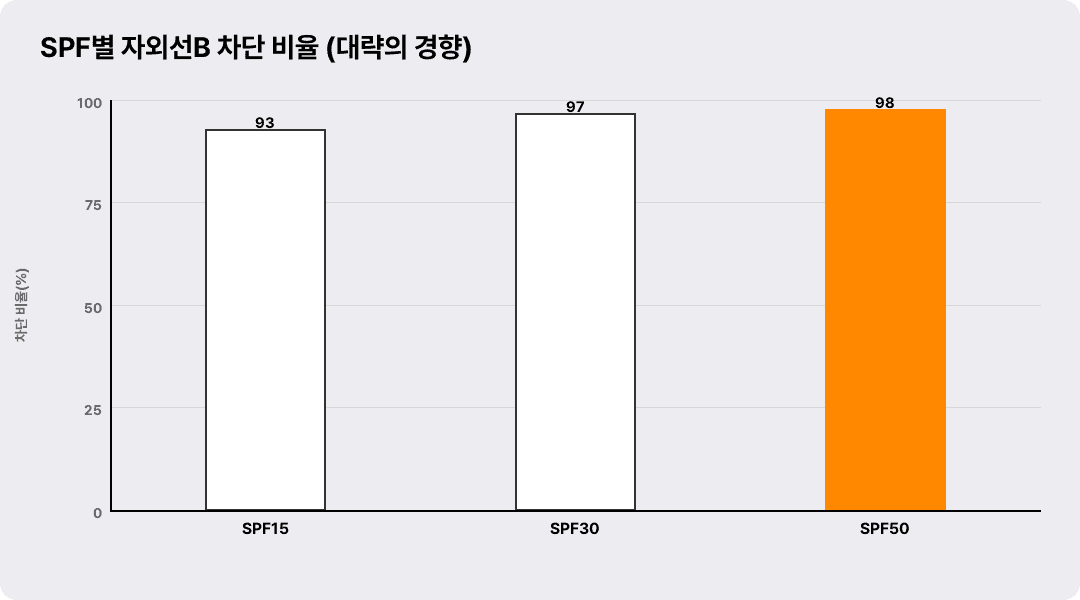
The American Academy of Dermatology's Sunscreen Label Guide points out that SPF15 filters about 93% of UVB rays, while SPF30 filters about 97%. Doubling the SPF number does not double the protection; rather, the difference becomes very gradual after a certain point. This is why many dermatological associations recommend SPF30 or higher as a daily standard.
Here is an approximate percentage of UVB rays filtered according to SPF levels:

How does the PA rating differ from SPF?
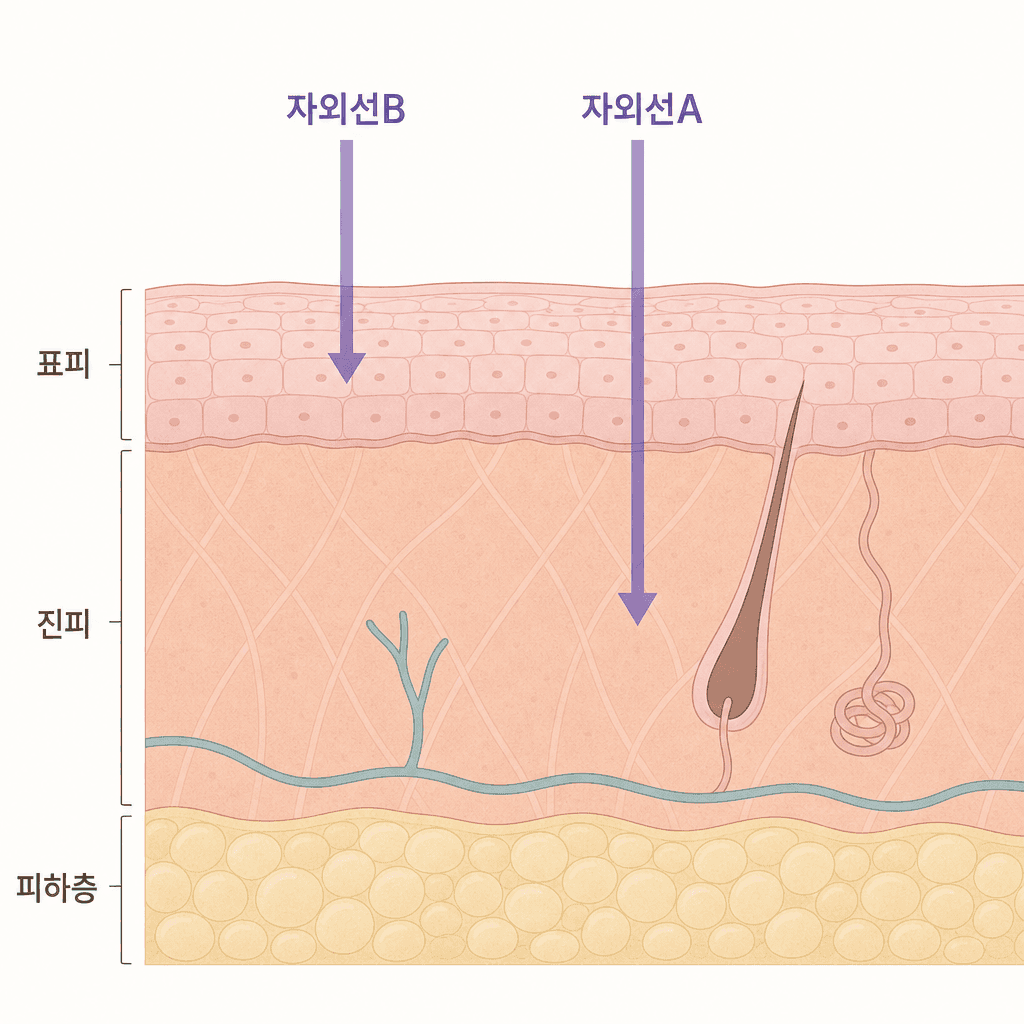
PA measures protection against UVA rays using a system of "+" symbols. UVA rays have longer wavelengths than UVB, allowing them to penetrate deep into the dermis of the skin. They are more closely linked to cumulative, long-term changes like pigmentation and loss of elasticity. Simply put, the more "+" signs you see (from PA+ up to PA++++), the higher the UVA protection.
If you only focus on a high SPF and ignore UVA protection, you might avoid sunburns but still experience pigmentation and premature aging signs from UVA exposure. That is why checking both ratings is so important. In US and European labeling systems, the term "Broad Spectrum" is used instead of PA to represent this exact concept. The American Academy of Dermatology's Sunscreen Guide also advises choosing a broad-spectrum formula (which blocks both UVA and UVB) with an SPF of 30 or higher.
Looking at a cross-section of the skin showing how deeply UVA and UVB rays reach makes it easy to understand why you need to protect against both.

How do I choose between daily and outdoor sunscreen?
For routine office commutes or a mostly indoor lifestyle, SPF30 and PA++ to +++ are perfectly adequate. If you are concerned about UVA rays passing through window glass, a formula with a slightly higher PA rating is ideal.
For indoors & short outings → SPF 30 or higher, PA++ or higher
For commutes, walks, & moderate sun exposure → SPF 30 to 50, PA+++ or higher
For hiking, swimming, & prolonged outdoor activities → SPF 50, PA++++ + Water Resistant
The American Academy of Dermatology's Sunscreen Guide recommends using products labeled "water resistant" for activities involving sweating or swimming. This label means the product maintains its effectiveness in water or sweat for either 40 or 80 minutes, so it must be reapplied after that time. The key is to choose based on your activities rather than simply seeking out the highest number.

The amount you apply and how often you reapply are what matter most
No matter how high the SPF is, if you apply too little, you won't get the level of protection stated on the bottle. The SPF on the label is calibrated for a specific amount, but in reality, most people only apply about half of the recommended quantity.
Dermatological Application Guidelines recommend about two finger-lengths (approx. 1 teaspoon) for the face, and about a shot-glass full (approx. 1 ounce) for the entire body. Furthermore, you should reapply every two hours, or immediately after swimming or heavy sweating.
In short, applying a generous amount and reapplying on time is just as crucial as choosing the right numbers. Because this information is for general reference, those with specific skin conditions or photosensitivity should consult a dermatologist before starting a new routine.

Frequently Asked Questions
Q. Is there a noticeable difference between SPF50 and SPF30?
A. In terms of UVB protection, SPF30 blocks about 97% of rays, while SPF50 blocks about 98%u2014so the difference is actually very small. However, because many people do not apply enough sunscreen, choosing SPF50 for outdoor activities can offer an extra margin of protection. Ultimately, application amount and reapplication frequency make the biggest difference.
Q. How do I read international products that don't have a PA rating?
A. Products from the US and Europe often use "Broad Spectrum" or a circled "UVA" logo instead of the PA rating system to show UVA protection. If you see these markings, it means the sunscreen shields against UVA as well, which is comparable to choosing a product with a high PA rating.
Q. Should I wear sunscreen on cloudy days?
A. Yes. UVA rays can penetrate clouds and window glass, meaning they can still reach your skin on overcast days or while indoors. Making sunscreen a daily habit is a wonderful way to prevent pigmentation and signs of aging. Results may vary by individual.
Q. It's so hard to reapply over makeup. What should I do?
A. Utilizing touch-up friendly formats like sun cushions, sun sticks, or sun sprays can help you maintain that two-hour reapplication window. However, keep in mind that sprays can apply quite thinly, so make sure to spray generously for even coverage.




Contouring & Volume
Hip Dip Filler Before and After: 4 Checks

Body
Potenza Treatment Interval: Why 4 Weeks?

Lifting
Ultherapy Before and After: Why Wait 90 Days?

Contouring & Volume
Belotero Revive Cost: 2cc Price vs. 3 Sessions

skin
Lip Hyperpigmentation Laser: Does It Work?

Contouring & Volume
Men's Forehead Filler: Hollow or Just Lines?