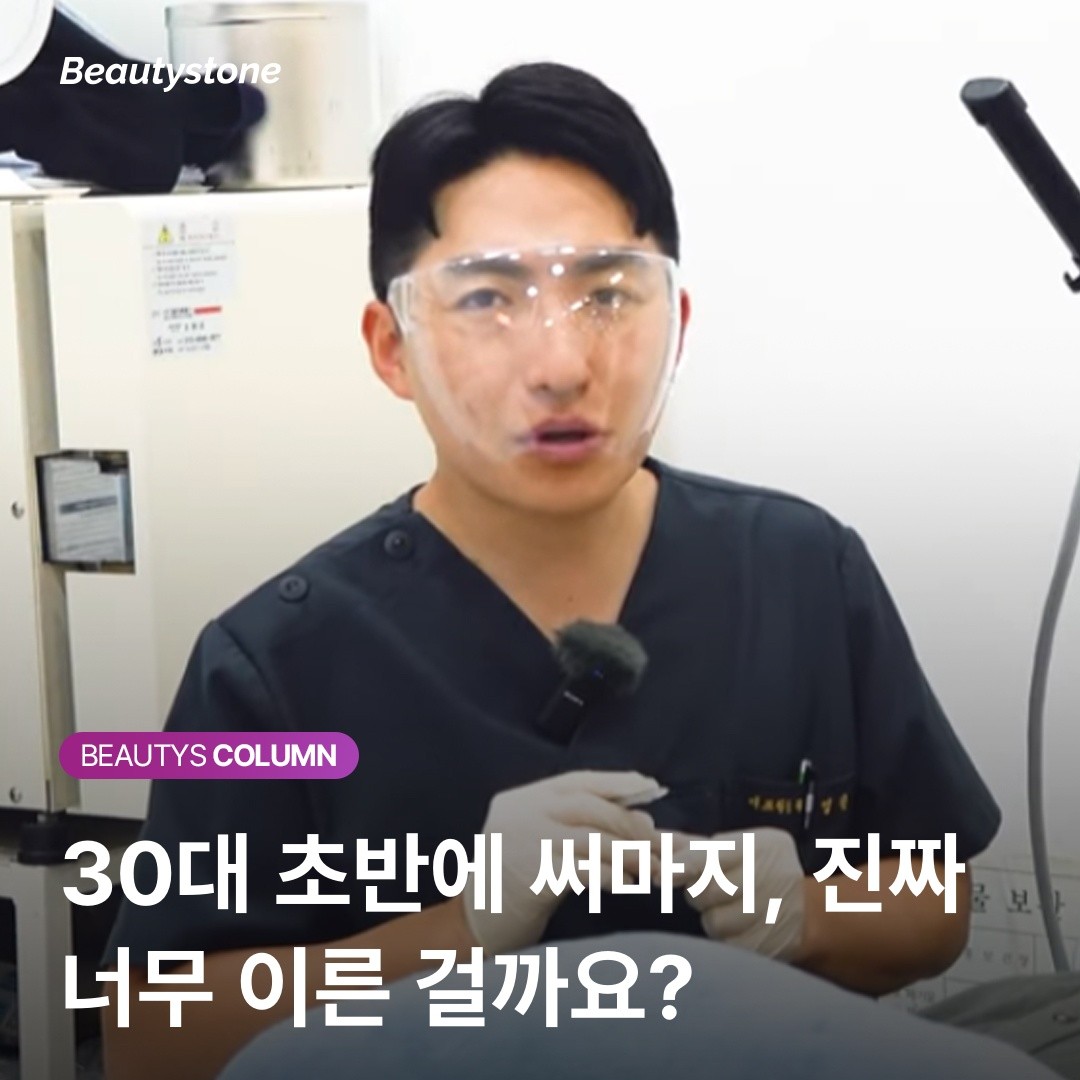
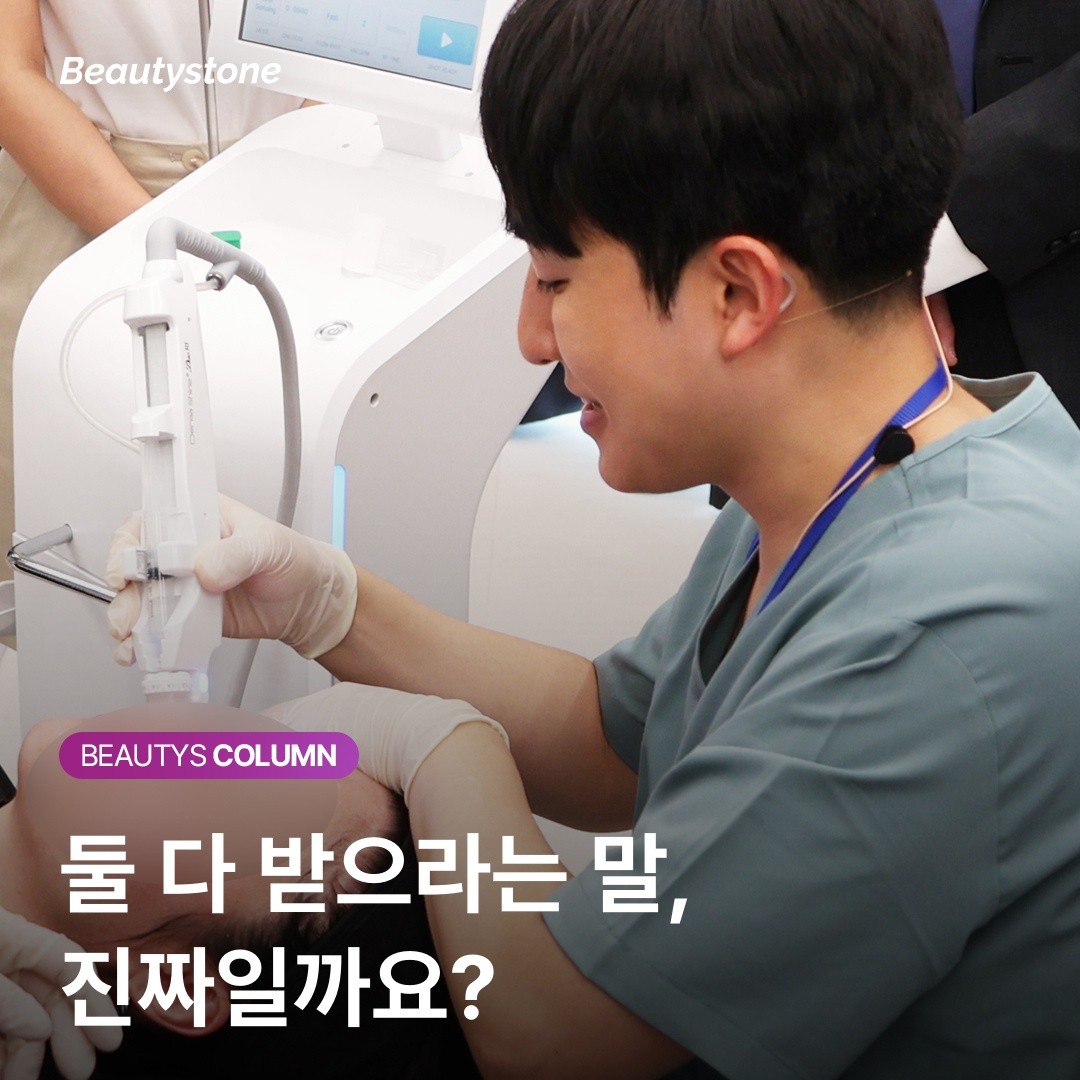
Thermage in your early 30s — really too early?
Before 35, collagen output is 2× higher than in your 40s—timing decides Thermage's value.

Thermage in your early 30s,
is it really too early?
Please check this before reading
Q. Isn’t Thermage in your early 30s
too early?
A. Quite the opposite.
If you have it before 35, even with the same number of shots, compared with your 40s
the collagen production rate is about twice as high.
When you start makes all the difference in value for money.
Q. I’m afraid of pain,
do people in their 30s still need anesthesia?
A. It’s not mandatory, but we do recommend it.
In your 30s, nerve sensation often responds more sensitively
and
we recommend a combination of topical anesthesia and a nerve block.

If you searched for Thermage in your 30s,
this is probably what you’re wondering about
If you came here by searching "Thermage 30s,"
you’re probably worried about one of two things.
"If I get it too early,
will I build up resistance later?"
Or, "Is it too aggressive of a procedure
to start now?"
To put it simply,
neither is really true.
Thermage delivers heat deep into the dermis to
stimulate collagen regeneration,
and this response appears very differently
depending on age.
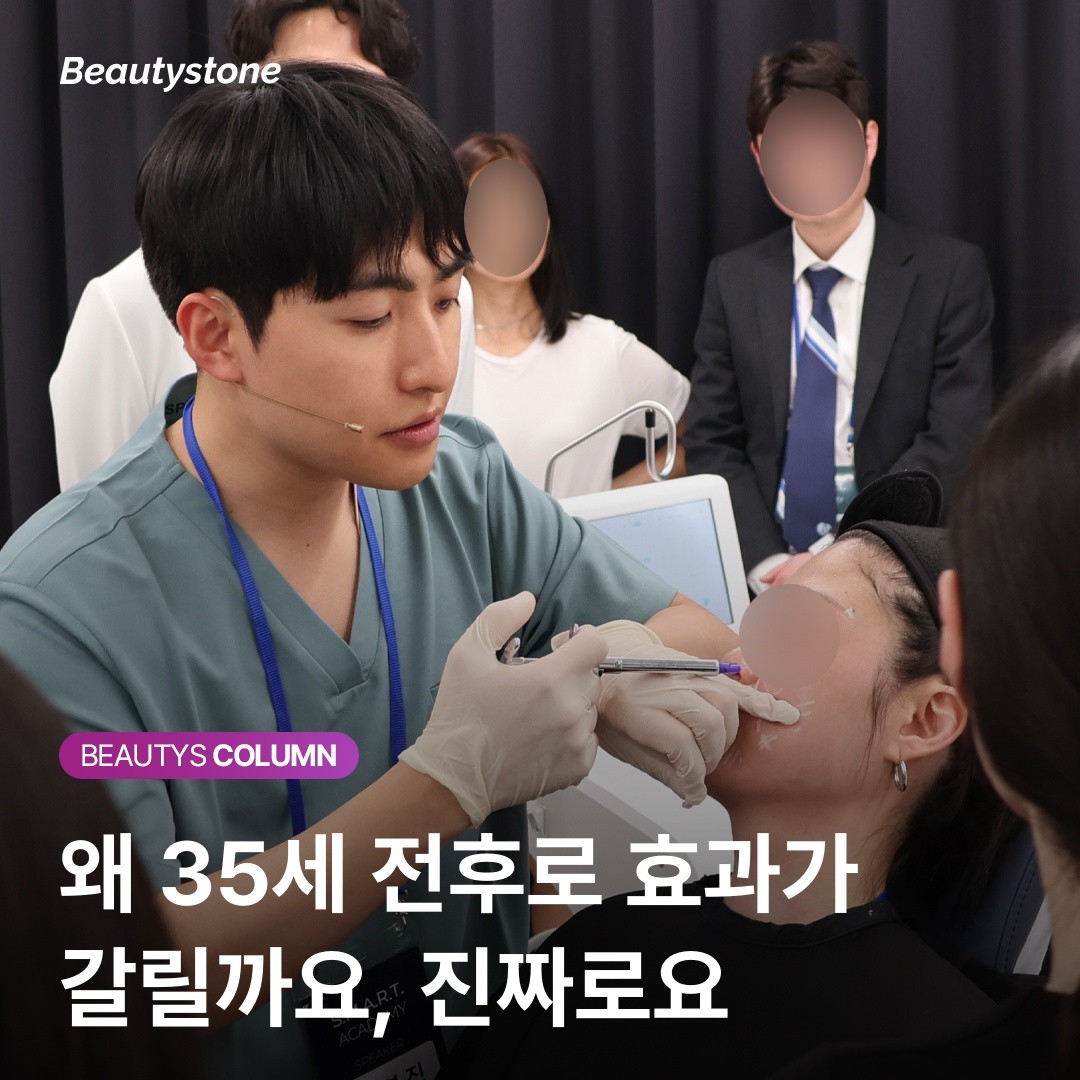
Why does the effect differ around age 35,
really?
"Thermage in your early 30s is like making an early deposit into your collagen savings account.
Because collagen synthesis drops to about half around age 35,
the earlier you start,
the better the value.
"
— Dr. Wi Young-jin (Beautystone Clinic, Hongdae)
The activity of fibroblasts that produce collagen
gradually declines from age 25
and drops sharply around 35.
Even with the same 600 shots,
the "factory" that responds to stimulation and produces new collagen
is operating at a much higher rate
in the early 30s.
We saw a similar case in clinic today.
A 36-year-old patient who had her first Thermage at 33 and
returned three years later,
had better skin elasticity
now than she did right before treatment three years ago.
In other words, her sagging had been delayed
by one step compared with the average for her age group.
Of course, the dramatic change right after treatment
may be less noticeable than in your 40s.
But when you compare yourself with friends two to three years later,
the difference becomes clear.
Thermage in your 30s: personalized guidance by type
Check the appropriate number of shots and
treatment interval for your condition.
Type | Recommended anesthesia | Recommended number of shots | Retreatment interval |
Early 30s / almost no sagging | Mainly topical anesthesia | Around 600 shots | 2.5~3 years |
Mid-30s / early mild sagging | Topical + partial nerve block | Around 900 shots | 2 years |
Late 30s / sensitive to pain | Topical + full nerve block | 900~1200 shots | 1.5~2 years |
In your early 30s, topical anesthesia alone
is often enough,
but as you move into your mid-to-late 30s, the dermis thins
and pain can feel deeper.
At that point, a nerve block helps you
stay comfortable during treatment, reduces movement,
and leads to a safer result.
The 3 questions people in their 30s ask most often
in the clinic
Q1. I’m scared Thermage will make my face look hollow.
Facial hollowing is not an issue with the device itself—
it happens when too many shots are delivered
to an area without much fat.
In your early 30s, with about 600 to 900 shots,
you generally don’t need to worry about hollowing.
Q2. The cost is a concern—
how often should I have it?
In your early 30s, once every 2.5 to 3 years is enough.
If you do it too often, the value decreases,
so one session before 35,
and one more in your late 30s, can make a big difference.
Q3. When does the redness usually go away after the procedure?
In most cases, it settles by the same day or the next morning
as a normal reaction.
However, for the first three days after treatment,
please avoid saunas, exercise, and alcohol so
redness doesn’t linger
and the dermis can recover smoothly.
If you take away just one thing today,
— Thermage in your 30s is less about immediate results than
about making an early deposit
for your future self five years from now.
In the next article,
we’ll walk through a real case comparing
a first treatment in the early 30s versus the 40s,
and the difference in results with the same number of shots.
This has been Dr. Wi Young-jin.
Related reading

Thermage in your early 30s,
is it really too early?
Please check this before reading
Q. Isn’t Thermage in your early 30s
too early?
A. Quite the opposite.
If you have it before 35, even with the same number of shots, compared with your 40s
the collagen production rate is about twice as high.
When you start makes all the difference in value for money.
Q. I’m afraid of pain,
do people in their 30s still need anesthesia?
A. It’s not mandatory, but we do recommend it.
In your 30s, nerve sensation often responds more sensitively
and
we recommend a combination of topical anesthesia and a nerve block.

If you searched for Thermage in your 30s,
this is probably what you’re wondering about
If you came here by searching "Thermage 30s,"
you’re probably worried about one of two things.
"If I get it too early,
will I build up resistance later?"
Or, "Is it too aggressive of a procedure
to start now?"
To put it simply,
neither is really true.
Thermage delivers heat deep into the dermis to
stimulate collagen regeneration,
and this response appears very differently
depending on age.

Why does the effect differ around age 35,
really?
"Thermage in your early 30s is like making an early deposit into your collagen savings account.
Because collagen synthesis drops to about half around age 35,
the earlier you start,
the better the value.
"
— Dr. Wi Young-jin (Beautystone Clinic, Hongdae)
The activity of fibroblasts that produce collagen
gradually declines from age 25
and drops sharply around 35.
Even with the same 600 shots,
the "factory" that responds to stimulation and produces new collagen
is operating at a much higher rate
in the early 30s.
We saw a similar case in clinic today.
A 36-year-old patient who had her first Thermage at 33 and
returned three years later,
had better skin elasticity
now than she did right before treatment three years ago.
In other words, her sagging had been delayed
by one step compared with the average for her age group.
Of course, the dramatic change right after treatment
may be less noticeable than in your 40s.
But when you compare yourself with friends two to three years later,
the difference becomes clear.
Thermage in your 30s: personalized guidance by type
Check the appropriate number of shots and
treatment interval for your condition.
Type | Recommended anesthesia | Recommended number of shots | Retreatment interval |
Early 30s / almost no sagging | Mainly topical anesthesia | Around 600 shots | 2.5~3 years |
Mid-30s / early mild sagging | Topical + partial nerve block | Around 900 shots | 2 years |
Late 30s / sensitive to pain | Topical + full nerve block | 900~1200 shots | 1.5~2 years |
In your early 30s, topical anesthesia alone
is often enough,
but as you move into your mid-to-late 30s, the dermis thins
and pain can feel deeper.
At that point, a nerve block helps you
stay comfortable during treatment, reduces movement,
and leads to a safer result.
The 3 questions people in their 30s ask most often
in the clinic
Q1. I’m scared Thermage will make my face look hollow.
Facial hollowing is not an issue with the device itself—
it happens when too many shots are delivered
to an area without much fat.
In your early 30s, with about 600 to 900 shots,
you generally don’t need to worry about hollowing.
Q2. The cost is a concern—
how often should I have it?
In your early 30s, once every 2.5 to 3 years is enough.
If you do it too often, the value decreases,
so one session before 35,
and one more in your late 30s, can make a big difference.
Q3. When does the redness usually go away after the procedure?
In most cases, it settles by the same day or the next morning
as a normal reaction.
However, for the first three days after treatment,
please avoid saunas, exercise, and alcohol so
redness doesn’t linger
and the dermis can recover smoothly.
If you take away just one thing today,
— Thermage in your 30s is less about immediate results than
about making an early deposit
for your future self five years from now.
In the next article,
we’ll walk through a real case comparing
a first treatment in the early 30s versus the 40s,
and the difference in results with the same number of shots.
This has been Dr. Wi Young-jin.
Related reading
Recommended post
Recommended post
Latest post
Latest post

Lifting
서울에서 시술 받을 때 홍대와 강남 어디가 좋을까 — 외국인 방문객을 위한 가이드
가격과 접근성 모두 중요 하지만, 가장 필요한건 원장님이 진료를 봐주시는지가 더 중요 할 것 같습니다. 특히 외국인을 보는 곳으로 가야, 해부학적인 다른 점도 체크가 가능해요.

Lifting
울쎄라 부작용, 솔직히 저도 5년 전엔 몰랐던 것
울쎄라 부작용, 멍·붓기보다 입꼬리 비대칭이 더 무섭습니다. 4.5mm 깊이가 신경 분지 근처를 지나거든요.

skin
레이저로 안 되던 모공, 포텐자 RF는 뭐가 다를까?
레이저와 마이크로니들 RF는 모공에 작용하는 방식이 달라요. 표면이냐 진피냐, 어디에 에너지를 전달하는지 정리했어요.

skin
홍대 피부과 고를 때 나는 "원장이 직접 진료하는 곳"부터 봐요
홍대 피부과가 너무 많아 고르기 어려우셨나요. 원장이 직접 진료하는 클리닉을 우선 보는 이유와 확인 방법을 정리했어요.

Lifting
마포에서 피부과 고를 때 써마지 잘 받으려면 뭘 봐야 할까
마포에서 피부과를 고를 때 위치보다 먼저 따져야 할 기준이 있어요. 써마지를 후회 없이 받기 위한 체크리스트를 정리했어요.

Contouring & Volume
쥬베룩이랑 필러는 뭐가 다른 거예요?
쥬베룩, 스컬트라, PRP, 필러… 다 비슷해 보이지만 작동 방식이 달라요. 콜라겐 부스터와 필러의 차이를 풀었어요.
1:1 Custom Approach
💬 Eng Available 1:1 consultations available via Whatsapp
🌸 Beautystone Clinic attends the Meditox Bangkok Cadaver Workshop 🌸
1:1 Custom Approach


![[Beauty Stone] How to Avoid Failing at Dark Circle Filler? "The Precision of 0.3cc Changes the Results"](https://framerusercontent.com/images/F4Q84TUWgjbZJV6MNheLnWHnaw.jpg?width=1080&height=1080)