

What a first Thermage session feels like, and why the real change takes 2 to 3 months.
Published
Updated

Author
Wi Young-jin · Chief director
Seoul National University College of Medicine · Seoul National University Hospital Specialist
→
Two questions come up more than any others from people looking at Thermage for the first time. Does it lift straight away, and is it as painful as everyone says? Both are the kind of thing you want settled before you book, which is fair enough.
Here is the short answer first: Thermage heats the dermis with radiofrequency so that collagen contracts and then rebuilds, which means there is a mild tightening you notice on the day but the real change arrives gradually over two to three months. The pain reads as a momentary burst of heat, and because the surface is cooled as the device works, it is no longer the ordeal its reputation suggests.
This is general information from Beautystone, a small skin clinic in Hapjeong, Seoul. Whether a treatment suits you, and how it should be done, is a decision for the clinician who examines you.
What you will learn
How Thermage actually tightens skin
How it differs from other lifting treatments
What the session feels like and how much it hurts
When the result settles in, so you know what to expect
How Thermage tightens skin
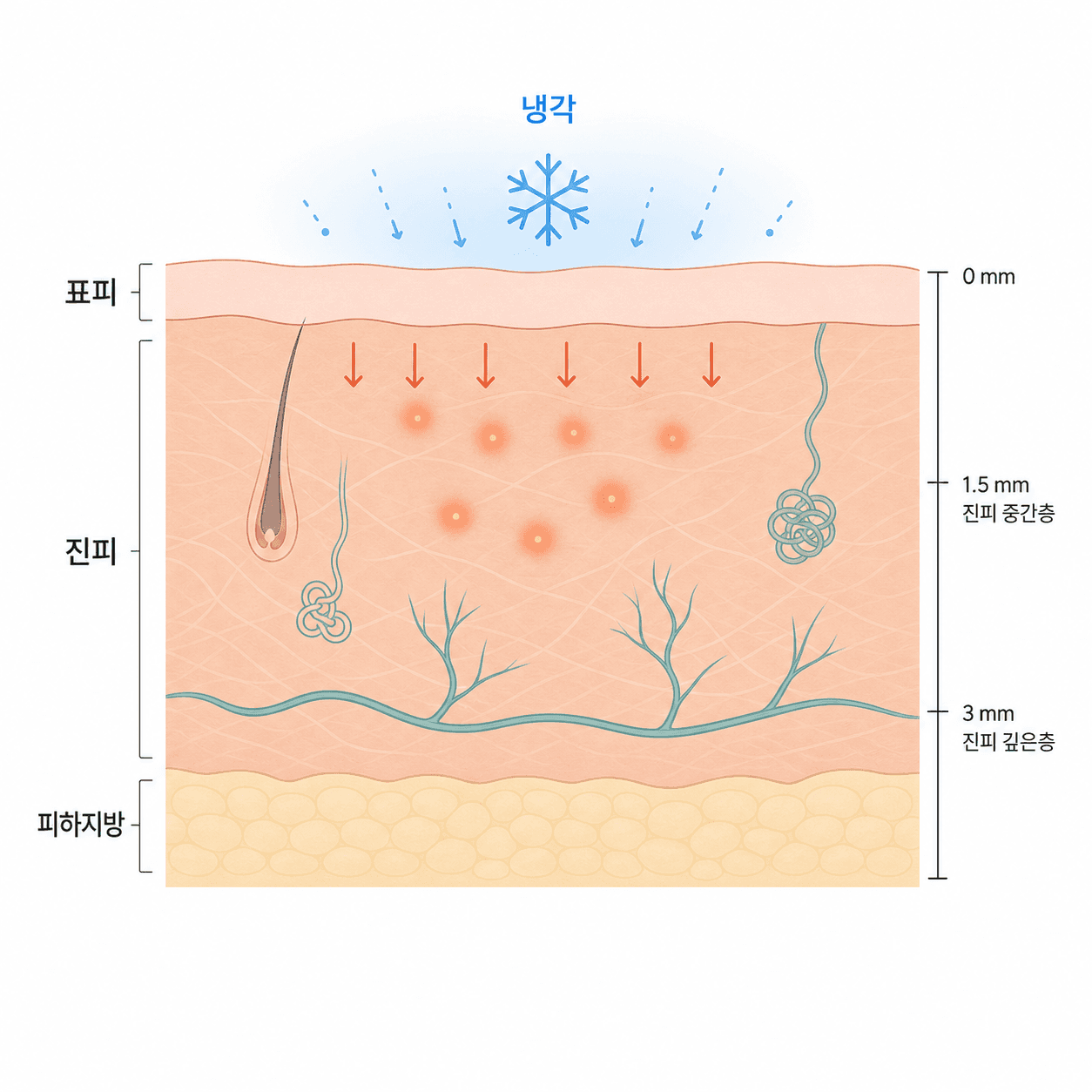
Thermage delivers radiofrequency heat into the dermis*, and it works in two stages. First the heat contracts collagen, which gives that immediate slight tightening. Then the cells stimulated by that heat build new collagen, and firmness comes up as the weeks pass.
Dermis*: the layer of skin beneath the epidermis, where collagen and elastin sit. It is the layer Thermage aims its heat at, so stimulating it improves firmness.
As set out in the account of how radiofrequency treatment works in two stages, immediate collagen contraction followed by new collagen formation, with improvement moving from around 35 to 40 percent right after treatment to 70 to 75 percent by three months, the point of Thermage is what accumulates over time. Because the surface is protected by cooling while heat goes only to dermal depth, lax skin can be firmed without an incision. In the US, Thermage is an FDA-cleared device, "cleared" being the correct word for a device, as opposed to "approved", which applies to a drug such as Botox. Individual results vary.

How it differs from ultrasound lifting
Lifting devices divide by how they put heat in. Thermage warms the dermis across a broad footprint, while ultrasound devices gather heat point by point at deeper layers. So what each one delivers, and the concern each one suits, come out a little differently.
What differs | Thermage (radiofrequency) | Ultrasound lifting |
|---|---|---|
How heat is delivered | Warms the dermis across a broad area | Gathered point by point at a focus |
What it mainly addresses | Overall firmness and fine lines | Deeper sagging and contour |
How it feels | Repeated waves of warmth | Momentary jolts of heat |
What the result reads like | Skin that feels denser and firmer | Lines that sit higher |
Neither is better in the abstract. It depends on whether you want firmness and texture tightened up or deeper sagging drawn upward, and plenty of people plan the two together.
Why the assessment comes before the device
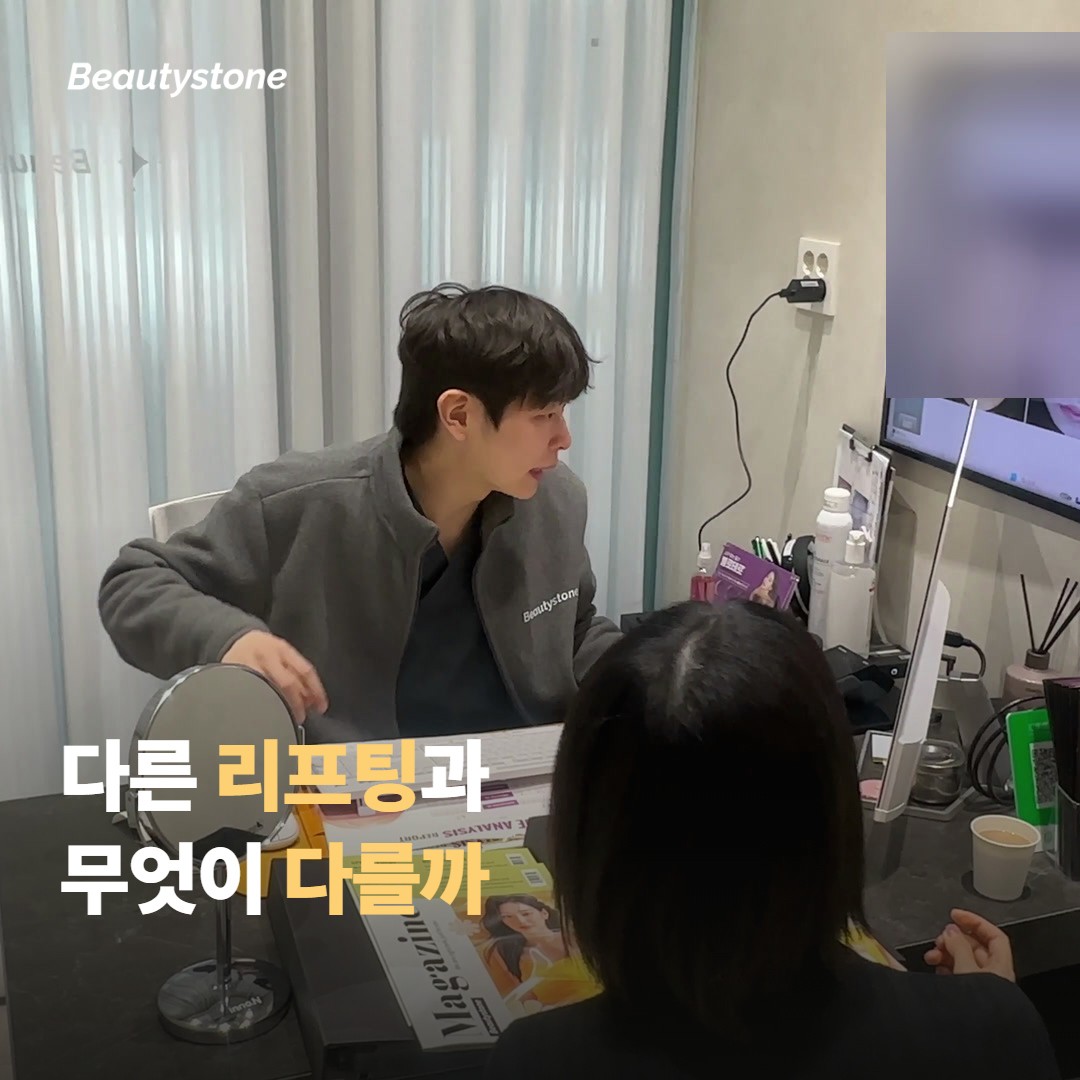
Beautystone is a small skin clinic in Hapjeong, Seoul, and before recommending Thermage we look at whether what bothers you is really firmness or really sagging. With the same heat, someone worried about fine lines and someone worried about a softening jawline need a different focus, so the consultation starts by sorting out which comes first. Being small and a short walk from Hapjeong Station means we can watch how you are responding to the pain during the session and adjust the intensity carefully as we go. If you are visiting from abroad, plan for the fact that any follow-up you need may have to happen with a provider where you live.
What the session feels like, and how much it hurts
The area is marked out, the cooling is switched on, and the radiofrequency is passed over the skin in repeated rounds. It varies by area, but a full face takes somewhere between 40 minutes and an hour. The pain arrives as a hot sensation at the moment the heat lands, and because the surface is being cooled throughout, it is dialled to something manageable. Areas close to bone, and more sensitive people, can feel it more strongly, so say so beforehand and the intensity will be matched to you.
Redness or mild swelling afterwards usually settles within a few hours to a day, so there is generally no particular downtime and getting back to normal is quick.

When the result settles in
The real change from Thermage comes out of new collagen*. So the tightening you feel on the day matters less than the slow firming that runs over weeks to months.
New collagen*: collagen the skin makes after being stimulated by heat. It is not finished within days but fills in gradually over months, firming as it goes.
Plotted by stage, the way the effect accumulates looks something like this.
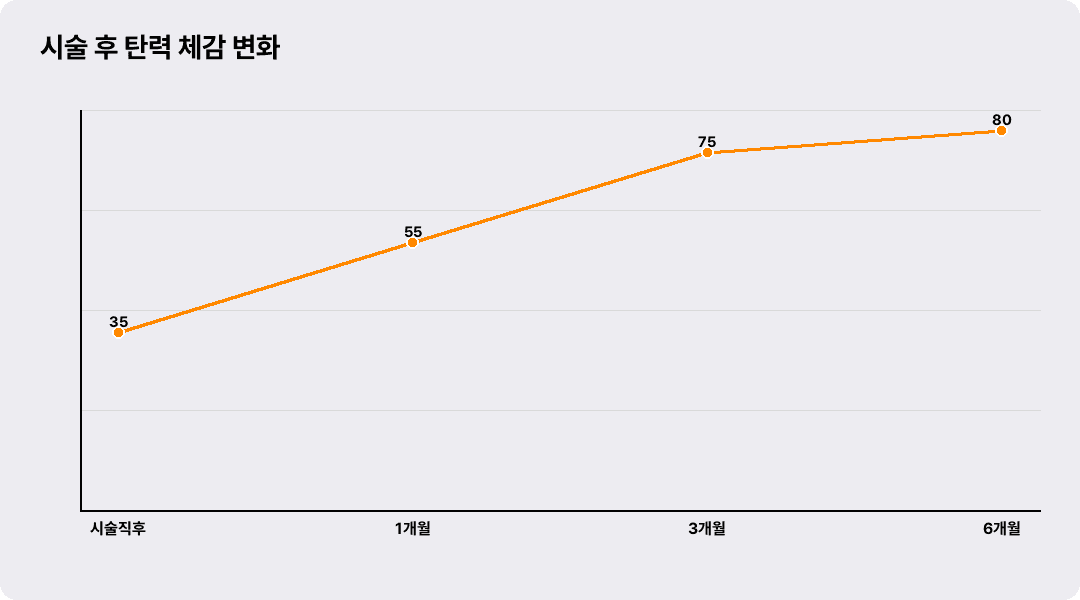
Which is why it is worth giving it two to three months and watching the change rather than judging within a week or two. How long it holds depends on your skin and your care, generally around a year, after which people usually time a top-up by how quickly collagen falls away. Keeping up sun protection will carry the result further. This article is general information, so whether the treatment suits you is a decision for the clinician who examines you.

Frequently asked questions
Q. Is Thermage really that painful?
A. Less of an ordeal than it used to be. It is done with a cooling device that chills the surface as it works, and most people describe it as a momentary burst of heat. Sensitive people and areas close to bone can feel it more strongly, so if you say something during the session the intensity will be adjusted.
Q. Does it lift straight away?
A. There is a slight tightening right after treatment, but the real change comes over the two to three months in which collagen builds. So rather than checking immediately, give it a few months and watch. Not rushing the verdict is how you actually see the result.
Q. Can I go straight back to normal life?
A. Most people can, from the same day, with no particular downtime. Redness or mild swelling usually settles within a few hours to a day. It is reassuring to take a day or two off saunas and hard exercise, anything that drives heat up sharply.
Q. How often should I have it done?
A. The result tends to hold for around a year, so people commonly top up on roughly that interval. Skin and the rate at which collagen falls away differ from person to person, though, so it is safer to set the next date with your clinician based on the change you are actually seeing.



Contouring & Volume
Glabella Botox Side Effects: Droopy Eyelids

Contouring & Volume
Juvelook Volume Not Working After 3 Sessions?

Contouring & Volume
Hip Dip Filler Before and After: 4 Checks

Body
Potenza Treatment Interval: Why 4 Weeks?

Lifting
Ultherapy Before and After: Why Wait 90 Days?

Contouring & Volume
Belotero Revive Cost: 2cc Price vs. 3 Sessions