

Both are RF lifting treatments, yet recovery, cost, and results differ. Here's a side-by-side look.
Published
Updated

Author
Wi Young-jin · Chief director
Seoul National University College of Medicine · Seoul National University Hospital Specialist
→
When exploring options for lifting treatments, you will often see "Thermage FLX" and "InMode" recommended together. While both fall under the same category of RF (Radio Frequency)*, their costs and recovery processes are actually quite different. It is easy to find yourself wondering, "If they are both RF treatments, aren't they basically the same?"
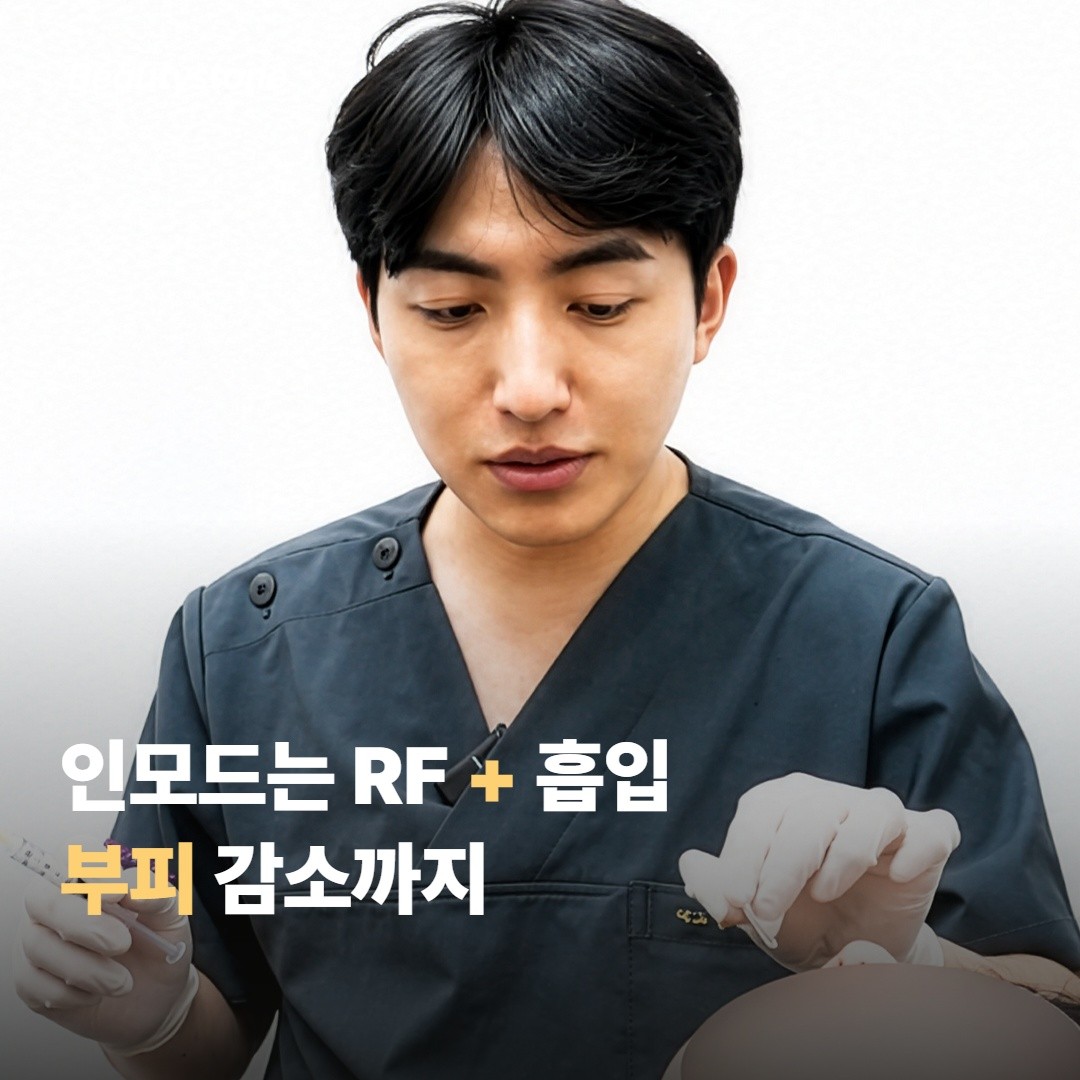
To put it simply, while both treatments utilize RF energy, their direct goals are entirely different. Thermage delivers uniform heat deep into the dermal layer to restore overall skin elasticity and firmness. On the other hand, InMode combines RF with suction to reduce unwanted fat and volume while sculpting the facial contours. In essence, they yield completely different results.
RF (Radio Frequency)*: Energy that delivers heat deep into the skin to stimulate collagen regeneration. The final results vary significantly depending on the depth and distribution of the energy.
Thermage: Focusing on Skin Elasticity Over a Broad Area
A typical single session covers the entire face with about 1,200 to 1,500 shots, and the treatment takes about 1 hour and 30 minutes to 2 hours.
Results begin to appear after about a month and become more visible over 4 to 6 months as your body naturally regenerates collagen. The benefits generally last for 1 to 2 years. It is an ideal option for those looking to lift sagging skin over a broad area all at once, though those hoping for a significant reduction in facial fat or volume may find it less satisfying.

InMode: RF Combined with Suction to Reduce Volume
InMode is a versatile platform equipped with multiple handpieces. Among them, 'FORMA' uses external RF energy to focus purely on skin elasticity, while 'FaceTite' inserts a cannula* just beneath the skin to deliver bipolar RF and suction, effectively reducing unwanted fat and volume.
Cannula*: A thin, hollow tube with a blunt tip. It is commonly inserted under the skin during RF, dermal filler, or liposuction procedures.
Even though it is under the same name of "InMode," the results vary greatly based on which handpiece is used. FORMA requires no downtime and focuses entirely on skin elasticity. FaceTite offers significant volume reduction but requires local anesthesia, tiny incisions, and about a week of recovery. While it involves higher costs and a longer recovery period, the results are much more dramatic.
Your Choice Depends on Your Specific Concerns
If your primary concern is sagging cheekbones and cheeks without the need for volume reduction, Thermage is the right choice for you. It lifts sagging skin over a broad area in a single session with virtually no downtime, allowing for a quick return to your daily routine.
If your concerns are focused on sagging volume along the jawline, a loss of definition, or a double chin, InMode FaceTite can deliver much more satisfying results. However, you should prepare for local anesthesia and recovery time. For those experiencing both types of sagging, a step-by-step combination of InMode FORMA and Thermage is often recommended.

Session and Cost Structure
Thermage FLX requires only a single session, with results lasting 1 to 2 years.
While total costs vary depending on the area treated and the handpieces chosen, InMode tends to have a higher per-session cost when aiming for quick results in 1 to 2 sessions. Thermage requires a higher upfront investment, but since it is completed in just one session, the cumulative cost over time can actually be lower. Please note that this information is for general reference, and the ideal treatment for your unique skin and sagging patterns should be decided through a personal consultation with a medical professional.

Frequently Asked Questions
Q. Can I receive both treatments together?
A. Yes, as long as they are applied to different areas for different goals. A very common combination is Thermage on the upper cheeks and InMode FaceTite along the jawline. However, some clinics may recommend scheduling them in two separate stages to ease the recovery process.
Q. Which treatment is more painful?
A. Thermage can feel quite hot and prickly during the session, but it leaves virtually no downtime. InMode FaceTite is performed under local anesthesia, so you will feel minimal discomfort during the actual procedure, though it requires about a week of healing afterward.
Q. What if I don't see results right away?
A. Since both treatments rely on stimulating natural collagen regeneration over 4 to 6 months, it is difficult to judge the final outcome within the first month. We highly recommend waiting at least 4 months to assess the full results. If you feel the target improvement has not been reached by then, you can discuss alternative combinations with your doctor.


Contouring & Volume
Hip Dip Filler Before and After: 4 Checks

Body
Potenza Treatment Interval: Why 4 Weeks?

Lifting
Ultherapy Before and After: Why Wait 90 Days?

Contouring & Volume
Belotero Revive Cost: 2cc Price vs. 3 Sessions

skin
Lip Hyperpigmentation Laser: Does It Work?

Contouring & Volume
Men's Forehead Filler: Hollow or Just Lines?