

A 600-shot Ultherapy quote describes area, not power. Here's what 300 and 600 shots cover, why eye-area pricing sits apart, and the three boxes to check.
Published
Updated

Author
Wi Young-jin · Chief director
Seoul National University College of Medicine · Seoul National University Hospital Specialist
→
If you've collected two Ultherapy quotes for "600 shots" and they came back far apart, you're probably not looking at a pricing mistake. You're looking at two different treatment plans that happen to share a number.
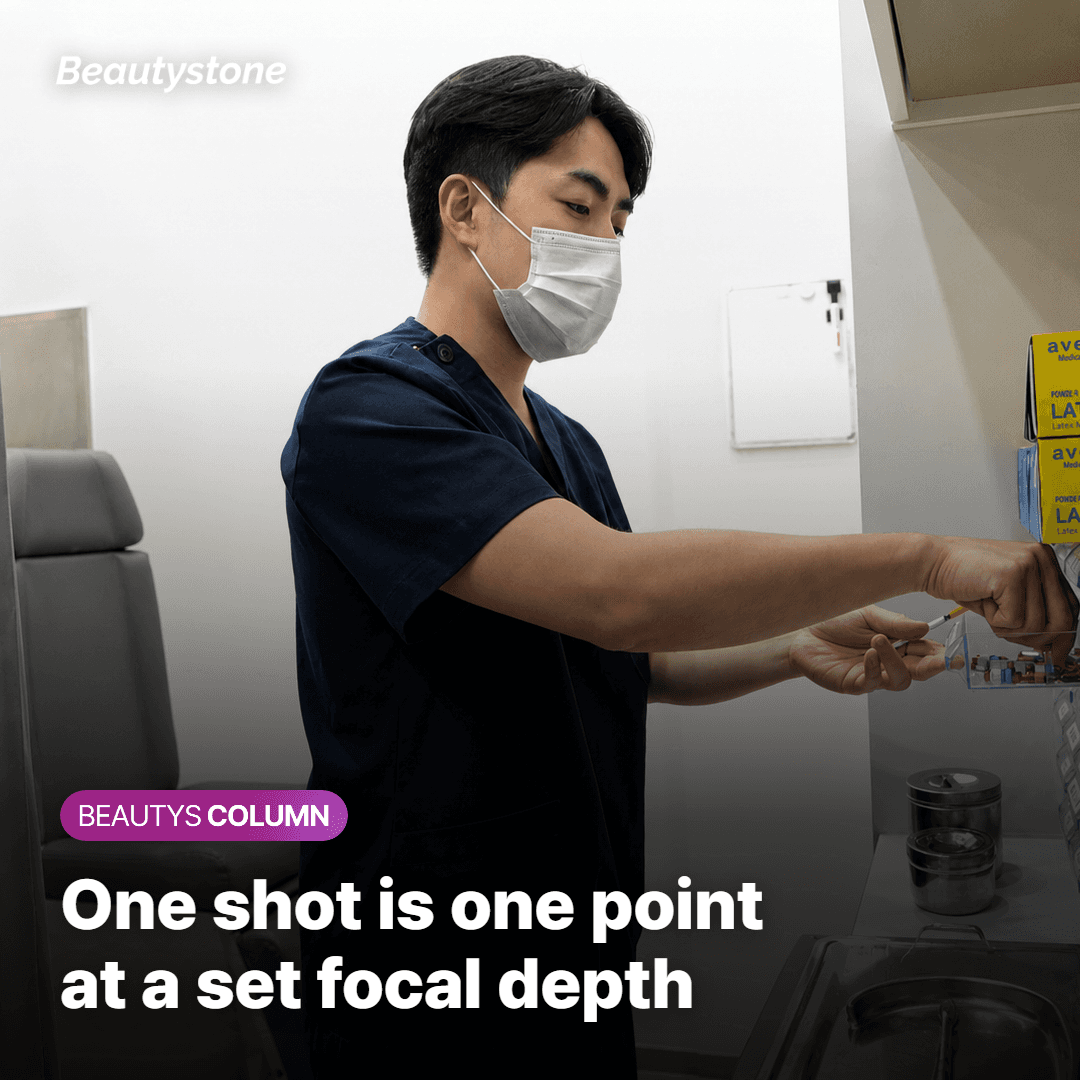
A shot isn't a measure of power. It's one focused point of ultrasound energy delivered at a set depth, so 600 shots describes how much ground a plan covers and how densely it covers it. Two clinics can spend the same 600 shots on completely different territory, and the invoice rarely says which.
In this article, we'll cover what a single shot actually buys, how 300-shot and 600-shot plans differ in coverage, why the eye area sits on its own line, why Ultherapy and Thermage quotes can't be stacked side by side, and what your quote should say about comfort and recovery.
What a Single Ultherapy Shot Actually Delivers
Ultherapy focuses ultrasound energy at a fixed depth under the skin and leaves a tiny thermal coagulation point there. Published work describes the device aiming at set focal depths of 1.5 mm in the superficial dermis, 3.0 mm in the deep dermis and 4.5 mm at the SMAS layer, while the epidermis above them is left untouched. One shot is one of those points.
SMAS*: the thin fibrous sheet wrapping the muscles under your skin. When it contracts, the tissue sitting on top of it is pulled tighter.
That single fact reframes the whole quote. Six hundred shots means six hundred points, and points have to be placed somewhere. Concentrate them along one jawline and the treated strip is narrow but dense. Scatter them across a whole face and the same 600 points cover more ground far more sparsely. Same number, different treatment.
So when two quotes carry an identical shot count and very different totals, the gap usually lives in that placement: which regions are included, how many focal depths are used, and how many passes are laid down in each region.
300 vs. 600 Shots: Coverage, Not Intensity
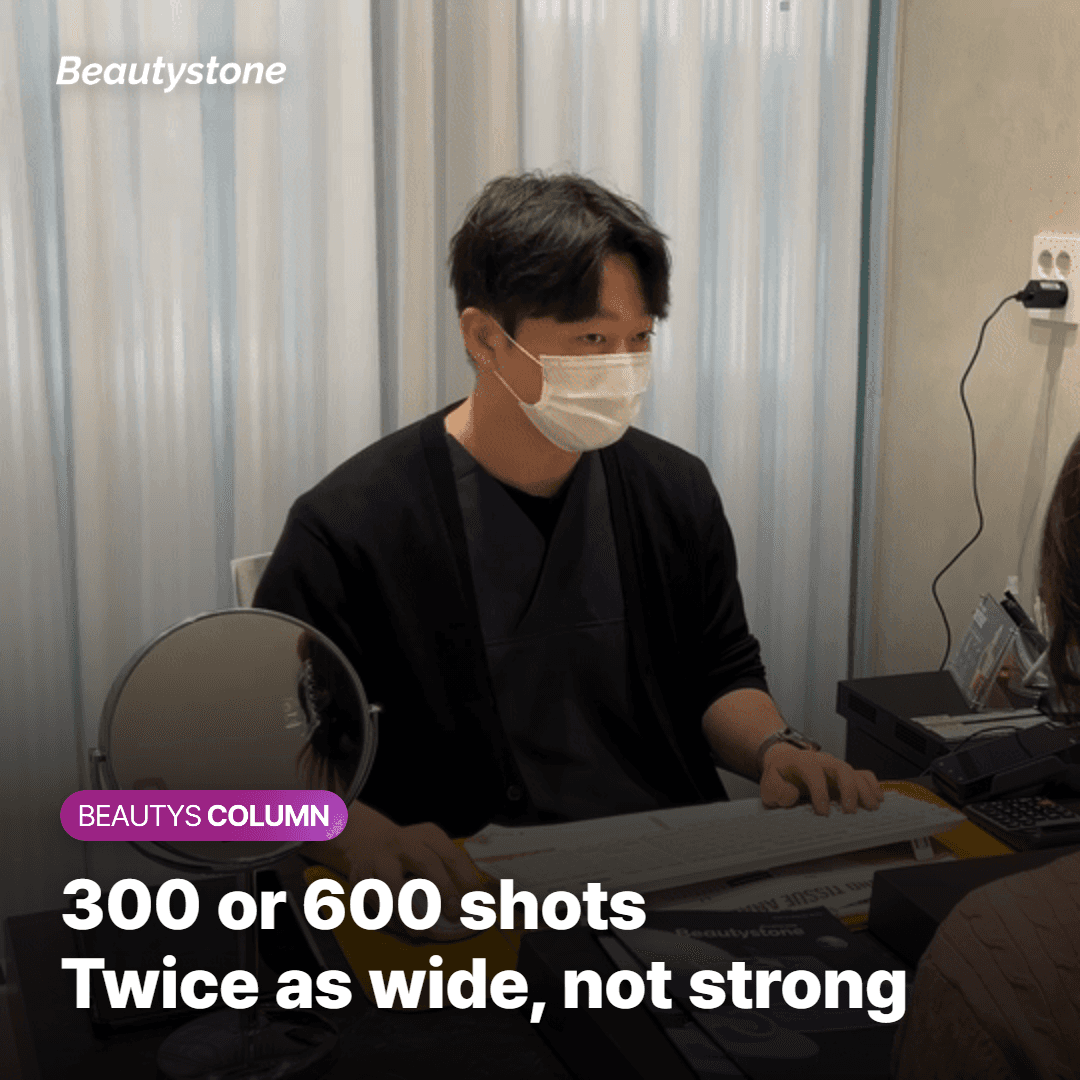
The difference between a 300-shot plan and a 600-shot plan is width, not strength. A 300-shot plan is usually sized for one region — a jawline, or the soft area under the chin. A 600-shot plan is usually sized to run a connected lower face: cheeks, the nasolabial area and the jawline in one session. Reading "600" as twice as wide is closer to the truth than reading it as twice as strong.
Size on the quote | What it usually covers | What to ask alongside it |
|---|---|---|
300 shots | One region, such as the jawline or under the chin | How many passes are laid over that region |
600 shots | A connected lower face — cheeks, nasolabial area, jawline | How the shots are split between those regions |
Eye area | The shallow layers around the eyes | Whether a dedicated cartridge is budgeted for it |
Splitting a plan region by region isn't fussiness for its own sake. One review reported that protocols with depths customized to regional anatomy scored better on surface uniformity assessment than a standard protocol, which is a reminder that where the energy lands can matter as much as how much of it you buy.
This is also why, at Beautystone — a dermatology clinic in Seoul's Hapjeong area — the consultation writes down region, depth and line count before it writes down a total. If that split never makes it onto paper, there's nothing to work from next time when you want to add coverage in one place and pull back in another.
Why Eye-Area Ultherapy Sits on Its Own Line
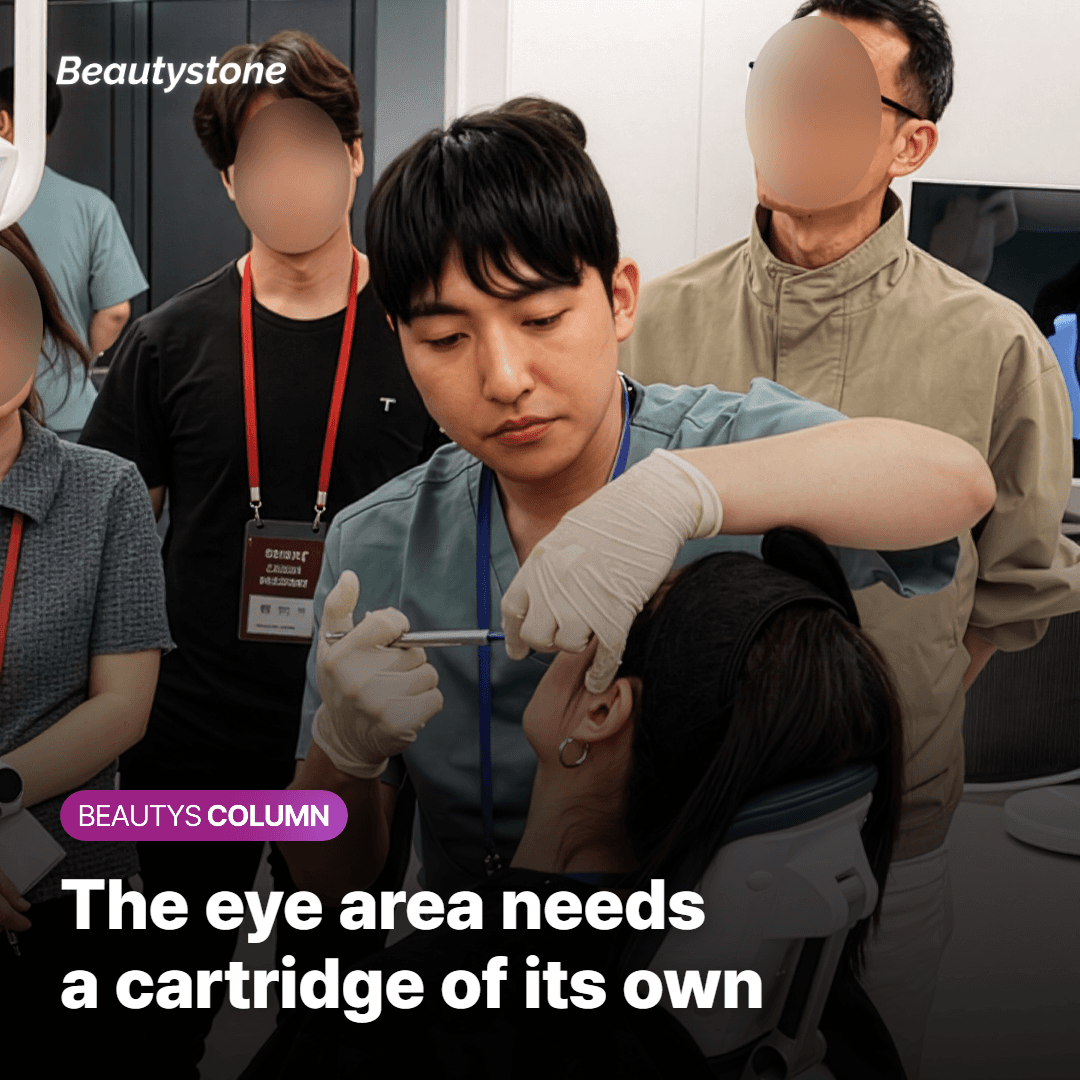
Around the eyes, the skin is thin and bone sits close beneath it, so a cartridge built for the deepest focal target isn't the right tool there. A dedicated shallow-depth transducer is used instead.
Transducer*: the cartridge that delivers the ultrasound. Each type is built for one focal depth, and it's replaced once a set number of shots has been used.
Because that cartridge is a separate consumable, its cost doesn't dissolve into the face plan. That's the reason eye-area pricing usually appears as its own item rather than folding neatly into a facial total.
If a clinic offers you the two together as one package, the useful question is simple: is the eye-specific cartridge actually budgeted inside that figure, or is the number just the face plan with the eyes mentioned? A package that hasn't allocated the cartridge is a package that will need a conversation later.
Why Ultherapy and Thermage Quotes Don't Line Up
Two quotes are hard to compare when they aim at different layers and count in different units. Ultherapy focuses ultrasound down to the SMAS layer. Thermage uses radiofrequency to warm the dermis across a broader surface. So an Ultherapy quote tends to read as "which region, how many lines," while a Thermage quote reads as "how many pulses over what surface." Put two numbers from different measuring systems next to each other and the cheaper one always looks like the winner.
If sagging is the main concern, the sensible order is to settle the layer first. When the deeper support has drifted and the jawline has lost its edge, tightening only the surface tends to feel underwhelming. When texture is the real complaint, working only in the deep layer doesn't deliver the change you were picturing. Which of the two comes first is the thing worth deciding before any figure is compared.
If you've been handed a combined package, ask one more thing: do the two treatments overlap on the same region on the same day, and in what order? Layers differ, so pairing them can make sense — but a bundle that hasn't decided where they overlap may be two prices added together rather than one plan.

Side Effects, Downtime, and What Your Quote Should Say
Ultherapy is an energy-based procedure, and how much discomfort you feel during a session — and how quickly things settle afterwards — varies from person to person. That variation belongs in the consultation before the treatment, not in a phone call after it.
Redness, mild swelling and tenderness over the treated area are common and usually settle on their own. Individual results vary, and so does recovery. If anything worsens, spreads, or simply doesn't behave the way you were told to expect, contact your provider right away rather than waiting it out.
There's a practical reason to want this written down alongside the region, depth and line count. A record of what was used and how you responded is what makes the next session a decision rather than a guess. Without it, a second round starts from the same blank page as the first.
Region: which areas are inside the price — jawline, under the chin, nasolabial area, forehead.
Depth: how many focal depths are planned, since each one may mean another cartridge.
Lines: how many passes go over each region, which is what actually consumes the shot count.

The Bottom Line
If you take one thing from this, take the three boxes:
A shot is a unit of coverage, so 600 shots describes area and density rather than strength.
A 300-shot plan is usually one region; a 600-shot plan usually runs a connected lower face.
Eye-area work needs its own shallow-depth cartridge, which is why it's priced separately.
Ultherapy and Thermage count in different units, so compare the plan before comparing the total.
Like any procedure, this one comes with trade-offs, and comfort and recovery differ from person to person. A low quote isn't automatically a bad one — it just means something was trimmed, and the three boxes show you what. Ultimately the choice depends on your skin, your goals and your budget.
If you're weighing up a 600-shot quote, ask on the spot which regions those 600 shots are divided across and how many lines go over each. Beautystone is a dermatology clinic in Seoul's Hapjeong area, and a consultation is the most reliable way to see how those numbers would fall for your face.




Contouring & Volume
Hip Dip Filler Before and After: 4 Checks

Body
Potenza Treatment Interval: Why 4 Weeks?

Lifting
Ultherapy Before and After: Why Wait 90 Days?

Contouring & Volume
Belotero Revive Cost: 2cc Price vs. 3 Sessions

skin
Lip Hyperpigmentation Laser: Does It Work?

Contouring & Volume
Men's Forehead Filler: Hollow or Just Lines?