

Jaw Botox? Half the Time It's Bone, Not Muscle
Jaw Botox? Half the Time It's Bone, Not Muscle
Jaw Botox? Half the Time It's Bone, Not Muscle
Does jaw Botox really slim your face? Masseter atrophy and the real limits, explained.
Published -
Updated -

Author
Wi Young-jin · Chief director
Seoul National University College of Medicine · Seoul National University Hospital Specialist
→

Half of the people who come for jaw Botox
think the problem is muscle when it’s actually bone
Check this first before reading
Q. If you get jaw Botox,
does your face really get smaller?
A. It shrinks by as much as the muscle (masseter) atrophies,
so the bone itself stays the same.
That’s why, from the start, people split into those who will "benefit" and those who will "benefit less".
Q. Why, even with the same dose,
did I get less effect?
A. The thicker your chewing muscle, the more dramatic the result,
and if your jawbone angle is large,
there’s a limit no matter how much is injected.
They look similar, but
the key point is different
Jaw Botox is a procedure that injects botulinum toxin into the chewing muscle,
that is, the masseter,
to gradually reduce muscle volume.
Unlike the square-jaw surgery people often talk about,
it’s not about shaving the bone,
but about making only the muscle thinner.
So the expression "making the jawline smoother" is correct,
but saying "the facial bones get smaller"
is, strictly speaking, an inaccurate explanation.
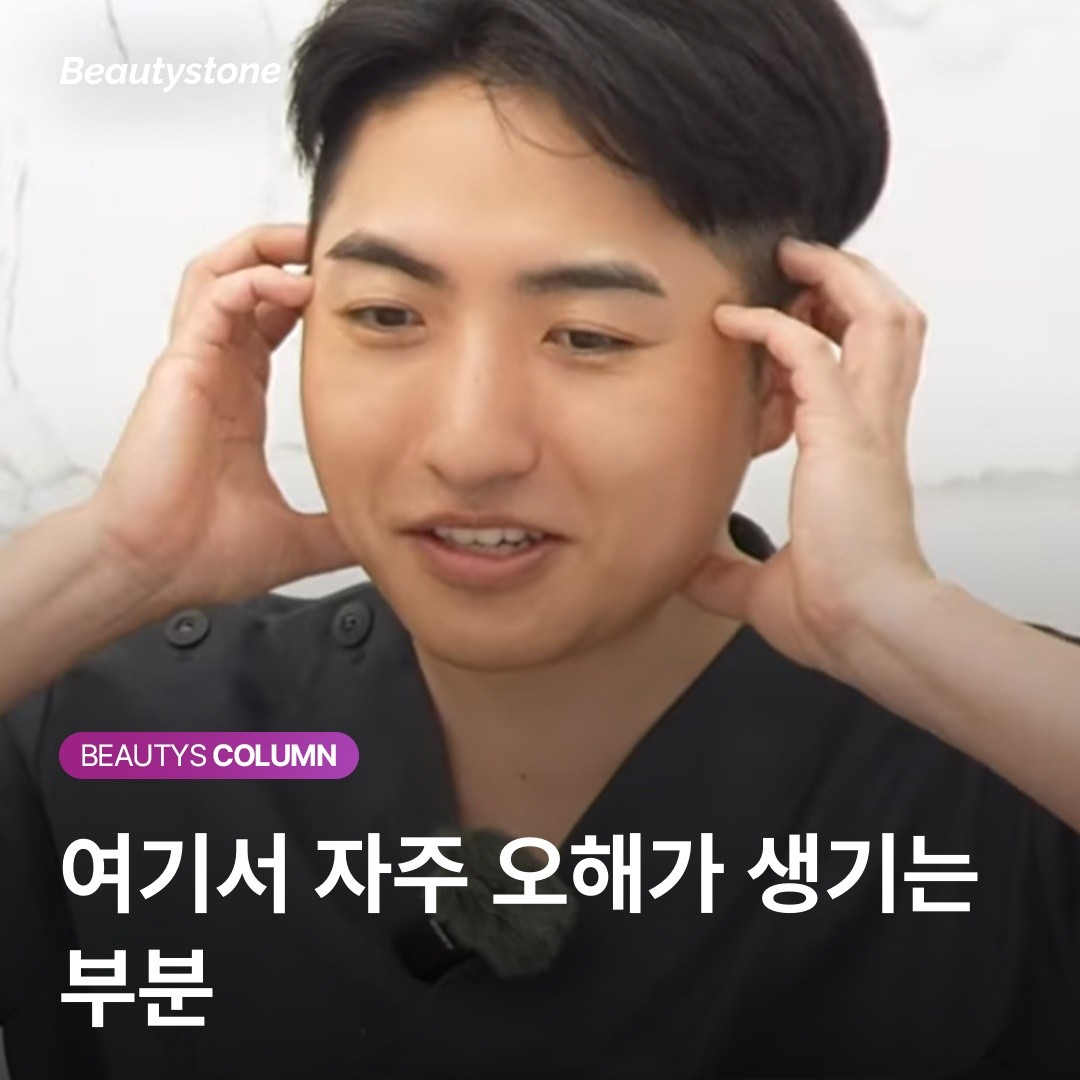
Dr. Wi Young-jin’s
key insight
Does jaw Botox really make your face smaller?
Principles and limitations explained by the doctor.
— Dr. Wi Young-jin (Beautystone Clinic, Hongdae)
Last month, a woman in her early 30s came in,
and she said she had gotten jaw Botox three times elsewhere,
but there was no effect at all.
On palpation, the masseter was thinner than expected,
but the mandibular angle (the corner of the jawbone) itself
was flared outward.
For someone like that, even if you inject a lot of Botox,
the angular look seen from the front
doesn’t change much.
But there’s one important thing here.
The masseter is the muscle that pops out beside the cheek when you clench your teeth tightly,
and for people whose masseter is thick,
you can see a volume-reduction effect over 8 to 12 weeks.
Dr. Wi Young-jin’s key summary
Jaw Botox is a procedure that reduces "muscle volume,"
not a procedure that reduces "bone."
If you look in the mirror in front of you and clench your teeth tightly,
and the muscle beside your cheek feels firmly engaged, you’re someone it works well for;
if it doesn’t engage much, there are limits.
This is how I categorize patients in the clinic
Type | Features | Approach |
Muscle type | Masseter bulges when clenching, accompanied by TMJ pain | Dramatic Botox effect, every 4–6 months |
Bone type | Thin muscle, but a flared mandibular angle and angular line | Limited Botox effect, combine contour injections and filler |
Mixed type | Muscle + fat + slightly sagging cheek line | Recommend Botox + lifting laser together |
One jaw Botox treatment alone
won’t permanently make your face smaller.
Once the toxin breaks down, the muscle
tries to return to its original state.
However, if you keep getting it twice a year,
the muscle gets used to being in an "unused" state,
so the maintenance period tends to get longer.
Jaw Botox vs. jawline Botox: are they the same thing?
Not quite. Jaw Botox means thinning the masseter so a wide lower face looks narrower, while “jawline Botox” is a loose term people use for anything that sharpens the jaw outline — and masseter injections change width, not the outline itself.
A wide lower face and a blurred jaw outline are three different problems underneath: muscle volume, bone shape, and skin that has lost its firmness. Botulinum toxin in the masseter only addresses the first one.
If the masseter bulges out beside the cheek when you clench, reducing its volume over roughly 8 to 12 weeks visibly narrows the face seen from the front. If the muscle is already thin, there is little volume left to remove, no matter how the treatment is labelled.
What you want to change | What is usually causing it | Does masseter Botox address it? |
|---|---|---|
Lower face looks wide from the front | A thick masseter that bulges when you clench | Yes — this is what the injection is actually for |
The jaw corner looks angular and squared off | A flared mandibular angle, meaning the bone itself | Limited — the bone does not change, so contour injections or filler are usually discussed instead |
The jaw outline looks soft or blurred | Sagging and volume shift along the cheek line | Not on its own — a lifting treatment is normally combined |
So before booking something advertised as jawline Botox, it is worth asking one plain question: which of the three is being treated, and with what. Individual anatomy differs, so the honest answer often comes only after the jaw is examined and palpated.
Chasing a sharper outline by simply raising the masseter dose is also the wrong lever, and it carries its own trade-off — what happens when the cheeks look hollow after masseter Botox.
The three questions I get most often in the exam room
Q1. They say chewing strength weakens,
is everyday life okay?
For the first 1–2 weeks, when chewing tough foods,
you may feel like you can’t put much strength into it.
Unless the dose is excessive,
it rarely causes problems with normal meals.
Q2. How many treatments does it take to see results,
and how long do they last?
Noticeable change usually appears after the second treatment.
The average maintenance period is about 4–6 months,
and the more you repeat it, the longer the interval becomes.
Q3. I heard it can make the cheeks sag,
is that really true?
If the injection point is wrong or the dose is too high,
the cheek fat may look hollow.
Especially for people over 40 whose elasticity has declined,
we recommend combining it with lifting first.
If your jaw type is unclear,
send front and side photos via WhatsApp.
This was Wi Young-jin.
Also read
▶My cheeks sank after jaw Botox — why did that happen?
▶After prescribing Saxenda for 6 months, honestly, this is how it is
▶10 most common questions about Shurink Universe, answered by the doctor
▶Pico toning effect: how many sessions until melasma fades? 4 stages of change by session
▶It’s not AI. [Cellrdiem vs Rituo], which product is right for me? (Use, price comparison)
Half of the people who come for jaw Botox
think the problem is muscle when it’s actually bone
Check this first before reading
Q. If you get jaw Botox,
does your face really get smaller?
A. It shrinks by as much as the muscle (masseter) atrophies,
so the bone itself stays the same.
That’s why, from the start, people split into those who will "benefit" and those who will "benefit less".
Q. Why, even with the same dose,
did I get less effect?
A. The thicker your chewing muscle, the more dramatic the result,
and if your jawbone angle is large,
there’s a limit no matter how much is injected.
They look similar, but
the key point is different
Jaw Botox is a procedure that injects botulinum toxin into the chewing muscle,
that is, the masseter,
to gradually reduce muscle volume.
Unlike the square-jaw surgery people often talk about,
it’s not about shaving the bone,
but about making only the muscle thinner.
So the expression "making the jawline smoother" is correct,
but saying "the facial bones get smaller"
is, strictly speaking, an inaccurate explanation.
Dr. Wi Young-jin’s
key insight
Does jaw Botox really make your face smaller?
Principles and limitations explained by the doctor.
— Dr. Wi Young-jin (Beautystone Clinic, Hongdae)
Last month, a woman in her early 30s came in,
and she said she had gotten jaw Botox three times elsewhere,
but there was no effect at all.
On palpation, the masseter was thinner than expected,
but the mandibular angle (the corner of the jawbone) itself
was flared outward.
For someone like that, even if you inject a lot of Botox,
the angular look seen from the front
doesn’t change much.
But there’s one important thing here.
The masseter is the muscle that pops out beside the cheek when you clench your teeth tightly,
and for people whose masseter is thick,
you can see a volume-reduction effect over 8 to 12 weeks.
Dr. Wi Young-jin’s key summary
Jaw Botox is a procedure that reduces "muscle volume,"
not a procedure that reduces "bone."
If you look in the mirror in front of you and clench your teeth tightly,
and the muscle beside your cheek feels firmly engaged, you’re someone it works well for;
if it doesn’t engage much, there are limits.
This is how I categorize patients in the clinic
Type | Features | Approach |
Muscle type | Masseter bulges when clenching, accompanied by TMJ pain | Dramatic Botox effect, every 4–6 months |
Bone type | Thin muscle, but a flared mandibular angle and angular line | Limited Botox effect, combine contour injections and filler |
Mixed type | Muscle + fat + slightly sagging cheek line | Recommend Botox + lifting laser together |
One jaw Botox treatment alone
won’t permanently make your face smaller.
Once the toxin breaks down, the muscle
tries to return to its original state.
However, if you keep getting it twice a year,
the muscle gets used to being in an "unused" state,
so the maintenance period tends to get longer.
Jaw Botox vs. jawline Botox: are they the same thing?
Not quite. Jaw Botox means thinning the masseter so a wide lower face looks narrower, while “jawline Botox” is a loose term people use for anything that sharpens the jaw outline — and masseter injections change width, not the outline itself.
A wide lower face and a blurred jaw outline are three different problems underneath: muscle volume, bone shape, and skin that has lost its firmness. Botulinum toxin in the masseter only addresses the first one.
If the masseter bulges out beside the cheek when you clench, reducing its volume over roughly 8 to 12 weeks visibly narrows the face seen from the front. If the muscle is already thin, there is little volume left to remove, no matter how the treatment is labelled.
What you want to change | What is usually causing it | Does masseter Botox address it? |
|---|---|---|
Lower face looks wide from the front | A thick masseter that bulges when you clench | Yes — this is what the injection is actually for |
The jaw corner looks angular and squared off | A flared mandibular angle, meaning the bone itself | Limited — the bone does not change, so contour injections or filler are usually discussed instead |
The jaw outline looks soft or blurred | Sagging and volume shift along the cheek line | Not on its own — a lifting treatment is normally combined |
So before booking something advertised as jawline Botox, it is worth asking one plain question: which of the three is being treated, and with what. Individual anatomy differs, so the honest answer often comes only after the jaw is examined and palpated.
Chasing a sharper outline by simply raising the masseter dose is also the wrong lever, and it carries its own trade-off — what happens when the cheeks look hollow after masseter Botox.
The three questions I get most often in the exam room
Q1. They say chewing strength weakens,
is everyday life okay?
For the first 1–2 weeks, when chewing tough foods,
you may feel like you can’t put much strength into it.
Unless the dose is excessive,
it rarely causes problems with normal meals.
Q2. How many treatments does it take to see results,
and how long do they last?
Noticeable change usually appears after the second treatment.
The average maintenance period is about 4–6 months,
and the more you repeat it, the longer the interval becomes.
Q3. I heard it can make the cheeks sag,
is that really true?
If the injection point is wrong or the dose is too high,
the cheek fat may look hollow.
Especially for people over 40 whose elasticity has declined,
we recommend combining it with lifting first.
If your jaw type is unclear,
send front and side photos via WhatsApp.
This was Wi Young-jin.
Also read
▶My cheeks sank after jaw Botox — why did that happen?
▶After prescribing Saxenda for 6 months, honestly, this is how it is
▶10 most common questions about Shurink Universe, answered by the doctor
▶Pico toning effect: how many sessions until melasma fades? 4 stages of change by session
▶It’s not AI. [Cellrdiem vs Rituo], which product is right for me? (Use, price comparison)


Latest post
Latest post

Hair Removal
레이저 제모 1회에도 남는 몫이 있어요 — 밀도를 모자이크로 보는 법

Tattoo removal
Why Extremity Tattoos Are Slower to Remove

Tattoo removal
Tattoo Removal Cost: Why Quotes Vary by Area

Tattoo removal
Unused Tattoo Removal Sessions: What Happens?

Lifting
Forehead Thread Lifting: How Far Can It Go?

skin
Skin Booster Prices: What to Check in a Quote
1:1 Custom Approach
1:1 Consultation Whatsapp
🌸 Beautystone Clinic attends the Meditox Bangkok Cadaver Workshop 🌸
1:1 Custom Approach