

'Heavy eyelids after forehead Botox': losing the forehead's lift, and why it varies by person.
Published
Updated

Author
Wi Young-jin · Chief director
Seoul National University College of Medicine · Seoul National University Hospital Specialist
→
"My eyes look smaller and feel heavy after getting forehead Botox." This is a complaint we hear very often in clinical practice. Many patients worry, wondering, "Could I have developed ptosis?" However, in almost all cases, it is not true ptosis. It is a temporary phenomenon called "pseudo-ptosis" that naturally resolves once the Botox wears off. Still, because individual experiences vary so much, it can be quite frustrating to wonder, "Why is this only happening to me?" Let's break down the mechanism and why these differences occur.
"My eyes shrank after forehead Botox" is a very common complaint
Even when the same doctor administers the same dose in the exact same spots, results vary from person to person. For some, the horizontal wrinkles are neatly smoothed out while their expression remains perfectly natural. For others, however, their eyebrows droop, their eyelids feel heavy, and their overall impression turns slightly gloomy. In some cases, the eyes look more defined after a few days, or the muscles settle within a week.
This difference does not mean "the procedure was done incorrectly," but rather that "everyone's facial muscles work differently." As explained in Part 1, the difference lies in how your frontalis (forehead muscle), levator palpebrae superioris (eyelid-lifting muscle), and orbicularis oculi (eye-closing muscle) normally share the workload.

The difference between 'True Ptosis' and 'Pseudo-ptosis'
True ptosis is a condition where the levator palpebrae superioris—the muscle responsible for lifting the upper eyelid—itself functions poorly*. It can be caused by aging, trauma, or neurological conditions, and because it is usually permanent, it requires surgical correction.
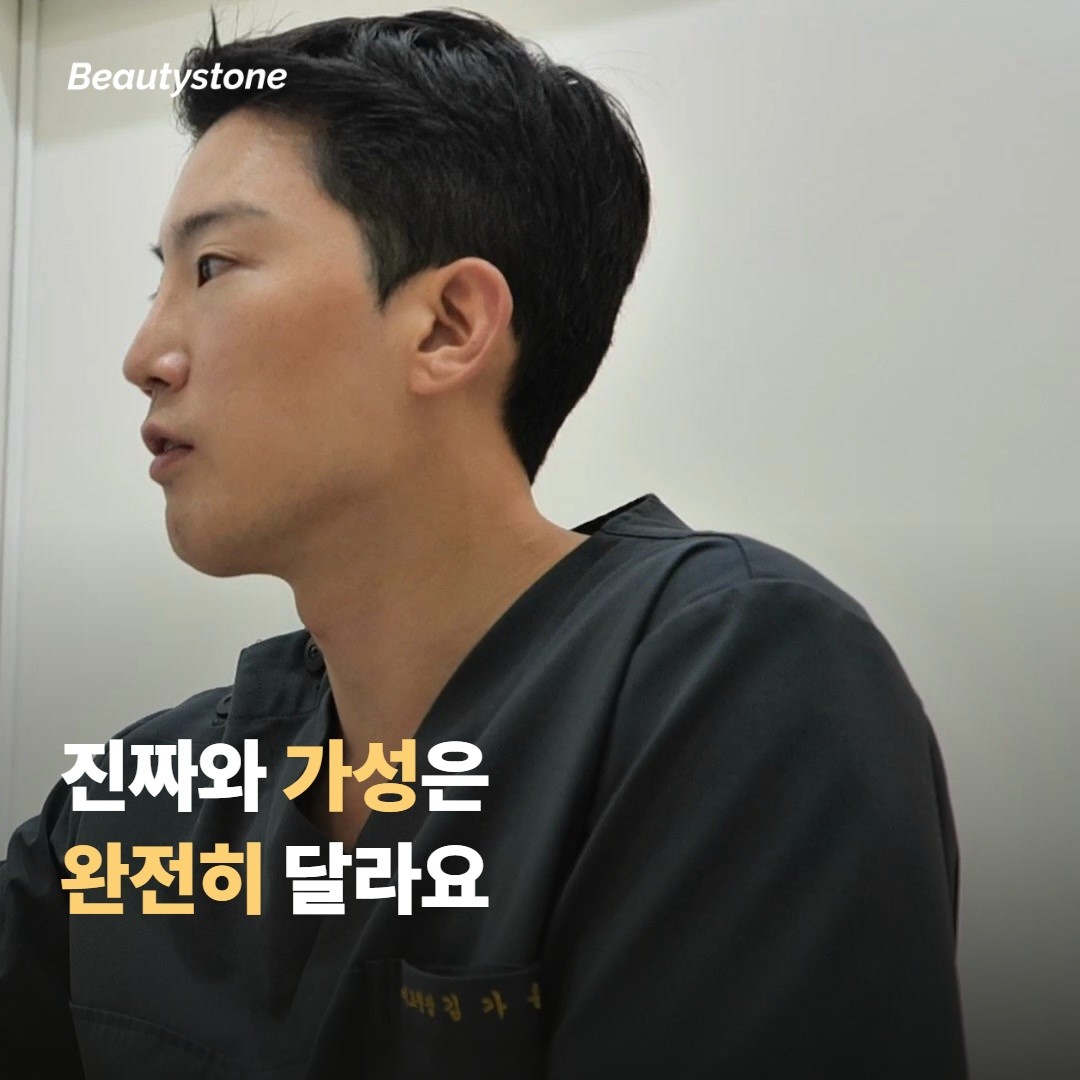
What happens after forehead Botox is not true ptosis, but pseudo-ptosis*. The levator muscle is working perfectly fine, but because the "support of the frontalis muscle" is temporarily gone, the eyebrows and eyelids appear to droop more than usual. This naturally resolves in about 3 to 4 months as the Botox wears off.
* Ptosis: A condition in which the upper eyelid droops over the pupil due to weakened function of the levator palpebrae superioris. It is caused by aging, trauma, or neurological conditions, and because it is permanent, surgery is the standard treatment.
* Pseudo-ptosis: A condition where the levator palpebrae superioris is normal, but the eyebrows and eyelids temporarily droop due to the relaxation of the supporting muscle (frontalis). It naturally resolves as the Botox wears off. It must be carefully distinguished from true ptosis.
The mechanism: 'The helper hands are gone'
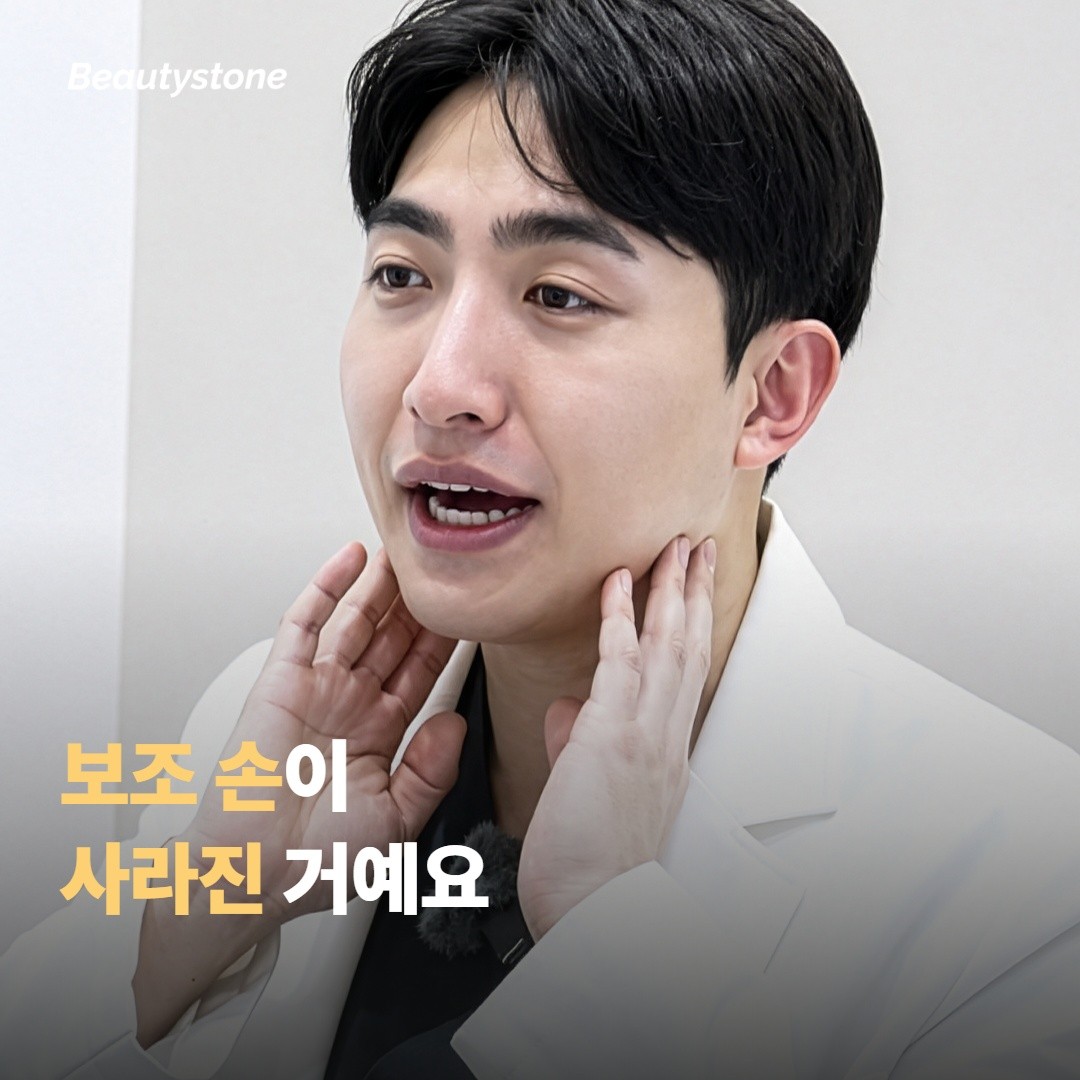
If your frontalis muscle usually lends a "helping hand" by slightly holding up your eyebrows, that support disappears after forehead Botox. The results:
1. The eyebrow position drops by about 1 to 2 mm. 2. The drooping eyebrows create a sensation of slightly pressing down on the upper eyelids. 3. Even when you consciously try to open your eyes wider, the frontalis muscle won't budge to lift them. 4. This leads to complaints like "my eyelids feel heavy" or "my vision feels narrowed."
A heavy or puffy appearance is a combined result of mild lymphatic stagnation from the relaxed frontalis muscle and the descent of the eyebrows. In reality, actual eyelid edema (swelling) is rarely present.
Why the difference is so vast — Frontalis Dependency
The reason the same procedure yields such different results is that everyone relies on their frontalis muscle as a helper to varying degrees. Just as eye shapes and sizes differ, everyone's level of frontalis dependency is unique.
Pattern | Usual Appearance | After Forehead Botox |
|---|---|---|
Levator-Dominant Type | Clear vision even with minimal eyebrow movement | Horizontal wrinkles smooth out; expression remains natural |
Mild Frontalis Dependency | Eyebrows move slightly when opening eyes | A slightly heavy feeling that resolves within a few days |
High Frontalis Dependency | Eyebrows are usually held high at rest | Heavy eyelids, narrowed vision, and a darker, tired look |
Clinical observations show that high frontalis dependency is common in those without double eyelids, those with excess skin on the upper lids hooding the eyes, or mature patients with naturally weakened levator muscles. We will guide you through a self-diagnosis method in our next post.

It is temporary, but the next treatment needs a different approach
Pseudo-ptosis* resolves as the Botox wears off. Forehead Botox typically lasts 3 to 4 months (with Dysport and Xeomin showing similar durations). There is no special shortcut to speed up recovery; patience is key.
However, if you get the exact same dosage in the exact same spots next time, the same issue will recur. Once this dependency pattern is identified, the standard approach is to adjust the next treatment with a lower dose + injecting higher up + preserving the lateral forehead. We will cover the detailed dosage and placement guide in Part 3 of this series.
Contour filler treatment details
Frequently asked questions
Q. If it is pseudoptosis, can I just wait and see?
A. Yes, it will recover naturally after 3 to 4 months once the Botox effect wears off. However, there is no specific way to speed up the recovery, so time is the only answer. If your vision feels too uncomfortable during the recovery period, a medical clinic can help ease the symptoms with temporary measures, such as prescription eye drops or temporary eyelid tape.
Q. How do you distinguish between pseudoptosis (false) and true ptosis?
A. The clearest sign is the 'timing.' If it occurred within a few days to two weeks after getting Botox, it is likely pseudo-ptosis. If it has been progressing slowly over time regardless of Botox, we suspect real ptosis. Because the standard treatment for real ptosis is surgery, different diagnoses lead to completely different paths.
Q. Will switching to Dysport prevent resistance from developing?
A. With any product, if you rely on it too heavily, similar issues can occur. However, because Dysport has a wider diffusion radius than Botox, the risks can actually be greater for those with a strong dependency. We will cover how to choose between different products in detail in Part 4.
Q. If I have pseudoptosis (false droopy eyelid), is it safe for me to receive the same treatment next time?
A. For your next treatment, it’s best to take a different approach. If you receive the same dosage in the exact same spots, the same issue is bound to happen again. If a pattern of dependency has emerged, the standard method is to adjust the treatment by using a lower dosage, targeting only the upper area, and preserving the sides.






Contouring & Volume
Glabella Botox Side Effects: Droopy Eyelids

Contouring & Volume
Juvelook Volume Not Working After 3 Sessions?

Contouring & Volume
Hip Dip Filler Before and After: 4 Checks

Body
Potenza Treatment Interval: Why 4 Weeks?

Lifting
Ultherapy Before and After: Why Wait 90 Days?

Contouring & Volume
Belotero Revive Cost: 2cc Price vs. 3 Sessions