

Juvelook Volume or Rejuran first? The smart order, spacing, and how to split the areas.
Published
Updated

Author
Wi Young-jin · Chief director
Seoul National University College of Medicine · Seoul National University Hospital Specialist
→
If you've looked in the mirror and wished you could firm up hollow cheeks and smooth out tired-looking skin at the same time, you're not alone. It's one of the most common questions we hear: can you build back a little structure and improve skin quality together, without asking too much of your skin at once?
The short answer is that these two goals lean on two different tools, which is exactly why they're often planned as a pair. In this article, we'll cover how Juvelook Volume and Rejuran each work, why people combine them, the smart order and spacing, how to split up the areas you treat, what recovery looks like, the risks worth knowing, and who the combination suits.
What Are Juvelook Volume and Rejuran?
Juvelook Volume is a hybrid injectable that combines PDLLA — a biostimulatory material* — with non-crosslinked hyaluronic acid. Injected into the deeper layers, it's designed to give the area some immediate support while gently encouraging your own collagen to build over the weeks that follow. People tend to reach for it when the concern is broad flatness or hollowing, like sunken cheeks or temples, rather than a single fine line. *PDLLA: a biodegradable material thought to prompt gradual collagen production.
Rejuran, by contrast, is a skin booster built around polynucleotides (PN) derived from salmon DNA. Instead of filling a hollow, it works on the quality of the skin itself — supporting hydration, texture, and that overall sense of bounce. Think of it as tending to the surface story rather than rebuilding the foundation underneath.
So if Juvelook Volume is the treatment that shores up your structure, Rejuran is the one that refines the finish on top. Because their jobs don't really overlap, each can reach something the other tends to miss — which is the whole logic behind pairing them.
One honest note for readers outside Korea: Juvelook and Rejuran aren't FDA-approved in the United States, so availability varies by country. In the US, Sculptra is the closest widely available collagen biostimulator, though it isn't identical. If you're planning treatment abroad, it's worth confirming what's offered locally.

Why Pair Them at All?
Here's the reasoning: the two do complementary jobs. Juvelook Volume addresses the underlying shape, while Rejuran works on the skin's condition at the surface. Restoring a bit of structure can make skin look fuller, but it won't necessarily improve fine texture or hydration — and that's where a booster earns its place.
What Juvelook Volume brings: support for hollow areas and a slow, gradual boost to collagen.
What Rejuran brings: better hydration, smoother texture, and a healthier-looking finish.
That said, more isn't automatically better. Combining treatments means combining recoveries, and stacking them carelessly can overtax skin that's already busy healing. The aim is for the two to complement each other, not compete for the same recovery window.
Which Comes First, and How Far Apart?
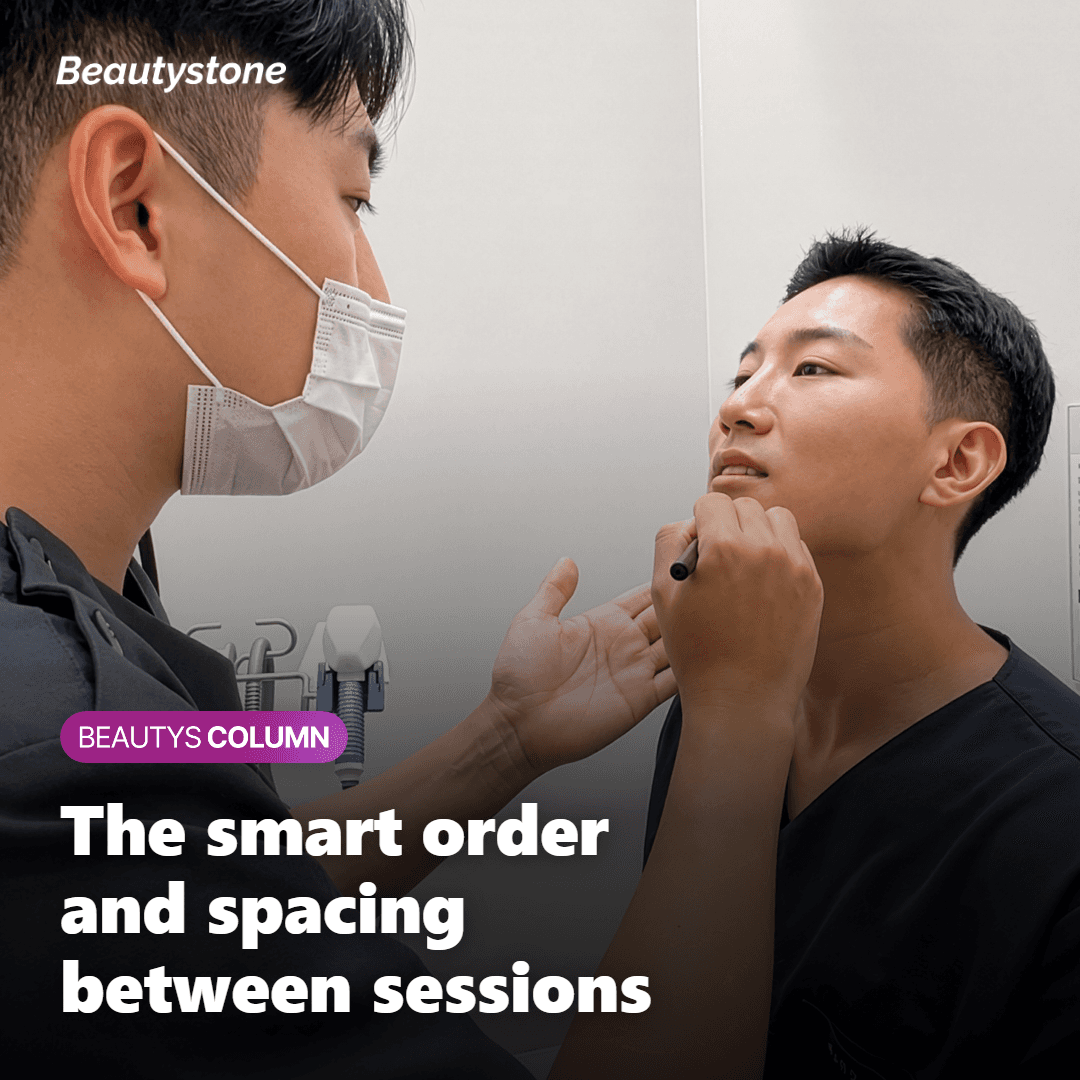
This is the part people most often get wrong. There's no single rule that fits everyone, but a common and sensible approach is to build the foundation first and refine the surface afterward — in other words, structure before skin quality. Settling the shape first tends to make the final result easier to plan.
Volume first, booster after: Doing Juvelook Volume first, then adding Rejuran once the initial swelling and bruising have calmed, is a frequent choice. The idea is to let the volumizing work settle before layering skin-quality treatment on top.
That order isn't a hard rule, though. If dryness and rough texture are what bother you most, some people start with Rejuran to settle the skin's condition, then revisit volume afterward. What comes first really depends on what's troubling you most right now and how your skin is doing.
Spacing: Rather than stacking both on the same day, many clinics prefer to leave a few weeks between them. Waiting also makes it easier to tell which treatment caused which reaction, so nothing gets misread. Your provider will map the exact intervals to your skin and goals.
How to Split Up the Areas
Because you're planning two treatments with different strengths, it helps to divide the map of your face by job rather than treating everywhere with both.
Where volume tends to go: the broad, flatter zones — think hollow cheeks or temples — where the goal is to restore support and fullness.
Where a booster tends to go: the areas where you mostly want better texture, hydration, and glow, rather than added structure.
Splitting the work this way keeps each treatment focused on what it does best and makes the overall plan easier to follow. Still, the number of sessions and the spacing between them depend on how your skin responds, so it's wise to leave room to adjust as you go rather than locking in every detail up front.
Side Effects & Risks
No injectable is risk-free, and combining two means being extra thoughtful. Because both involve needles, you can expect some redness, swelling, bruising, or a firm feeling at the injection sites right afterward.
Most of that tends to settle within a few days to a week or two, but if pain or swelling is severe or keeps dragging on, contact your provider promptly. Combining two treatments in a poorly spaced window can compound irritation rather than easing it.
A couple of other honest caveats: pairing the two doesn't simply add their benefits together, and outcomes vary from person to person. People who are pregnant or breastfeeding, prone to keloid scarring, or have active inflammation at the treatment site may not be suitable candidates — so share your full history at the consultation. Afterward, avoid rubbing the area hard or exposing it to excess heat while it settles.
How Much Does It Cost?
Pricing for Juvelook Volume and Rejuran depends on the areas treated, how many sessions you need, and the specific plan — and combining treatments naturally means combining costs. We don't quote fixed figures here because plans are individual, and prices at a Seoul clinic are subject to change. For current rates, see our pricing page or ask at your consultation, which is the most reliable way to get an estimate for your goals.
Is the Combo Right for You?
The combination tends to appeal to people who want both firmer, fuller structure and a more hydrated, refined surface — not one or the other. If your main concern is hollowing, volume may do the heavy lifting; if it's dullness and dry texture, a booster may matter more. Many people find that addressing both gives a more balanced result than either treatment alone.
It's less suited to anyone who can't accommodate spaced-out sessions, or who falls into the caution groups above. It isn't a magic fix, and the right order and number of sessions genuinely vary from person to person. As always, everyone's skin is different — what fits a friend may not fit you.
The Bottom Line
Pairing Juvelook Volume with Rejuran can be a thoughtful way to chase structure and skin quality together — as long as it's planned well.
To recap:
Juvelook Volume supports hollow areas and stimulates collagen; Rejuran improves hydration and texture.
A common approach is volume first, then a booster once the skin has calmed — but the order can flip depending on your top concern.
Leaving a few weeks between them, and splitting areas by job, keeps each treatment focused and each recovery clean.
Both come with mild, usually short-lived side effects, and neither lasts forever.
Like any procedure, it comes with trade-offs, and results vary from person to person. Ultimately, the choice depends on your skin, your goals, and your budget. If you're weighing up whether to start with volume or skin quality, a consultation is the best way to find out what fits you. Beautystone is a dermatology clinic in Seoul's Hapjeong area, with consultations available via LINE — reach out anytime if you're unsure which to tackle first.
Frequently asked questions
Q. Can I get Juvelook Volume and Rejuran on the same day?
A. Sometimes it's possible, but many providers prefer to space them out so it's easier to see how swelling and reactions settle for each one. Separating the sessions also lets each treatment recover cleanly. It really comes down to your schedule and skin condition, so decide the timing with your provider.
Q. Which should come first, Juvelook Volume or Rejuran?
A. A common approach is to build structure first with Juvelook Volume, then refine skin quality with Rejuran afterward. That said, if dryness and rough texture bother you most, some people start with the booster instead. The best order depends on what's troubling you most right now.
Q. How long should I wait between the two?
A. Results vary, but a frequent approach is to wait for the volume treatment's swelling and bruising to settle, then leave a few weeks before moving on. Spacing them out also makes it easier to tell which treatment caused which reaction. Your provider will adjust the intervals as your skin responds.
Q. Does combining them double the effect?
A. Not exactly. Because they do different jobs, they can complement each other, but the benefits don't simply add up, and outcomes vary from person to person. How to combine them for your goals is best decided at a consultation, where your skin can be assessed directly.





Contouring & Volume
Hip Dip Filler Before and After: 4 Checks

Body
Potenza Treatment Interval: Why 4 Weeks?

Lifting
Ultherapy Before and After: Why Wait 90 Days?

Contouring & Volume
Belotero Revive Cost: 2cc Price vs. 3 Sessions

skin
Lip Hyperpigmentation Laser: Does It Work?

Contouring & Volume
Men's Forehead Filler: Hollow or Just Lines?