

Redness after a skin booster usually fades first; bumps and bruises are what to plan for. Here's how to time one around photos and a flight from Seoul.
Published
Updated
Author
Wi Young-jin · Chief director
Seoul National University College of Medicine · Seoul National University Hospital Specialist
→
For most people, skin booster downtime is short, and a 2024 review of injectable skin boosters describes them as known for minimal invasiveness and a short recovery time.
For one hybrid hyaluronic acid booster, Profhilo, a systematic review of Profhilo and Profhilo Body found that adverse events (bruising, edema, a light pinching sensation, a small bump, localized hematomas) were mild, expected, and usually resolved within 72 hours.
Redness around the needle entry points usually fades first. What can still show on the day you'd planned to be photographed is a bump or a bruise, so if you're fitting a skin booster into a Seoul trip, plan around those, not the redness.
If you're reading this, you've probably got a short trip booked, a few days you'd like to be photographed, and a flight home with work waiting at the other end. That's a reasonable worry, and it has a fairly practical answer. I'm going to lay it out the way I would in the consultation room: separate the reactions, look at what each one depends on, then decide where the session goes in your itinerary. In this article, we'll cover how long redness lasts, why bumps depend on the product, why bruising is the part to plan for, and how to place the session inside your trip.
How long does redness last after a skin booster?
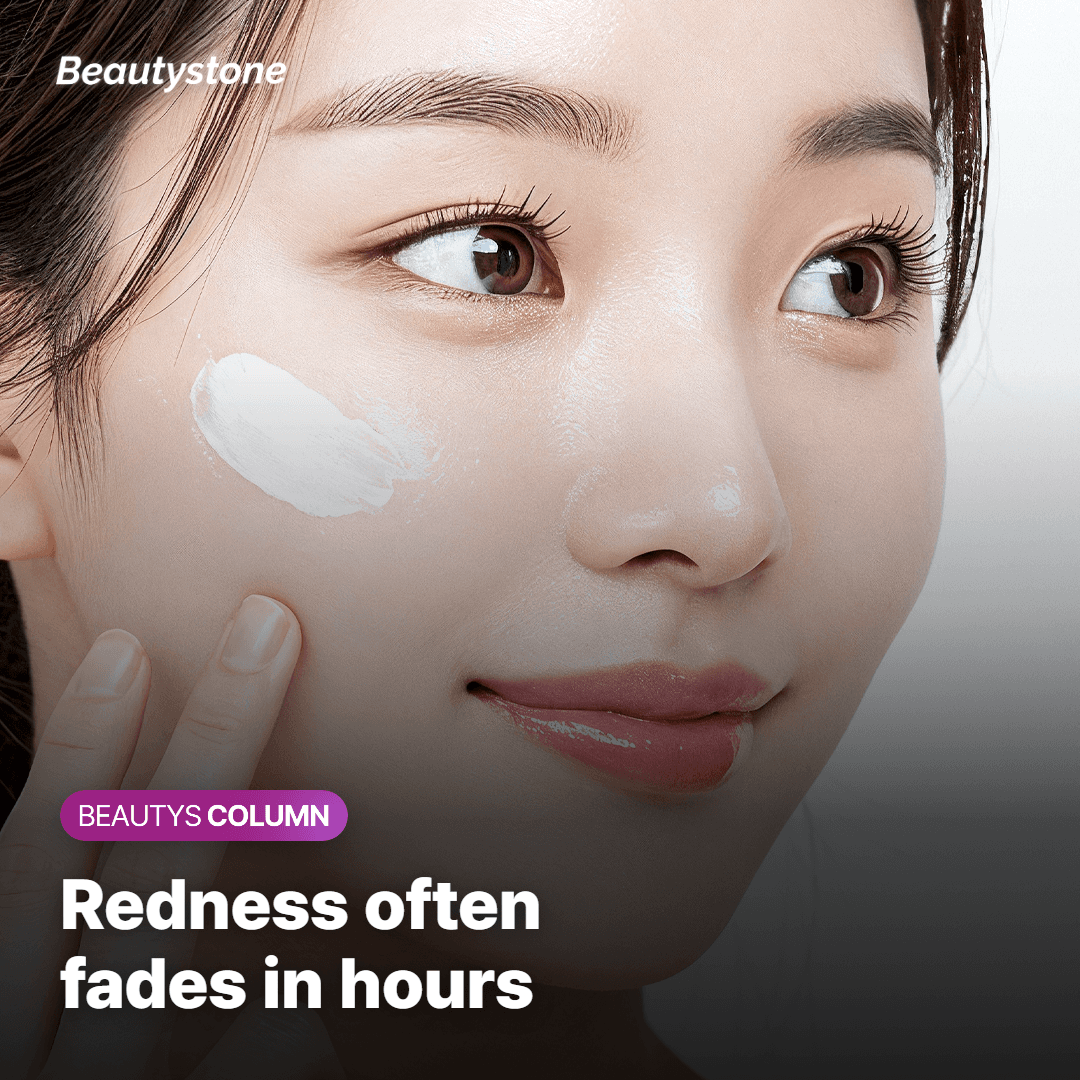
For most people redness is the shortest part of the downtime, measured in hours rather than days.
A skin booster places small amounts of product into the dermis (the layer just under the skin's surface) through many tiny needle entry points. Each entry point is a very small injury, and the flush you see afterward is the skin responding to it. That's why redness tends to be the first thing to appear and the first thing to fade. You may also see tiny pinprick marks where the needle went in.
This is why I don't treat "downtime" as a single number. It's really three separate clocks:
Redness: usually the first to fade.
Bumps: how often they appear depends mostly on the product and where it's placed, which is the next section.
Bruising: it doesn't happen to everyone, but when it does, it's the reaction most likely to still be visible on a day that matters.
Redness that fades over the evening is the normal pattern. Redness that spreads, gets hotter or becomes more painful over the following days isn't, and that's covered in the side effects section below.
Why do some people get bumps and others don't?
Mostly because of what's in the syringe and how it's placed, not because something went wrong.
"Skin booster" is an umbrella term. Some are hyaluronic acid (a gel that holds water in the skin), some of those are cross-linked (the HA molecules are chemically linked so the gel lasts longer), some aren't, and some use a different ingredient altogether, such as PN (polynucleotides, the ingredient family Rejuran belongs to). These don't all sit in the skin the same way.
According to the review, intradermal injection of cross-linked HA can sometimes result in “beads” or “papules”, small raised bumps that depend on both the product and the skin it goes into.
The authors note that this issue is frequently observed on the cheek skin, particularly on the lateral parts.
In plain terms, that's the outer cheeks.
To prevent it, the review advises lightly cross-linked HA, small bolus injections and avoiding excessively superficial placement.
That gives two sensible directions when someone is on a short trip and the cheeks are part of the plan. One is to adjust the product and technique along those lines: a lighter gel, smaller amounts per point, and not too shallow. The other is to leave the outer cheeks out of this visit and treat them on a trip with more room to spare. Which one fits depends on your skin when it's examined, and individual results vary either way.
Skin booster side effects: bruising is the wild card
Bruising is the reaction that's hardest to predict, so it's the one to plan around.
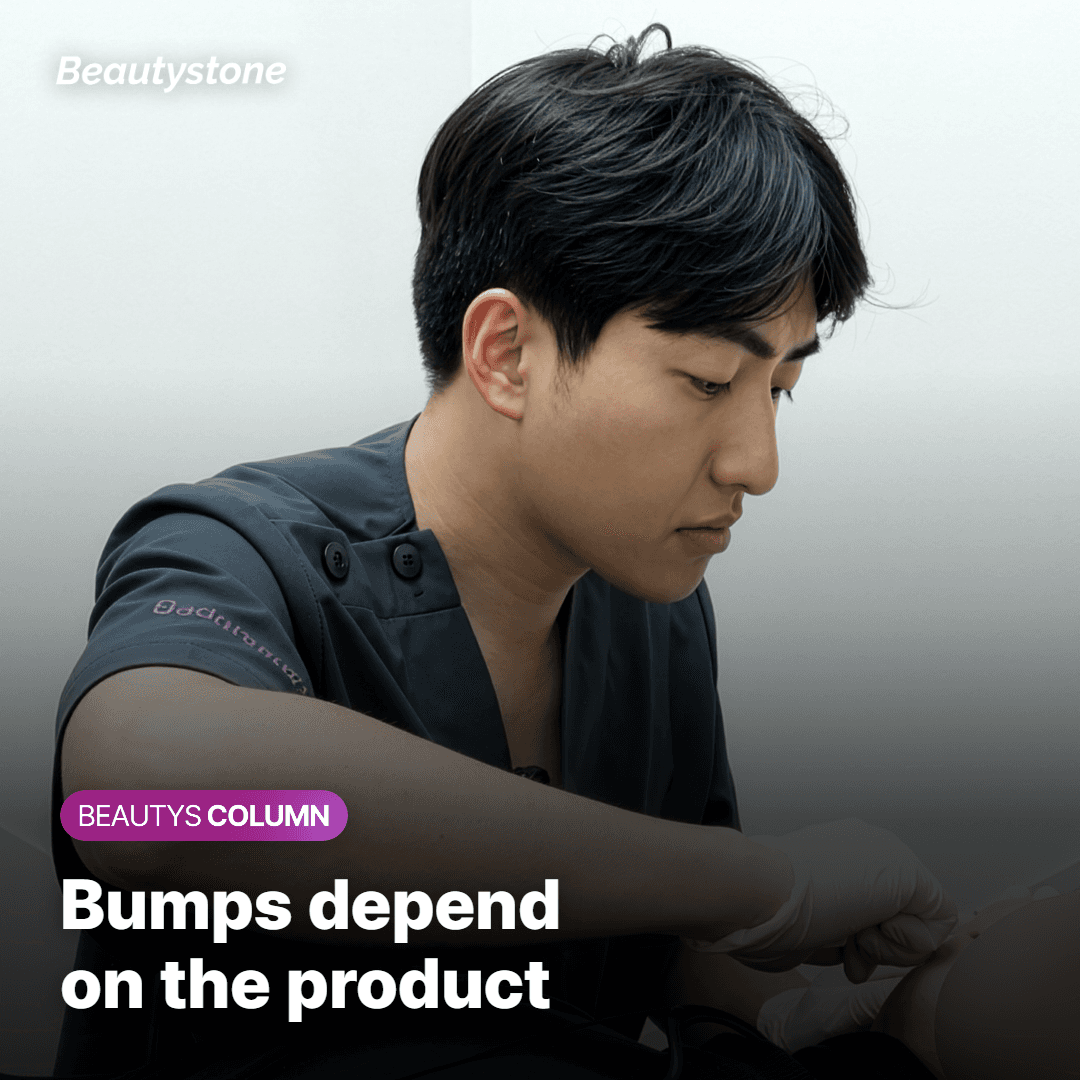
It doesn't happen to everyone, and nobody can tell you in advance exactly where one will appear, because it depends on whether a needle meets a small blood vessel. In the Profhilo review mentioned above, bruising and localized hematomas (small pools of blood under the skin) were among the expected, mild reactions. The practical move is to assume a bruise is possible and build room for it. A bruise is the most likely reason a photo day or a meeting goes differently than planned.
Small bumps belong in the same category: expected, usually short-lived, and best left alone rather than pressed or squeezed.
Rarer problems exist with any facial injection, and they're the reason to know the warning signs. Get urgent care rather than waiting it out if, after a facial injection, the skin turns pale, gray or blotchy, the pain keeps climbing, or your vision changes. Redness that spreads, feels hot or comes with a fever also needs a doctor's attention right away.

Fitting a skin booster into your Seoul trip
Unless you were sedated that day, there's no reason to delay your flight home because of a skin booster. The flight isn't the issue; whether a bump or bruise is still visible when you land is.
Photos and sightseeing are a different question, and the honest answer depends on which clock is still running. Redness usually fades first, while a bruise is the unpredictable one. So if there's a day in Seoul you really want photographed, my judgment for most people is to put the session after it, not before. If your main concern is walking into work looking normal, think about the bruise, not the redness.
A single visit still counts. Skin boosters mostly change the skin gradually rather than all at once, so one session moves things in the right direction instead of transforming your face overnight. For reference, in a split-face trial, thirty healthy subjects received non-cross-linked HA on one side of the face and saline on the other, and the effects were assessed after three sessions of multiple intradermal injections.
If you come to Korea more than once a year, sessions can be lined up with your trips. How far apart they should be is something to decide after your skin has been examined, not from a fixed calendar.
Once you're home, if something looks off, you can send photos to our WhatsApp consultation line and ask. That's for questions, not a substitute for in-person care: we can't promise a reply time or treatment from a distance, and for any of the warning signs above, see a doctor where you live first.

What helps while it settles, and what to leave alone
Most of good aftercare is not interfering.
Don't rub, press or pick: leave the needle marks and any bumps alone. Don't massage bumps yourself unless the doctor who treated you tells you to.
Keep skincare plain: a gentle moisturizer is enough while the marks close. Hold off on exfoliating acids and scrubs on the treated area until it has settled.
Sunscreen is non-negotiable: you're likely to be outdoors a lot on a trip, so cover up and reapply.
Skip heat and hard workouts at first: saunas, jjimjilbang and intense exercise push blood flow up, so it's sensible to wait until the redness has gone.
What doesn't help is trying to speed things up. Strong actives, peels or aggressive cleansing on freshly injected skin are more likely to irritate it than to make the reactions fade faster. If redness gets worse instead of better, or comes with pain or heat, contact the clinician who treated you.

The Bottom Line: plan around the bruise, not the redness
Redness after a skin booster is usually the first reaction to fade.
Bumps depend mainly on the product and where it's placed, with the outer cheeks the area to ask about.
Bruising is the least predictable part, so it's the one to plan around.
The flight itself isn't a reason to delay unless you were sedated; photo days and work are the real deadlines.
Like any injectable treatment, a skin booster comes with trade-offs. Ultimately, the choice depends on your skin, your goals and how much room your trip has.
If you take one thing into a consultation, make it this: ask which product is planned, whether it's cross-linked, and whether the outer cheeks are part of the plan. Those three answers tell you which reaction you're most likely to be watching, and that decides where the session belongs in your itinerary.
Beautystone is a skin clinic in Hapjeong, Seoul, one stop on subway Line 2 from Hongik University Station, where the airport railroad stops. If your dates are set, a WhatsApp message like this is enough to start: "I'm in Seoul from [date] to [date] and fly home on [date]. I'm interested in a skin booster for [area]. Here are two daylight photos. Which product would you suggest, and where should the session go in my trip?"


Lifting
Ultherapy Before and After: Why Wait 90 Days?

Contouring & Volume
Belotero Revive Cost: 2cc Price vs. 3 Sessions

skin
Lip Hyperpigmentation Laser: Does It Work?

Contouring & Volume
Men's Forehead Filler: Hollow or Just Lines?

Contouring & Volume
Calf Botox Timeline: When to Book Session 2?

Contouring & Volume
Thread Lift Cost: Smile Lines vs. Full Face?