

Targeting the mid-dermis means less pain and little downtime: an honest take on feel and recovery.
Published
Updated

Author
Wi Young-jin · Chief director
Seoul National University College of Medicine · Seoul National University Hospital Specialist
→
When exploring lifting treatments, you will often see people saying, "Sofwave has very little pain." To get straight to the point, while it is true that it is less painful than other HIFU treatments, it doesn't mean it is "completely painless." The key reasons are its shallower treatment depth and different method of energy delivery.
This article is a compilation of treatment information from Beautystone Clinic.
What kind of treatment is Sofwave?
Sofwave is a non-invasive lifting treatment that uses SUPERB (Synchronous Ultrasound Parallel Beam) technology—emitting 7 parallel ultrasound beams—to focus collagen stimulation at a depth of about 1.5mm in the mid-dermis. While Ultherapy targets deeper tissue, reaching up to 4.5mm to the SMAS layer, Sofwave precisely targets the shallower superficial dermis. This key difference reduces the burden of pain, even though both belong to the same category of collagen stimulation.
It is a naturally recommended choice for those whose main concerns are superficial fine lines or sagging epidermis, or for those who find the pain and downtime of deeper treatments like Ultherapy too burdensome. However, since its intensity does not reach the SMAS layer, other treatment categories should be considered if you have deep-set sagging.
The reason it feels less painful is due to the different treatment depth
Sofwave works by intensively delivering ultrasound energy to the mid-dermis layer (about 1.5mm deep). Compared to Ultherapy, which falls under the non-invasive lifting category that reaches the deeper SMAS layer at 4.5mm and 3.0mm, its treatment depth is less than half.
As stronger energy reaches deeper layers, pain signals become stronger. Since Sofwave only acts on the superficial dermis*, the perceived pain is much lower, even though it lies in the same category of collagen-stimulating treatments.
Dermis*: The core part of the skin located beneath the epidermis, where collagen and elastin are concentrated. Stimulating collagen synthesis in the mid-dermis improves epidermal sagging and fine wrinkled skin.
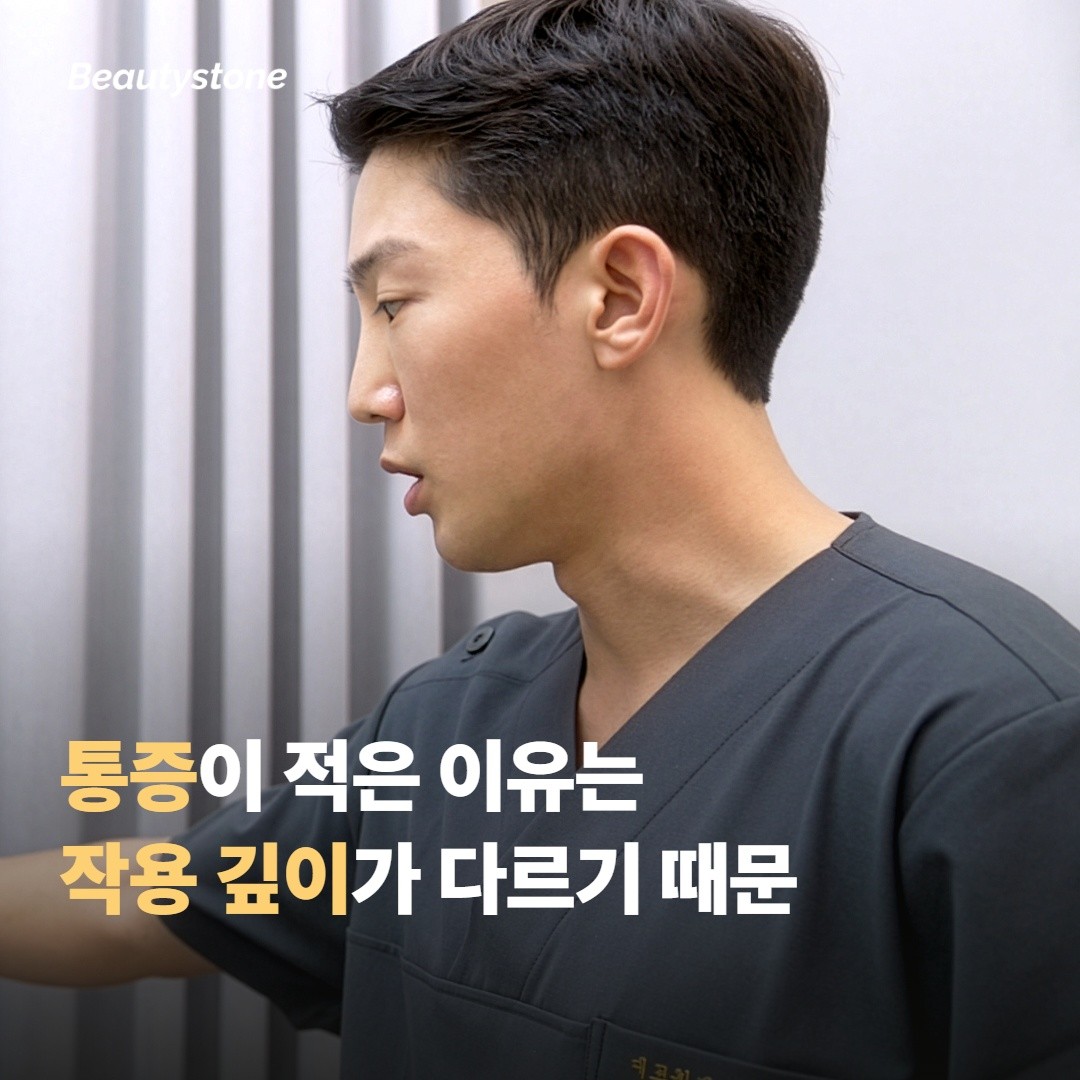
How it feels during the treatment: "A hot, prickling sensation"
Sensations commonly described by patients during the procedure:
Phase / Area | Sensation |
|---|---|
First few passes | A warm stimulation is felt. It is quite manageable. |
Jawline / Cheekbone area | Areas close to the bone feel more vibration and resonance. |
Forehead / Temples | Areas where nerves are concentrated feel slightly tingly. |
Continuous treatment zones | When repeated over the same area, a cumulative warm sensation gradually builds up. |
Typically, pain is managed initially with a numbing cream. If you still feel concerned, you can consult with our medical staff to explore additional pain management options.
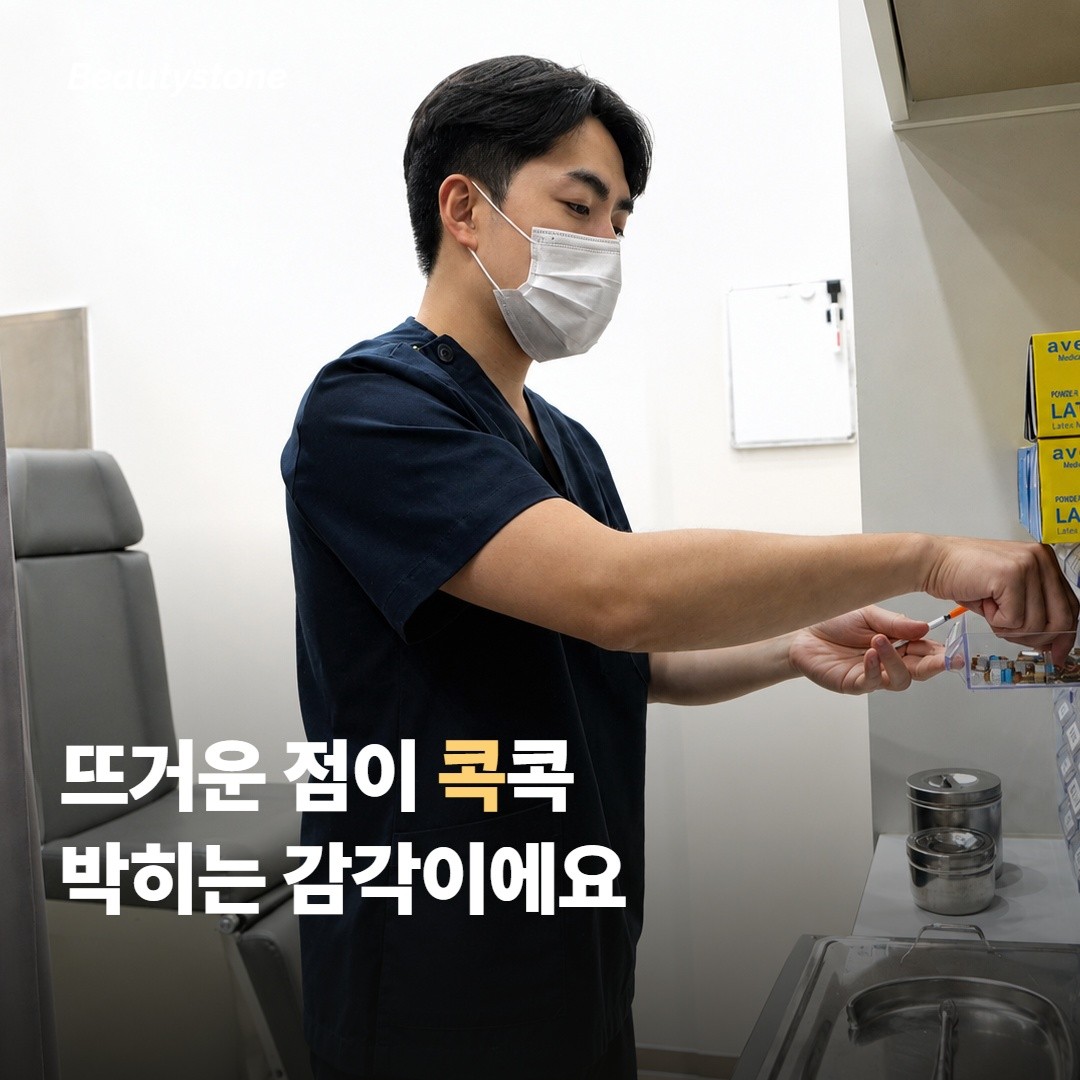
Recovery is immediate, allowing you to return to daily life right away
The biggest advantage of Sofwave is its minimal downtime. It falls under the general characteristics of non-invasive collagen stimulation treatments that allow you to return to your daily routine—such as working out, wearing makeup, or dining out—immediately after the procedure.
However, individual recovery experiences may vary slightly:
Timeline | Typical Experience |
|---|---|
Immediately after | Slight redness in the treated area. Makeup can be applied. |
Days 1–3 | Partial swelling or slight tightness. It does not interfere with daily activities. |
Within 1 week | Almost everyone returns to their pre-treatment skin condition. |
Weeks 2–4 | Subtle changes begin as the initial collagen response gets underway. |
Weeks 8–12 | This is when the lifting effect becomes most noticeable. |
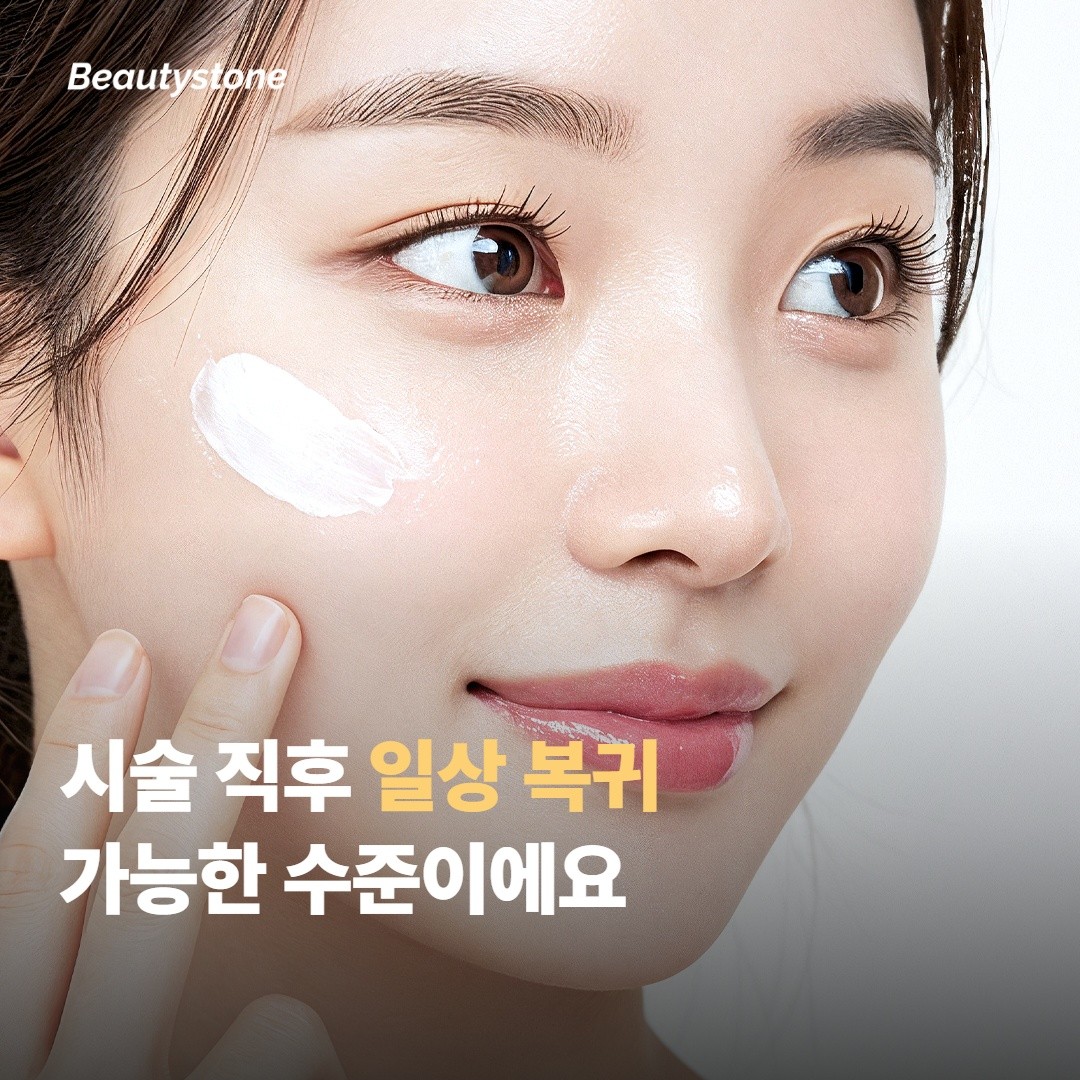
Whether
Frequently asked questions
Q. Is the treatment very painful if done without numbing cream?
A. Every individual is different, but even for the same procedure, the perceived pain definitely increases without numbing cream. If you have a low pain tolerance, we highly recommend using numbing cream from the start.
Q. Is it really okay to exercise right after the procedure?
A. You can resume light, casual exercise today. However, we recommend avoiding saunas, high temperatures, and high-intensity cardio for 1 to 2 days, or until any sensation of heat at the treatment site has subsided.
Q. How much of an effect can I expect to see after just one session?
A. The most noticeable changes are usually seen around 8 to 12 weeks, and the effects can be expected to last for about 6 months to a year. However, individual results may vary, and many patients see enhanced, cumulative benefits by receiving 1 or 2 additional treatments rather than just one. Please note that this information is for general guidance. For the most accurate assessment of your skin condition and to determine the ideal treatment intensity for you, we recommend consulting directly with our medical staff.
Q. Which area of the face is the most painful during a Sofwave treatment?
A. In areas where the bone is close to the surface, like the jawline and cheekbones, you will feel a noticeable vibration and echoing sensation. In areas with a high concentration of nerves, such as the forehead and temples, there might be a slight tingling. Usually, we manage the initial discomfort with a numbing cream and can discuss additional pain relief options if needed.


Contouring & Volume
Hip Dip Filler Before and After: 4 Checks

Body
Potenza Treatment Interval: Why 4 Weeks?

Lifting
Ultherapy Before and After: Why Wait 90 Days?

Contouring & Volume
Belotero Revive Cost: 2cc Price vs. 3 Sessions

skin
Lip Hyperpigmentation Laser: Does It Work?

Contouring & Volume
Men's Forehead Filler: Hollow or Just Lines?