

Director reveals ideal Ultraformer interval—it's not just once a year. See real case differences.
Published -
Updated -

Author
Wi Young-jin · Chief director
Seoul National University College of Medicine · Seoul National University Hospital Specialist
→
When searching for Shurink treatment intervals, some say "get it every 3 to 4 weeks," while others suggest "getting it again after 6 months to a year."
Since both are HIFU lifting treatments, why do people talk about different treatment intervals for Shurink and Ulthera?
The core explanation is quite simple.
Shurink is a relatively low-intensity HIFU device, so for initial care, we sometimes consider 2 to 3 sessions at 3 to 4-week intervals, followed by a personalized maintenance cycle depending on your skin condition.
On the other hand, because Ulthera differs in its energy depth, intensity, and overall treatment design, it is usually planned with intervals of 6 months or more.
In other words, Shurink treatment intervals should be divided into "initial intensive care intervals" and "maintenance care intervals."
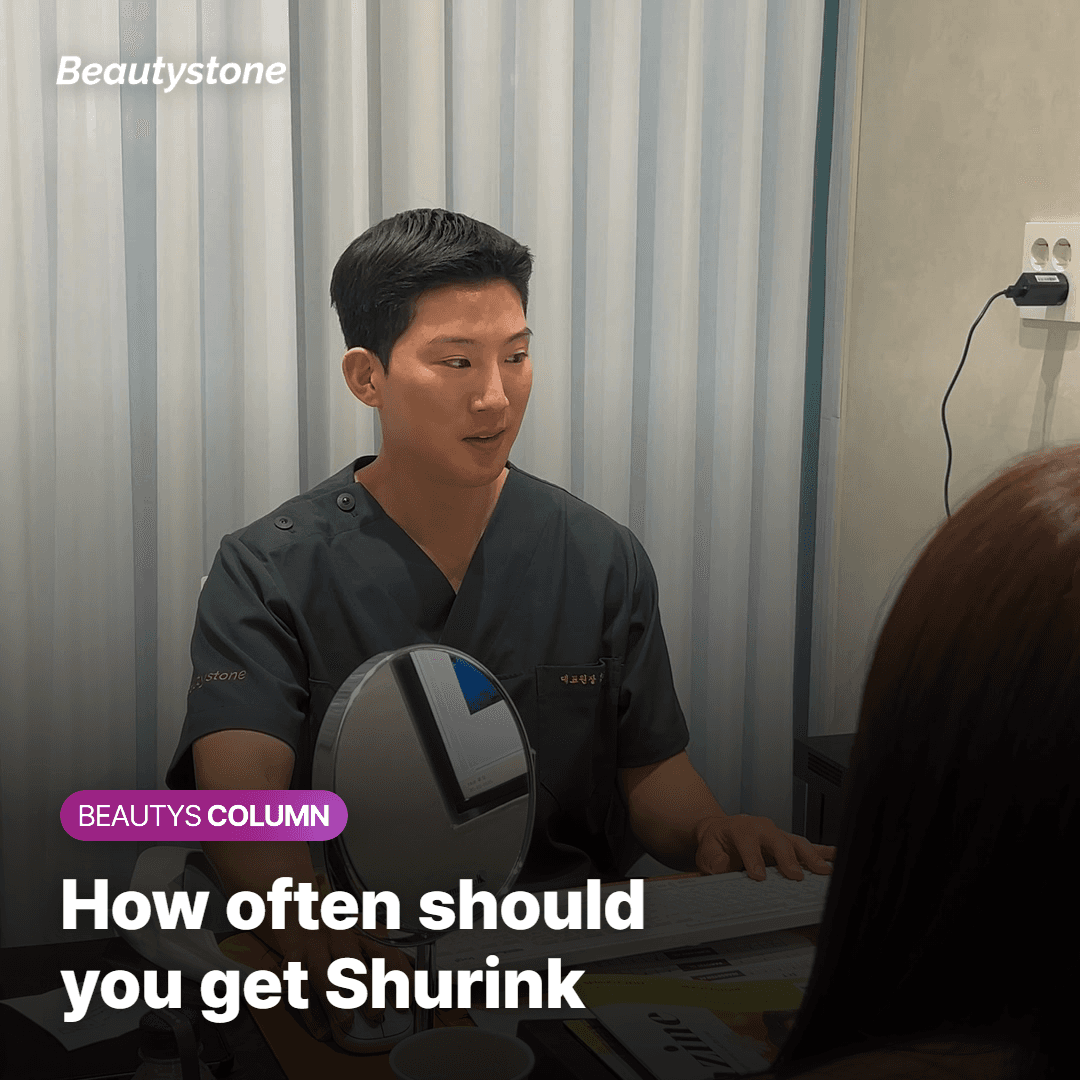
Quick Check Before You Read
Q. Should I only get Shurink once a year?
Not necessarily.
If you are receiving Shurink for the first time, we may recommend 2 to 3 sessions at intervals of 3 to 4 weeks, depending on your skin condition and the degree of sagging. However, rather than repeating treatments blindly after the initial sessions, it is best to adjust your maintenance intervals based on how your skin responds and changes.
Q. When will I start feeling the effects of Shurink?
While individual results vary, some patients feel a subtle tightening sensation immediately after the procedure, and most notice changes between 2 weeks to a month later.
Collagen regeneration does not finish immediately after the treatment; it is a gradual process that unfolds beautifully over time.
Q. Can getting it too often strain my skin?
Yes, that is possible.
Shurink uses High-Intensity Focused Ultrasound (HIFU) to deliver thermal energy deep into the skin layers.
If repeated without giving your skin sufficient recovery time, it can cause prolonged swelling, sensitivity, or discomfort depending on your skin type.
This is why "how often you get it" is less important than "getting it at the ideal interval for your unique skin condition."
Why Both 3–4 Weeks and 6 Months are Mentioned for Shurink Intervals
Shurink is a popular lifting treatment utilizing High-Intensity Focused Ultrasound (HIFU).
By delivering ultrasound energy to the deeper layers of the skin, it gently stimulates collagen production to help you achieve firmer, more lifted skin.
However, the most confusing part about Shurink is the interval. Some recommend every 3 to 4 weeks, while others recommend 6 months or more.
These two suggestions do not contradict each other; they serve different purposes.
The 3 to 4-week interval is closer to the initial management stage, where you plan multiple sessions when starting the treatment for the first time.
The interval of 6 months or more is closer to the maintenance stage, where we schedule your next session by checking how well the lifting effect is maintained after your initial series of treatments.
Shurink vs. Ulthera: Why the Intervals Differ for the Same HIFU Technology
Both Shurink and Ulthera are lifting treatments that utilize High-Intensity Focused Ultrasound (HIFU). However, just because they use the same HIFU technology does not mean their treatment intervals are identical.
This is because the device's energy characteristics, target depths, intensities, skin reactions, and treatment goals are different.
Simply put, Shurink is designed to be gentler on the skin, making it easier to repeat regularly for consistent care, whereas Ulthera often requires a deeper, stronger design in a single session.
Therefore, Shurink is often planned for multiple sessions at 3 to 4-week intervals initially, while Ulthera is usually scheduled for maintenance at intervals of 6 months or more.
Please note that these guidelines are not absolute rules.
The perfect interval can vary based on your skin thickness, facial fat volume, degree of sagging, and previous treatment history.
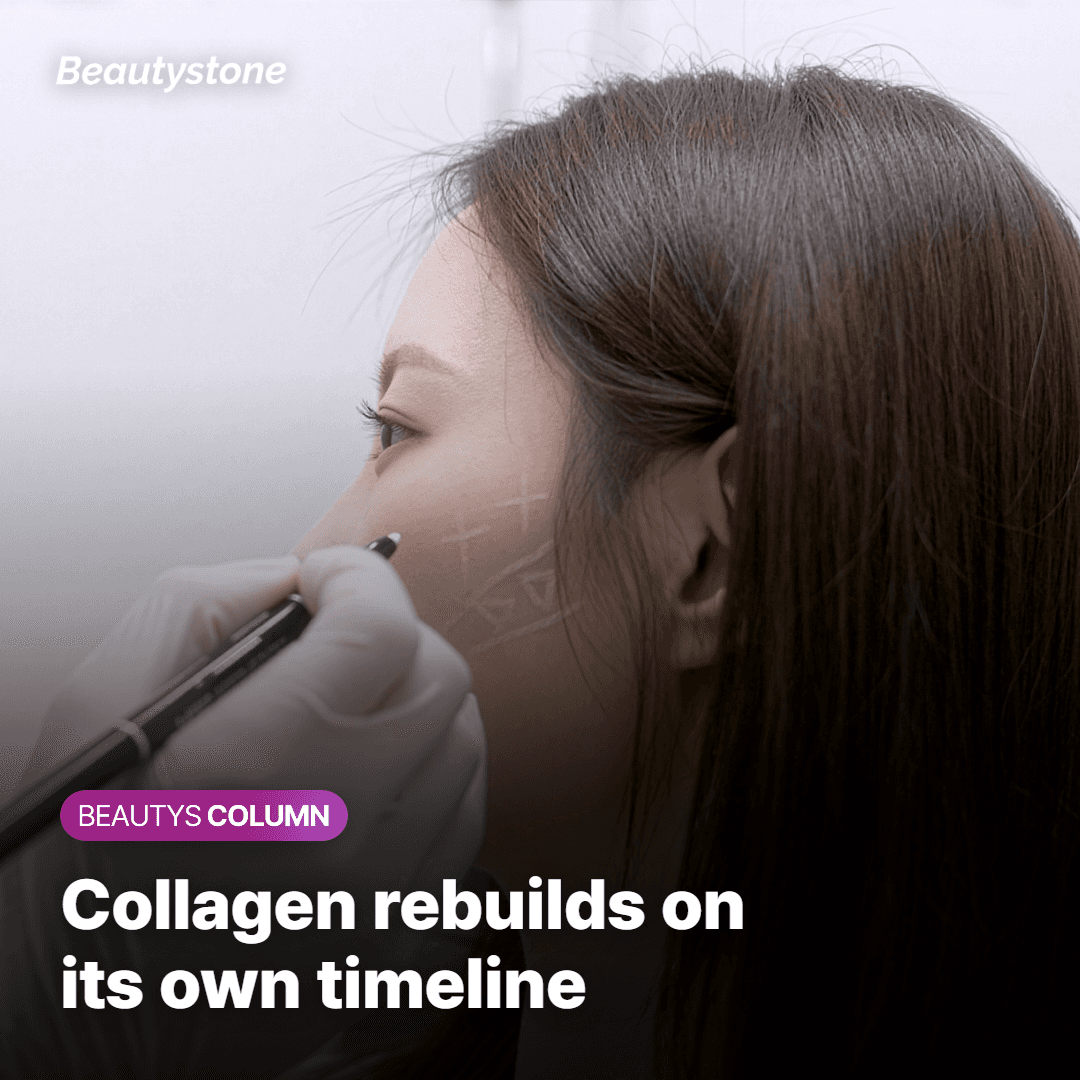
How Shurink Works in Your Skin
Shurink works by focusing ultrasound energy deep within the target skin layers to deliver mild thermal stimulation.
This stimulation initiates changes in the deep tissues, helping to naturally trigger the skin's collagen regeneration process.
However, this wonderful transformation does not happen overnight.
Immediately after the procedure, your skin and tissues will need some quiet time to recover from the stimulation. After this, as collagen gradually rebuilds, you will begin to notice a firmer, more lifted contour.
Therefore, rather than thinking "more frequent is always better," it is much more effective to plan your treatments to give your skin ample time to respond and heal.

How Shurink Works in Your Skin
Shurink focuses ultrasound energy deep within your skin layers to apply gentle thermal stimulation.
This stimulation causes changes in the underlying tissues, which helps guide your skin's natural collagen regeneration.
However, this process is not completed immediately after the session.
Right after the procedure, because your skin and tissues have been stimulated, a period of rest and recovery is essential.
As your collagen progressively reorganizes over the coming weeks, you will gradually experience improved elasticity and a subtle lift.
Generally, some clients feel the changes within 2 weeks to a month, while the full skin response may take 1 to 3 months to beautifully unfold.
This is why, with Shurink, it is not a matter of "the more often, the better," but rather planning your sessions with enough time for your skin to respond naturally.
Recommended Shurink Treatment Intervals
Skin Condition / Age Group | Recommended Interval | Reason |
Early 30s, for prevention | 12 to 18 months | Excellent natural collagen retention, allowing results to last longer |
Late 30s to 40s, early sagging | 9 to 12 months | Active sagging can shorten the duration of visible lifting effects |
Late 40s and above, noticeable sagging | 6 to 9 months | Slower natural collagen regeneration requires more frequent touch-ups |
Thin or highly sensitive skin | 12 months or longer | Your skin requires extra time to recover comfortably from thermal stimulation |
The table above serves as a general guide.
In real clinic settings, your ideal Shurink interval may adjust based on skin thickness, sagging degree, facial fat volume, risk of cheek hollows, and past treatments.
In particular, if you are considering combining Shurink with other advanced lifters like Shurink Universe, Ulthera Prime, Thermage, Onda Lifting, or Oligio, it is highly recommended to customize your treatment schedule accordingly.
If you are considering Shurink for the first time or are unsure about your next treatment date, simply let us know when your last session was and the areas you would like to address.
We will guide you on what to check before your consultation and how we can personalize your treatment during your visit.
▶ Contact us on WhatsApp for details
When Shurink Results Seem to Fade Quickly
Even with the same Shurink treatment, the duration of results can feel different for everyone.
This is usually not an issue with the technology itself, but rather a reflection of individual skin health and daily habits.
The lifting and firming effect may feel shorter-lived if any of the following apply:
Inconsistent sun protection
Chronic lack of sleep
High stress levels
Sudden, drastic weight loss
Smoking
Dry, sensitive skin conditions
Pre-existing, deep sagging
Particularly after rapid weight loss, the loss of facial fat coupled with changes in skin elasticity can make the Shurink effect seem shorter.
In this case, rather than simply rushing your next session, it is much better to evaluate your general skin health and the underlying cause of the sagging.
My Shurink Interval: A 30-Second Self-Check
When choosing the best time for your next Shurink, simply checking the date of your last treatment is not quite enough.
We recommend taking a moment to review these 3 steps:
Step 1. Check your last Shurink treatment date
First, confirm when you last had your Shurink session.
If you are in the initial treatment stage, you can schedule your next session in 3 to 4 weeks.
However, if you have already completed a few sessions, you are likely in the maintenance stage.
In this phase, we usually recommend observing your skin’s response and waiting 6 months or more before your next session.
Step 2. Observe if sagging is returning
Notice if your jawline is losing its definition, if you feel sagging around your cheeks and nasolabial folds, or if a double chin is starting to stand out again.
Instead of getting a touch-up just because a certain amount of time has passed, it is much safer to base it on when you actually begin to feel the need for a lift.
Step 3. Assess your current skin condition and lifestyle
Check if your skin has been sensitive lately, if you are experiencing redness or breakouts, or if your skin feels exceptionally dry.
Additionally, if you have recently experienced poor sleep, stress, sun exposure, or sudden weight changes, your treatment interval may need to be adjusted.
When your skin barrier is compromised, focusing on soothing and restoring your skin is often a priority before receiving another heating lifting treatment.
Is it okay to get Shurink extremely often?
Getting Shurink very frequently does not guarantee better or more dramatic results.
Because HIFU lifting works by applying heat deep into the skin tissue, your skin needs plenty of time to heal, adapt, and build back stronger.
If the intervals are too short, swelling, sensitivity, or a dull ache can persist. For those with naturally thin skin or minimal facial fat, overdoing it can occasionally lead to volume loss in certain areas.
Therefore, rather than simply increasing the number of shots or forcing a short interval, it is key to carefully distribute the treatment precisely where your skin needs it most.
Especially if you are concerned about cheek hollowness, the treatment settings for areas like the lower cheekbones, central cheeks, and around the nasolabial folds must be expertly tailored.
How should I decide the timing for my next Shurink?
The ideal timing for your next Shurink session cannot be decided by looking at the calendar alone.
If your face still feels beautifully lifted from your previous session, there is no need to rush into another treatment.
On the other hand, if you notice your jawline softening, or if cheek sagging and double chin begin to catch your eye, it might be the perfect time to book a consultation.
However, if you plan to get a touch-up in less than 6 months, we highly recommend checking both your current skin condition and how your skin responded to your last treatment.
For more advanced sagging, combining Shurink with other treatments such as Ulthera, Thermage, Onda Lifting, Oligio, or thread lifts can often yield much more satisfying results than Shurink alone.
Our Approach at Not Beautystone (Hapjeong Branch)
At Not Beautystone, we do not believe in determining your Shurink interval by a simple calendar date.
We sit down to check your skin thickness, facial contours, degree of sagging, previous lifting history, risk of cheek hollows, and lifestyle habits together.
Because we carry both Shurink Universe and Ulthera Prime, we don't push a single device; instead, we consult with you to find the exact direction that fits your skin goals.
Furthermore, rather than simply focusing on high shot counts, we believe in the art of precise distribution—carefully placing energy where it matters most, keeping the SMAS layer and your skin's health in mind.
Conveniently located near Hapjeong Station, our clinic offers easy access for those seeking quality lifting treatments from nearby Hongdae, Sinchon, and Ewha Womans University areas.
Frequently Asked Questions
Q1. After my first Shurink treatment, must I wait exactly 1 year for the next?
Not at all.
For first-timers, depending on your current skin condition, we may plan an initial series of 2 to 3 sessions scheduled 3 to 4 weeks apart to build a beautiful foundation.
Once this initial phase is complete, we typically transition to a maintenance plan, scheduling sessions 6 months or more apart while observing your skin's lovely progress.
Q2. Which is better, Shurink or Ulthera?
It’s hard to say one is absolutely better than the other as they both shine in different ways.
Shurink is fantastic for consistent, routine maintenance, while Ulthera is excellent when you need a deeper, more customized lifting design.
The best choice for you will depend on your skin thickness, facial volume, sagging, pain tolerance, budget, and desired recovery time.
Q3. Does increasing the shot count guarantee better results?
Not necessarily.
With Shurink, the skill of placing the right energy at the right depth and the precise intervals is just as important as the total shot count.
For individuals with thin skin or less facial fat, delivering excessive shots can end up straining the skin.
Thus, a personalized plan tailored to your actual skin condition is much more valuable than simply chasing higher shot counts.
Q4. Can I receive Shurink, Thermage, and Onda Lifting together?
While they can be beautifully combined, their intervals and ordering require expert planning.
Shurink uses HIFU energy, Thermage and Oligio use radiofrequency (RF) energy, and Onda Lifting utilizes microwave energy, meaning each works differently on your tissue.
Since each treatment has its own unique stimulation and recovery cycle, we prefer to curate a thoughtful sequence tailored to your skin’s health rather than rushing them all at once.
Q5. What factors affect the price of Shurink?
The cost of Shurink can vary based on the treatment area, shot count, number of sessions, and current seasonal promotions.
Whether you are treating the entire face, focusing on the jawline, or concentrating on a double chin will change the scope of the procedure. We recommend checking details during a brief consultation based on your target areas.
In Summary: Your Shurink Treatment Interval
Shurink intervals cannot be defined by a single formula like "every 3 to 4 weeks" or "once a year."
Whether you are in the starter or maintenance phase, and whether you are getting Shurink alone or combining it with Ulthera or other lifters, will guide your ideal timeline.
Rather than over-treating, the secret to beautiful results lies in giving your skin time to blossom and choosing the right moment for your touch-up.
If you are considering a treatment, we warmly invite you to explore our current packages and customized plans.
Since treatment plans and packages can vary by season, a personalized consultation is the best way to discover the perfect fit for your skin journey.
▶ Contact us on WhatsApp for details
Wishing you healthy, glowing skin, from Not Beautystone (Hapjeong Branch).
Content




Contouring & Volume
How Many cc Does Forehead Filler Need?

skin
Why Is My Skin Oily but Tight in the Fall?

Hair Removal
Underarm Laser Hair Removal Cost: Do the Math

Tattoo removal
Laser Before a Cover-Up: How Many Sessions?

skin
큐어젯 다운타임, 다음 날 출근과 화장은 언제부터 될까요?

Lifting
Titanium Lifting Side Effects: When to Worry